
Milk Nutrition Facts
Complete milk nutrition breakdown with 61 kcal per 100g, glycemic index, and diet compatibility.
Written by Victura Nutrition TeamReviewed by Victura Editorial ReviewLast updated Aug 16, 2026
61
Calories
3.1g
Protein
4.8g
Carbs
Use caution
Is it healthy?
per 100g · per panel values
Track this food in VicturaQuick answer
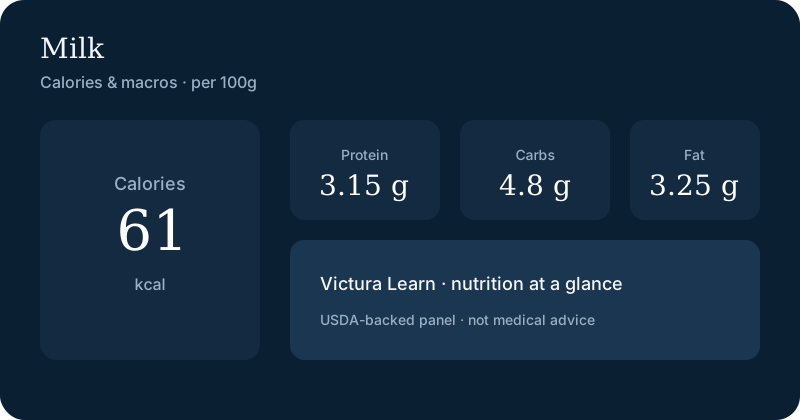
A cup of milk contains around 149 calories, while 100g contains about 61 calories. Per 100g you get about 4.8g carbs and 3.15g protein. Glycemic index is around 31.
Milk is a whole food with approximately 61 calories per 100g, tracked in Victura for macro-aware meal logging.
- Calories (cup)
- 149 kcal
- Calories (100g)
- 61 kcal
- Carbs (100g)
- 4.8g
- Protein (100g)
- 3.15g
- Serving reference
- 244g · cup
- Glycemic index
- 31

Where the calories come from
Per 100g · protein & carbs 4 kcal/g, fat 9 kcal/g
- Protein3.2 g · 20.6%
- Carbs4.8 g · 31.4%
- Fat3.3 g · 47.9%
Serving calculator
How much did you eat or drink — Milk?
61
Calories
3.1g
Protein
4.8g
Carbs
3.3g
Fat
Nutrition facts
per 100g · Source: USDA FoodData Central (seeded Phase 0)
61 kcal
Calories
Vitamins
- Vitamin D: 1.3mcg
Minerals
- Calcium: 113mg
Scientific explanation
Research-backedMilk provides a highly bioavailable matrix of essential macronutrients and micronutrients designed by nature to support growth and physiological maintenance. At 61 kcal per 100g, whole cow's milk delivers a balanced distribution of energy: 3.15g of high-quality protein, 3.25g of fat, and 4.8g of carbohydrates. The protein in milk is exceptionally valuable, consisting of approximately 80% casein and 20% whey. Casein provides a slow, sustained release of amino acids into the bloodstream, making it highly anti-catabolic, while whey is rapidly digested, stimulating muscle protein synthesis efficiently.
The carbohydrate content of milk is primarily lactose, a naturally occurring disaccharide. Despite containing 5.05g of sugar per 100g, whole milk exhibits a remarkably low glycemic index of 31. This low glycemic response is primarily due to the co-ingestion of fat and protein, which significantly delays gastric emptying and slows down the absorption of glucose in the small intestine. Consequently, whole milk does not cause the rapid blood glucose spikes typically associated with simple carbohydrate beverages.
From a micronutrient perspective, milk is an outstanding source of essential minerals and vitamins. It contains 113mg of calcium per 100g, representing approximately 9% of the Daily Value (DV). Calcium is critical not only for maintaining bone mineral density and skeletal integrity but also for facilitating muscle contractions, nerve transmission, and vascular function. To enhance the absorption of this calcium, milk is commonly fortified with Vitamin D, providing 1.3mcg (7% DV) per 100g. Vitamin D acts as a hormone that upregulates the expression of calcium-binding proteins in the intestines, ensuring optimal absorption and utilization of the mineral.

Community insights
Community insightWithin the Victura community, anonymized meal logs indicate that milk is a highly versatile staple used across diverse dietary protocols. It is most frequently logged as a base for post-workout protein shakes, a primary ingredient in breakfast smoothies, or paired with whole grains like oats.
Victura users who log whole milk as part of their breakfast report higher levels of sustained morning satiety compared to those who consume carbohydrate-only breakfasts. This observational pattern aligns with the known physiological effects of milk's protein and fat content on appetite-regulating hormones such as peptide YY (PYY) and glucagon-like peptide-1 (GLP-1). Additionally, endurance athletes and strength trainers frequently log chocolate milk or whole milk immediately post-exercise, leveraging its natural 3:1 carbohydrate-to-protein ratio to accelerate glycogen replenishment and facilitate muscle tissue repair. For individuals managing strict caloric deficits, community logs highlight the importance of precise portion control, as the liquid calories in whole milk can accumulate quickly if poured unmeasured.
Pros
- High-quality complete protein with a balanced amino acid profile
- Excellent source of bioavailable calcium and fortified Vitamin D
- Low glycemic index (31) prevents rapid blood sugar spikes
Cons
- Contains lactose, a common allergen and digestive irritant
- Liquid calories can accumulate quickly if portions are unmeasured
- Too high in carbohydrates for strict ketogenic diets
Best time to eat
Pair with complex carbohydrates or fiber-rich foods for balanced energy, or consume post-workout to support muscle recovery.
Good windows
- Post-workout recovery window
- With breakfast to enhance morning satiety
- As a base for nutrient-dense smoothies
Consider avoiding
- Immediately before intense cardiovascular workouts to prevent digestive discomfort
- Unmeasured portions late at night if managing a strict calorie deficit
Diet compatibility
Weight loss
Use caution
At 61 kcal and 0.0g fiber per 100g, this food is energy-dense - watch portions.
Keto
Use caution
Net carbs ~4.8g per 100g - too high-carb for standard keto.
Diabetic friendly
Friendly
GI 31 with 5.0g sugar - generally blood-sugar friendly in moderation.
Frequently asked questions
People also ask
Is milk healthy?
Yes — milk is a whole food with measurable nutrients. Healthiness depends on overall diet, portions, and your goals. Estimated GI is 31.
Can I eat milk every day?
Most people can include milk daily as part of a balanced diet, as long as total calories and carbs fit their plan.
Are milk good for weight loss?
At 61 kcal and 0.0g fiber per 100g, this food is energy-dense - watch portions.
How many calories are in milk?
A typical medium serving of milk has about 61 calories, while 100g contains about 61 calories (USDA reference).
Are milk good before a workout?
Milk can work before activity when you want easy carbs; pair milk with protein if your session is long.
Are milk high in sugar?
Milk contain about 5.0g sugar per 100g — mostly natural sugars when whole.
Can I drink milk every day?
Yes, most people can safely drink milk every day as part of a balanced diet. Daily consumption supports bone health and provides a reliable source of protein. However, you should monitor your total daily caloric and macronutrient intake to ensure it aligns with your specific fitness or weight goals.
Is milk good for weight loss?
Milk can be both beneficial and challenging for weight loss. On one hand, its high protein content promotes satiety, helping you feel full longer and reducing overall calorie intake. On the other hand, whole milk contains 61 kcal per 100g (about 149 kcal per cup), meaning liquid calories can add up quickly. Opting for lower-fat versions or strictly measuring portions is key when managing a calorie deficit.
How many calories are in a cup of milk?
A standard cup of whole cow's milk (approx. 244g) contains about 149 calories (kcal). In contrast, a 100g reference serving contains 61 calories. If you choose 2% reduced-fat milk, a cup contains about 122 calories, while a cup of skim milk contains roughly 83 calories.
Is milk good before a workout?
Milk can be a good pre-workout option, particularly when consumed 1 to 2 hours before exercise. The carbohydrates (lactose) provide readily available energy, while the protein supports muscle preservation. However, because the fat and protein slow down digestion, some individuals may experience mild stomach discomfort if they drink whole milk immediately before intense cardiovascular activity.
Is milk high in sugar?
Whole milk contains about 5.05g of sugar per 100g, which equates to roughly 12g of sugar per cup. This sugar is entirely lactose, a naturally occurring milk sugar, rather than added refined sugar. Because it is packaged alongside protein and fat, it has a minimal impact on blood glucose levels, giving it a low glycemic index of 31.
Is milk keto-friendly?
Whole milk is generally not considered keto-friendly. With 4.8g of net carbohydrates per 100g (about 11.7g of carbs per cup), drinking a single serving of milk can consume a significant portion of a standard 20g to 50g daily keto carbohydrate limit. Those on strict ketogenic diets typically opt for unsweetened almond milk or heavy cream instead.
How we review this guide
- Written by
- Victura Nutrition Team
- Reviewed by
- Victura Editorial Review
- Reference sources
- 4
- Last updated
- Aug 16, 2026
References
Ready to track your meals with AI?
Victura scans your plate, logs macros automatically, and coaches you toward your goals — halal, keto, diabetic-friendly, and more.