
Mozzarella Nutrition Facts
A complete guide to calories, protein, calcium, and dietary compatibility of part-skim mozzarella cheese.
Written by Victura Nutrition TeamReviewed by Victura Editorial ReviewLast updated Sep 2, 2026
254
Calories
24.3g
Protein
2.8g
Carbs
Generally yes
Is it healthy?
per 100g · per panel values
Track this food in VicturaQuick answer
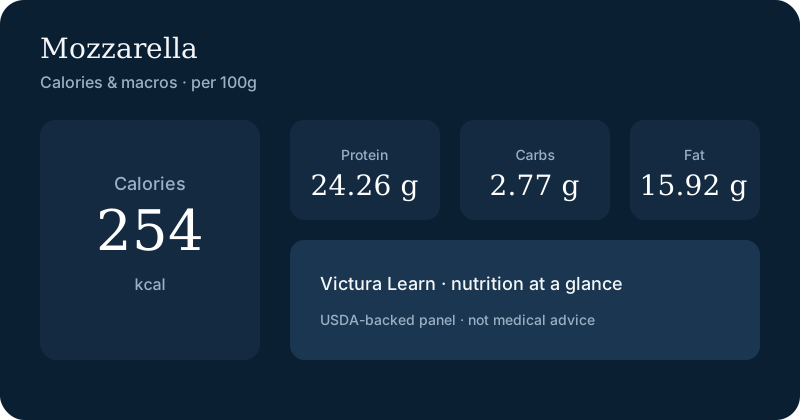
A 100g serving of mozzarella provides about 254 kcal. Per 100g you get about 2.77g carbs and 24.26g protein.
Mozzarella is a whole food with approximately 254 calories per 100g, tracked in Victura for macro-aware meal logging.
- Calories (100g serving)
- 254 kcal
- Carbs (100g)
- 2.77g
- Protein (100g)
- 24.26g
- Serving reference
- 100g · 100g serving

Where the calories come from
Per 100g · protein & carbs 4 kcal/g, fat 9 kcal/g
- Protein24.3 g · 38.6%
- Carbs2.8 g · 4.4%
- Fat15.9 g · 57%
Serving calculator
How much did you eat or drink — Mozzarella?
254
Calories
24.3g
Protein
2.8g
Carbs
15.9g
Fat
Nutrition facts
per 100g · Source: USDA FoodData Central (seeded Phase 0)
254 kcal
Calories
Minerals
- Calcium: 782mg
Scientific explanation
Research-backedMozzarella provides a rich source of high-quality protein and essential minerals, making it a highly nutritious addition to many diets. According to the USDA FoodData Central (FDC ID 170846), a standard 100g serving of part-skim mozzarella cheese contains 254.0 calories, 24.26g of protein, 15.92g of fat, and 2.77g of carbohydrates (with 1.13g coming from simple sugars and 0.0g of dietary fiber). This macronutrient distribution makes mozzarella an exceptional option for individuals looking to increase their daily protein intake without consuming excess carbohydrates.
One of the standout features of mozzarella is its micronutrient density, particularly its calcium content. A 100g serving delivers 782 mg of calcium, which represents approximately 60% of the daily recommended value for adults. Calcium is vital not only for maintaining bone density and skeletal integrity but also for supporting vascular contraction, muscle function, and nerve transmission. Because mozzarella is a fermented dairy product, it also contains bioactive peptides that have been studied for their potential blood pressure-lowering and immune-modulating properties.
From a dietary compatibility perspective, mozzarella is highly versatile but requires mindful portioning depending on your health goals. For individuals following a ketogenic or low-carb lifestyle, mozzarella is an excellent fit, as it contains only 2.77g of net carbs per 100g. It is also highly suitable for individuals managing diabetes, as its low carbohydrate and sugar content prevents rapid blood glucose spikes. However, for those focused primarily on weight loss, mozzarella's energy density (254.0 kcal per 100g) and lack of dietary fiber mean that portions must be carefully measured to avoid exceeding daily caloric targets. Incorporating it alongside high-fiber vegetables can help promote satiety while keeping overall calories in check.

Community insights
Community insightIn the Victura community, mozzarella is frequently logged as a go-to protein source for post-workout recovery and low-carb meal prep. Because of its mild flavor and excellent melting properties, it is widely used in healthy recipes ranging from classic Caprese salads to low-carb pizza crusts (such as fathead dough).
To manage calories effectively, community members often opt for pre-portioned mozzarella options. A single standard portion of mozzarella (such as a single low-moisture part-skim string cheese or a pre-cut slice) typically weighs about 28 grams (1 ounce). This single portion contains approximately 71 calories and nearly 7 grams of protein, making it an incredibly convenient, portion-controlled snack that prevents accidental overeating. Active individuals and athletes frequently pair mozzarella with a source of complex carbohydrates, like an apple or whole-grain crackers, to create a balanced pre- or post-workout snack that sustains energy levels and supports muscle protein synthesis.
Pros
Cons
Best time to eat
Good windows
Consider avoiding
Diet compatibility
Weight loss
Friendly
Consult your healthcare provider for personalized guidance.
Keto
Friendly
Consult your healthcare provider for personalized guidance.
Diabetes
Friendly
Consult your healthcare provider for personalized guidance.
Frequently asked questions
People also ask
Is a mozzarella healthy?
Yes — a mozzarella is a whole food with measurable nutrients. Healthiness depends on overall diet, portions, and your goals.
Can I eat a mozzarella every day?
Most people can include a mozzarella daily as part of a balanced diet, as long as total calories and carbs fit their plan.
Are Mozzarellas good for weight loss?
Mozzarellas can fit a calorie-controlled diet when portions are measured.
How many calories are in a mozzarella?
A typical medium serving of mozzarella has about 254 calories, while 100g contains about 254 calories (USDA reference).
Are Mozzarellas good before a workout?
Mozzarellas can work before activity when you want easy carbs; pair a mozzarella with protein if your session is long.
Are Mozzarellas high in sugar?
Mozzarellas contain about 1.1g sugar per 100g — mostly natural sugars when whole.
Is mozzarella healthy?
Yes, mozzarella is a highly nutritious food when consumed in moderation. It is an excellent source of high-quality protein (24.26g per 100g) and calcium (782 mg per 100g), which support muscle maintenance and bone health. Additionally, part-skim mozzarella contains less saturated fat than many hard cheeses like cheddar. However, because it is relatively energy-dense and contains sodium, it should be portioned mindfully as part of a balanced diet.
Can you eat mozzarella every day?
You can eat mozzarella every day, provided it fits within your daily caloric and macronutrient targets. Daily consumption of a moderate portion (such as 28g to 50g) is an excellent way to boost your calcium and protein intake. To maintain dietary variety, pair it with fiber-rich foods like leafy greens, tomatoes, or whole grains, and monitor your overall sodium and saturated fat intake from other sources.
Is mozzarella good for weight loss?
Mozzarella can be incorporated into a weight loss diet, but portion control is essential. At 254.0 calories and 0.0g of fiber per 100g, it is an energy-dense food. However, its high protein content (24.26g per 100g) promotes satiety and helps preserve lean muscle mass during a caloric deficit. Opting for part-skim varieties and limiting portions to 28g (1 ounce) per serving is a smart strategy for weight loss.
How many calories does mozzarella have in a single portion?
A typical single portion of part-skim mozzarella (28 grams or 1 ounce, which is equivalent to one standard string cheese or a thin slice) contains approximately 71 calories, 6.8 grams of protein, 4.5 grams of fat, and less than 1 gram of carbohydrates. This makes a single portion an excellent, low-calorie, high-protein snack option.
Is mozzarella good before a workout?
Yes, mozzarella can be a beneficial pre-workout snack, especially when consumed 1 to 2 hours before exercise. Its high protein content provides essential amino acids to protect muscle tissue, while its fat content offers sustained energy. For optimal performance, pair a small portion of mozzarella with an easily digestible carbohydrate, such as a piece of fruit, to provide immediate fuel for your muscles.
Is mozzarella high in sugar?
No, mozzarella is exceptionally low in sugar. It contains only 1.13g of sugar per 100g, which comes from naturally occurring lactose. Because of this minimal sugar content, mozzarella has a negligible impact on blood glucose levels, making it highly suitable for individuals on ketogenic, low-carb, or diabetic-friendly diets.
How we review this guide
- Written by
- Victura Nutrition Team
- Reviewed by
- Victura Editorial Review
- Reference sources
- 4
- Last updated
- Sep 2, 2026
References
Ready to track your meals with AI?
Victura scans your plate, logs macros automatically, and coaches you toward your goals — halal, keto, diabetic-friendly, and more.