
Protein Shake Nutrition Facts
A comprehensive breakdown of calories, macronutrients, and dietary benefits of ready-to-drink whey protein shakes.
Written by Victura Nutrition TeamReviewed by Victura Editorial ReviewLast updated Aug 26, 2026
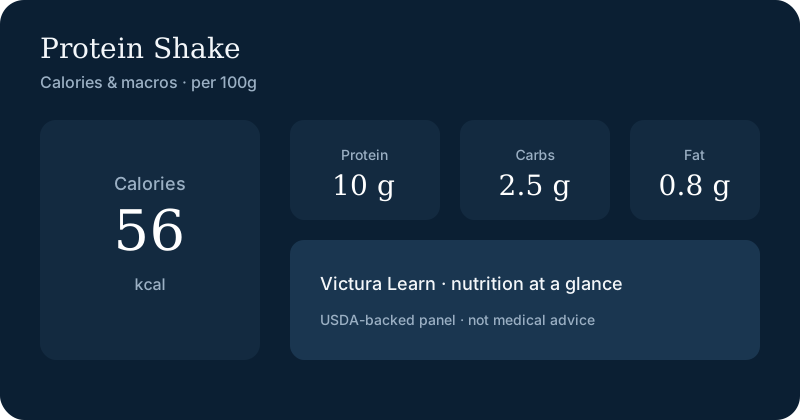
56
Calories
10.0g
Protein
2.5g
Carbs
Generally yes
Is it healthy?
per 100g · per panel values
Track this food in VicturaQuick answer
A 100g serving of protein shake provides about 56 kcal. Per 100g you get about 2.5g carbs and 10g protein.
Protein Shake is a whole food with approximately 56 calories per 100g, tracked in Victura for macro-aware meal logging.
- Calories (100g serving)
- 56 kcal
- Carbs (100g)
- 2.5g
- Protein (100g)
- 10.0g
- Serving reference
- 100g · 100g serving

Where the calories come from
Per 100g · protein & carbs 4 kcal/g, fat 9 kcal/g
- Protein10 g · 69.9%
- Carbs2.5 g · 17.5%
- Fat0.8 g · 12.6%
Serving calculator
How much did you eat or drink — Protein Shake?
56
Calories
10.0g
Protein
2.5g
Carbs
0.8g
Fat
Nutrition facts
per 100g · Source: USDA FoodData Central (seeded Phase 0)
56 kcal
Calories
Minerals
- Calcium: 120mg
Scientific explanation
Research-backedProtein Shake provides a highly bioavailable source of dietary protein, specifically formulated to assist with muscle tissue repair, athletic recovery, and daily macronutrient management. According to the USDA FoodData Central (FDC ID 173177), a standard ready-to-drink, whey-based protein shake contains 56 calories per 100g. For individuals tracking their energy intake, a common question arises: how many calories does protein shake have in a typical serving? A standard single-serve bottle of ready-to-drink protein shake is approximately 325g (about 11 fluid ounces), which delivers roughly 182 calories and an impressive 32.5g of high-quality protein.
In terms of macronutrient distribution per 100g, this beverage contains 10.0g of protein, 2.5g of carbohydrates, 0.8g of fat, and 0.0g of dietary fiber. The sugar content is exceptionally low at just 1.0g per 100g, making it highly compatible with low-carbohydrate and ketogenic lifestyles. The diet flags for this food highlight its versatility: with only 2.5g of net carbs per 100g, it is fully keto-friendly. It is also considered diabetic-friendly due to its minimal glycemic impact, though individuals should always check commercial labels for added artificial sweeteners or thickeners that might affect blood glucose levels. However, for active weight loss, users should note that at 56 kcal per 100g and containing 0.0g of fiber, liquid calories can be digested rapidly without triggering the same long-term satiety signals as whole-food protein sources. Portion control and mindful integration into a balanced diet are recommended.
Beyond macronutrients, this whey-based beverage is an excellent source of essential minerals. It provides 120mg of Calcium per 100g, which equates to approximately 9% of the Daily Value (DV) per 100g serving, or nearly 30% of the DV in a full 325g bottle. Calcium is vital not only for bone density and skeletal strength but also plays a critical role in muscle contraction and enzymatic functions during high-intensity exercise.
To help you compare this option with other common dietary beverages, review the structured comparison table below:
| Nutrient (per 100g) | Whey Protein Shake (RTD) | Whole Bovine Milk | Unsweetened Soy Milk |
|---|---|---|---|
| Calories | 56 kcal | 61 kcal | 43 kcal |
| Protein | 10.0 g | 3.2 g | 3.3 g |
| Fat | 0.8 g | 3.2 g | 2.0 g |
| Carbohydrates | 2.5 g | 4.8 g | 6.0 g |
| Dietary Fiber | 0.0 g | 0.0 g | 0.2 g |
| Sugars | 1.0 g | 4.8 g | 1.0 g |
| Calcium | 120 mg (9% DV) | 113 mg (9% DV) | 120 mg (9% DV) |
| Glycemic Index | Low (estimated < 30) | Low (31) | Low (34) |
| Pros | Extremely high protein-to-calorie ratio; rapid absorption; low fat. | Natural source of micronutrients; no artificial additives. | Plant-based; lactose-free; heart-healthy fats. |
| Cons | Highly processed; lacks dietary fiber; may contain artificial sweeteners. | High in saturated fats; contains lactose (allergen). | Lower essential amino acid profile compared to whey. |
| Best For | Post-workout recovery; muscle hypertrophy; low-carb diets. | General growth; culinary uses; balanced whole-food diets. | Vegan/vegetarian diets; lactose intolerance. |

Community insights
Community insightIn the Victura community, ready-to-drink protein shakes are among the most frequently logged items for post-workout recovery and convenient meal replacement. Anonymized meal logs indicate that users most frequently consume these beverages within a 30-to-60-minute window following resistance training or intense cardiovascular exercise. This aligns with athletic training principles regarding the optimization of muscle protein synthesis.
While fitness enthusiasts appreciate the convenience of grab-and-go shakes, culinary and dietary discussions within the community often emphasize customization. Many users utilize ready-to-drink shakes as a base for nutrient-dense smoothies, blending them with whole foods such as spinach, chia seeds, or berries to introduce dietary fiber, which is naturally absent (0.0g per 100g) in the base formula. This practice helps mitigate the rapid digestion rate of liquid proteins, promoting prolonged satiety and supporting long-term weight management goals.
Additionally, community feedback highlights the importance of label transparency. Because formulations vary widely between manufacturers, users are encouraged to cross-reference their specific brand's nutrition panel with the baseline USDA values. Some commercial shakes contain added thickeners, gums, or sugar alcohols that can cause mild gastrointestinal discomfort in sensitive individuals. Choosing clean, minimally processed formulations ensures the best digestive outcomes.
Pros
Cons
Best time to eat
Good windows
Consider avoiding
Diet compatibility
Weight loss
Friendly
Consult your healthcare provider for personalized guidance.
Keto
Friendly
Consult your healthcare provider for personalized guidance.
Diabetes
Friendly
Consult your healthcare provider for personalized guidance.
Frequently asked questions
People also ask
Is a protein shake healthy?
Yes — a protein shake is a whole food with measurable nutrients. Healthiness depends on overall diet, portions, and your goals.
Can I eat a protein shake every day?
Most people can include a protein shake daily as part of a balanced diet, as long as total calories and carbs fit their plan.
Are Protein Shakes good for weight loss?
Protein shakes can fit a calorie-controlled diet when portions are measured.
How many calories are in a protein shake?
A typical medium serving of protein shake has about 56 calories, while 100g contains about 56 calories (USDA reference).
Are Protein Shakes good before a workout?
Protein shakes can work before activity when you want easy carbs; pair a protein shake with protein if your session is long.
Are Protein Shakes high in sugar?
Protein shakes contain about 1.0g sugar per 100g — mostly natural sugars when whole.
Is it healthy to drink a protein shake every day?
Yes, drinking a protein shake daily can be a safe and convenient way to meet your protein requirements, particularly for active individuals. However, they should supplement rather than replace whole-food protein sources like poultry, fish, eggs, tofu, and legumes, which provide a broader spectrum of essential micronutrients and dietary fiber.
Do protein shakes help with weight loss?
Protein shakes can support weight loss by promoting satiety and preserving lean muscle mass during a caloric deficit. Because protein has a high thermic effect, replacing high-calorie snacks with a protein shake can reduce overall daily intake. However, because liquid calories are digested quickly and contain 0.0g of fiber per 100g, it is crucial to monitor portion sizes.
Should I drink a protein shake before or after a workout?
While consuming a protein shake after a workout is highly effective for muscle repair due to rapid amino acid absorption, drinking one pre-workout also ensures a steady supply of amino acids in your bloodstream. Ultimately, your total daily protein intake is more critical for muscle growth than precise timing.
How many calories are in a ready-to-drink protein shake?
A standard ready-to-drink whey protein shake contains approximately 56 calories per 100g. For a typical single-serve bottle of 325g (11 oz), this equates to about 182 calories and 32.5g of protein. Always check specific product labels, as calories vary based on added fats, carbohydrates, or flavorings.
Is a protein shake a good breakfast replacement?
A protein shake can serve as a quick, convenient breakfast option to kickstart muscle protein synthesis. However, because a plain shake lacks essential dietary fiber, healthy fats, and diverse vitamins, it is best to blend it with whole ingredients like oats, nut butter, and fruit to create a nutritionally complete meal.
How much calcium is in a ready-to-drink protein shake?
A standard ready-to-drink whey protein shake contains 120mg of calcium per 100g, which provides about 9% of the Daily Value (DV). A typical 325g bottle delivers nearly 30% of your daily calcium needs.
How we review this guide
- Written by
- Victura Nutrition Team
- Reviewed by
- Victura Editorial Review
- Reference sources
- 4
- Last updated
- Aug 26, 2026
References
Ready to track your meals with AI?
Victura scans your plate, logs macros automatically, and coaches you toward your goals — halal, keto, diabetic-friendly, and more.