
Orange Juice Nutrition Facts
A comprehensive, evidence-based guide to the calories, sugar, vitamins, and metabolic impact of raw orange juice.
Written by Victura Nutrition TeamReviewed by Victura Editorial ReviewLast updated Sep 16, 2026
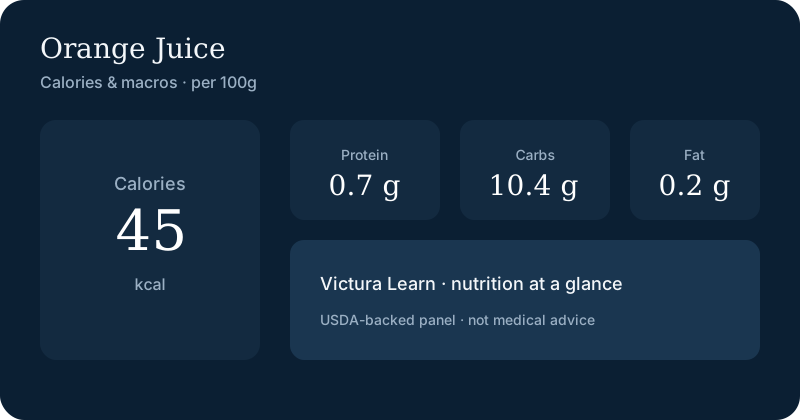
45
Calories
0.7g
Protein
10.4g
Carbs
Generally yes
Is it healthy?
per 100g · per panel values
Track this food in VicturaQuick answer
A 100g serving of orange juice provides about 45 kcal. Per 100g you get about 10.4g carbs and 0.7g protein. Glycemic index is around 50.
Orange Juice is a whole food with approximately 45 calories per 100g, tracked in Victura for macro-aware meal logging.
- Calories (100g serving)
- 45 kcal
- Carbs (100g)
- 10.4g
- Protein (100g)
- 0.7g
- Serving reference
- 100g · 100g serving
- Glycemic index
- 50

Where the calories come from
Per 100g · protein & carbs 4 kcal/g, fat 9 kcal/g
- Protein0.7 g · 6.1%
- Carbs10.4 g · 90%
- Fat0.2 g · 3.9%
Serving calculator
How much did you eat or drink — Orange Juice?
45
Calories
0.7g
Protein
10.4g
Carbs
0.2g
Fat
Nutrition facts
per 100g · Source: USDA FoodData Central (seeded Phase 0)
45 kcal
Calories
Vitamins
- Vitamin C: 50mg
Minerals
- Potassium: 200mg
Scientific explanation
Research-backedOrange Juice provides a highly concentrated source of essential micronutrients and simple carbohydrates, making it one of the most widely consumed fruit juices globally. According to the USDA FoodData Central (FDC ID 169098), a standard 100g serving of raw orange juice contains 45.0 calories, 0.7g of protein, 0.2g of total fat, and 10.4g of total carbohydrates. Of these carbohydrates, 8.4g are present as simple sugars (primarily fructose, glucose, and sucrose), while dietary fiber is minimal at just 0.2g per 100g. This low fiber content means that the net carbohydrates stand at approximately 10.2g per 100g, which has significant implications for metabolic health and glycemic control.
From a micronutrient perspective, orange juice is an exceptional source of Vitamin C (ascorbic acid). A 100g serving delivers 50.0mg of Vitamin C, which represents 56% of the daily recommended value (DV) for adults. Vitamin C is a powerful antioxidant that plays a critical role in immune function, collagen synthesis, and the enhancement of non-heme iron absorption from plant-based foods. Additionally, orange juice provides 200mg of Potassium per 100g (4% DV), an essential mineral and electrolyte that supports healthy blood pressure regulation, nerve transmission, and muscle function.
Despite these nutritional benefits, the metabolic impact of orange juice must be carefully evaluated. It has a glycemic index (GI) of 50, placing it in the medium GI category. Because the natural sugars in orange juice are not bound by a significant matrix of dietary fiber, they are absorbed rapidly into the bloodstream compared to whole oranges. Consequently, individuals managing diabetes should consume orange juice in strict moderation, even though its medium GI makes it generally blood-sugar friendly when portion sizes are controlled. Conversely, for those on a ketogenic or strict low-carb diet, orange juice is highly unfriendly, as a single standard glass can easily exceed the daily carbohydrate limit. For weight loss, the high energy density (45 kcal per 100g) and low satiety index of liquid calories mean that portions must be meticulously monitored to prevent an unintentional caloric surplus.

Community insights
Community insightIn the Victura community, orange juice is a frequent entry in daily meal logs, particularly during breakfast hours or as a quick post-workout recovery beverage. Anonymized user data indicates that while many individuals log orange juice for its high Vitamin C content, there is a common tendency to underestimate portion sizes. While a standard serving is often calculated per 100g, a typical household glass of orange juice is closer to 240g (approximately 8 fluid ounces), which delivers 108 calories and over 20g of sugar.
Fitness enthusiasts within the Victura community frequently utilize orange juice as a fast-acting carbohydrate source prior to high-intensity training. The rapid absorption of its simple sugars provides an immediate glycogen boost without causing gastrointestinal distress, which can sometimes occur with high-fiber pre-workout meals. However, for general wellness and weight management, successful users often report transitioning from drinking large glasses of juice to consuming whole oranges, or diluting their orange juice with sparkling water to reduce overall calorie and sugar density. To mitigate blood sugar spikes, nutritionists in our community recommend pairing orange juice with a source of healthy fats or protein, such as a handful of almonds or a boiled egg, which helps slow down gastric emptying and glucose absorption.
Pros
Cons
Best time to eat
Good windows
Consider avoiding
Diet compatibility
Weight loss
Friendly
Consult your healthcare provider for personalized guidance.
Keto
Friendly
Consult your healthcare provider for personalized guidance.
Diabetes
Friendly
Consult your healthcare provider for personalized guidance.
Frequently asked questions
People also ask
Is an orange juice healthy?
Yes — an orange juice is a whole food with measurable nutrients. Healthiness depends on overall diet, portions, and your goals. Estimated GI is 50.
Can I eat an orange juice every day?
Most people can include an orange juice daily as part of a balanced diet, as long as total calories and carbs fit their plan.
Are Orange Juices good for weight loss?
Orange juices can fit a calorie-controlled diet when portions are measured.
How many calories are in an orange juice?
A typical medium serving of orange juice has about 45 calories, while 100g contains about 45 calories (USDA reference).
Are Orange Juices good before a workout?
Orange juices can work before activity when you want easy carbs; pair an orange juice with protein if your session is long.
Are Orange Juices high in sugar?
Orange juices contain about 8.4g sugar per 100g — mostly natural sugars when whole.
Is orange juice healthy?
Yes, orange juice is healthy in moderation because it provides essential nutrients, particularly Vitamin C (50.0mg per 100g, or 56% DV) and Potassium (200mg per 100g). These nutrients support immune health and cardiovascular function. However, because it lacks the dietary fiber found in whole fruits, its sugar concentration (8.4g per 100g) can lead to rapid blood sugar spikes if consumed in excess.
Can you drink orange juice every day?
You can drink orange juice daily, but portion control is vital. Consuming a small portion (such as 100g to 150g) can easily fit into a balanced diet. However, drinking large quantities daily can lead to excessive calorie and sugar intake. Dentists also recommend drinking it through a straw or rinsing your mouth with water afterward to protect tooth enamel from natural citric acid.
Is orange juice good for weight loss?
Orange juice is generally not ideal for weight loss. At 45 calories per 100g, a typical 240g glass contains 108 calories with virtually no dietary fiber (0.2g). Liquid calories do not trigger satiety signals as effectively as solid foods. For weight loss, it is highly recommended to eat whole oranges instead, which provide the same vitamins alongside fiber to keep you full.
How many calories are in a glass of orange juice?
A typical 240g (8-ounce) glass of raw orange juice contains approximately 108 calories. In comparison, a standard 100g reference serving contains exactly 45.0 calories, 0.7g of protein, 0.2g of fat, and 10.4g of carbohydrates (including 8.4g of sugar).
Should you drink orange juice before a workout?
Yes, drinking orange juice before a workout can be highly beneficial, especially prior to high-intensity training. The 10.4g of carbohydrates per 100g consist of fast-digesting simple sugars that quickly convert into glucose, providing your muscles with immediate energy without causing gastrointestinal distress.
Is orange juice too high in sugar?
Orange juice contains a relatively high concentration of natural sugars, with 8.4g of sugar per 100g (about 20g of sugar in a standard glass). While these are natural sugars, the body processes them rapidly due to the lack of fiber. If you are managing diabetes or following a low-carb diet, you should limit your intake or opt for whole fruits instead.
How we review this guide
- Written by
- Victura Nutrition Team
- Reviewed by
- Victura Editorial Review
- Reference sources
- 4
- Last updated
- Sep 16, 2026
References
Ready to track your meals with AI?
Victura scans your plate, logs macros automatically, and coaches you toward your goals — halal, keto, diabetic-friendly, and more.