
Soy Milk Nutrition Facts
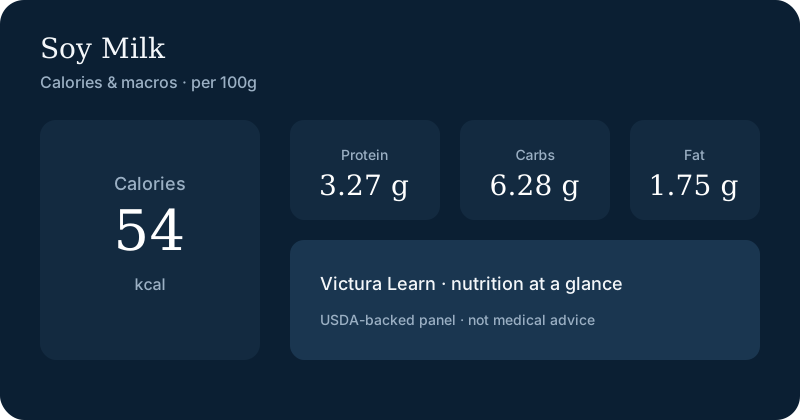
Complete soy milk nutrition breakdown with 54 kcal per 100g, glycemic index, and diet compatibility.
Written by Victura Nutrition TeamReviewed by Victura Editorial ReviewLast updated Aug 11, 2026
54
Calories
3.3g
Protein
6.3g
Carbs
Use caution
Is it healthy?
per 100g · per panel values
Track this food in VicturaQuick answer
A cup of soy milk contains around 130 calories, while 100g contains about 54 calories. Per 100g you get about 6.28g carbs and 3.27g protein. Glycemic index is around 34.
Soy Milk is a whole food with approximately 54 calories per 100g, tracked in Victura for macro-aware meal logging.
- Calories (cup)
- 130 kcal
- Calories (100g)
- 54 kcal
- Carbs (100g)
- 6.28g
- Protein (100g)
- 3.27g
- Serving reference
- 240g · cup
- Glycemic index
- 34

Where the calories come from
Per 100g · protein & carbs 4 kcal/g, fat 9 kcal/g
- Protein3.3 g · 24.2%
- Carbs6.3 g · 46.6%
- Fat1.8 g · 29.2%
Serving calculator
How much did you eat or drink — Soy Milk?
130
Calories
7.8g
Protein
15.1g
Carbs
4.2g
Fat
Calories and macros by serving
Values are calculated from the page's USDA per-100g reference. Prepared or branded products may vary.
| Serving | Calories | Protein | Carbs | Fat |
|---|---|---|---|---|
| 1 cup (240ml) | 130 | 7.8g | 15.1g | 4.2g |
| 100ml | 54 | 3.3g | 6.3g | 1.8g |
Nutrition facts
per 100g · Source: USDA FoodData Central (seeded Phase 0)
54 kcal
Calories
Minerals
- Calcium: 25mg
Scientific explanation
Research-backedSoy Milk provides approximately 54 kcal per 100g, delivering a balanced macronutrient distribution of 3.27g of protein, 6.28g of carbohydrates, and 1.75g of fat. Unlike many other plant-based milk alternatives, soy milk stands out for its high-quality protein content. Soy protein is a complete protein, meaning it contains all nine essential amino acids that the human body cannot synthesize on its own. This makes it highly comparable to animal-derived dairy protein in terms of muscle protein synthesis and tissue repair. The carbohydrate profile of this unfortified soy milk includes 6.28g of total carbohydrates per 100g, of which 3.99g comes from sugars and 0.6g from dietary fiber. With an estimated glycemic index (GI) of 34, soy milk is classified as a low-glycemic food. This low GI rating indicates that consuming soy milk results in a gradual, sustained rise in blood glucose levels rather than a rapid spike, making it an excellent option for individuals managing insulin sensitivity or diabetes. From a lipid perspective, the 1.75g of fat per 100g is predominantly composed of heart-healthy monounsaturated and polyunsaturated fatty acids, with minimal saturated fat and zero cholesterol. This lipid profile supports cardiovascular health by helping to maintain healthy LDL cholesterol levels when used as a replacement for fats high in saturated lipids. In its unfortified state, soy milk contains modest amounts of micronutrients, such as 25mg of calcium per 100g (representing approximately 2% of the Daily Value). While commercial varieties are frequently fortified with calcium, vitamin D, and vitamin B12 to match or exceed the micronutrient profile of cow's milk, this specific USDA reference represents the natural, unfortified state of original and vanilla soy milk. This distinction is crucial for individuals tracking specific micronutrient targets or formulating precise dietary plans.

Community insights
Community insightAmong Victura meal logs, soy milk appears frequently as a versatile, plant-based staple. It is highly favored by users following vegan, vegetarian, or lactose-free diets, particularly as a base for morning smoothies, oatmeal, and protein shakes. Many users report that substituting soy milk for water or lower-protein plant milks (such as almond or oat milk) in their breakfast routines significantly enhances post-meal satiety, helping them stay full until lunch. In the Victura community, soy milk is also widely logged as a dairy alternative in coffee and tea. Users note that while some unfortified or low-fat varieties may curdle in highly acidic coffee, original soy milk generally froths well and provides a creamy texture without the heavy saturated fat of dairy cream. Fitness-focused users frequently log soy milk in post-workout recovery shakes, pairing its natural complete proteins with a fast-digesting carbohydrate source to optimize muscle recovery. Additionally, individuals tracking glycemic responses consistently report stable energy levels and a lack of energy crashes when consuming soy milk, confirming its low-glycemic characteristics in real-world settings.
Pros
- Soy Milk is a whole food with measurable macro nutrients
- Contains complete plant-based protein with all essential amino acids
- Low glycemic index (34) supports stable blood sugar levels
Cons
- Portion size still matters for calorie goals
- Unfortified varieties are low in calcium compared to dairy
Best time to eat
Pair with protein and fiber for balanced meals.
Good windows
- With main meals
- Pre-workout fuel
- Post-workout recovery
Consider avoiding
- Very large portions without activity
Diet compatibility
Weight loss
Use caution
At 54 kcal and 0.6g fiber per 100g, this food is energy-dense - watch portions.
Keto
Friendly
Net carbs ~5.7g per 100g - compatible with strict keto.
Diabetic friendly
Friendly
GI 34 with 4.0g sugar - generally blood-sugar friendly in moderation.
Frequently asked questions
People also ask
Is soy milk healthy?
Yes — soy milk is a whole food with measurable nutrients. Healthiness depends on overall diet, portions, and your goals. Estimated GI is 34.
Can I eat soy milk every day?
Most people can include soy milk daily as part of a balanced diet, as long as total calories and carbs fit their plan.
Are soy milk good for weight loss?
At 54 kcal and 0.6g fiber per 100g, this food is energy-dense - watch portions.
How many calories are in soy milk?
A typical medium serving of soy milk has about 54 calories, while 100g contains about 54 calories (USDA reference).
Are soy milk good before a workout?
Soy milk can work before activity when you want easy carbs; pair soy milk with protein if your session is long.
Are soy milk high in sugar?
Soy milk contain about 4.0g sugar per 100g — mostly natural sugars when whole.
Can I drink soy milk every day?
For most individuals, incorporating soy milk into your daily diet is completely safe and highly beneficial. It provides a steady stream of essential amino acids, healthy fats, and minerals. Concerns regarding soy phytoestrogens (isoflavones) have been extensively researched, and major health organizations agree that moderate daily consumption of soy foods is safe and may even offer protective cardiovascular and bone health benefits. As with any food, balance and variety within your overall caloric budget are key.
Is soy milk good for weight loss?
Soy milk can be a valuable asset in a weight loss plan, provided you manage your portions and overall caloric intake. At 54 kcal per 100g, it is moderately energy-dense compared to water or unsweetened almond milk, but its high protein content (3.27g per 100g) promotes satiety and helps preserve lean muscle mass during a calorie deficit. Choosing unsweetened versions and tracking your total daily intake will ensure it supports your weight loss goals effectively.
How many calories are in a cup of soy milk?
One standard cup (240ml) of original, unfortified soy milk contains about 130 calories. This calorie count is based on the standard USDA reference for unfortified soy milk. If you choose light, unsweetened, or heavily sweetened commercial brands, the calorie content can range anywhere from 80 to 150 calories per cup, so checking the product label is always recommended.
Is soy milk good before a workout?
Yes, soy milk is an excellent pre-workout beverage option. It provides a balanced combination of easily digestible carbohydrates (6.28g per 100g) to fuel your muscles and complete protein (3.27g per 100g) to jumpstart muscle protein synthesis. For optimal performance, consume it 1 to 2 hours before your workout, or pair it with a fast-digesting carb like a banana if you need quick energy immediately before training.
Is soy milk high in sugar?
Original, unfortified soy milk contains approximately 3.99g of sugar per 100g, which is relatively low and consists of both natural sugars and small amounts of added sweeteners depending on the specific formulation. Unsweetened soy milk varieties contain even less sugar (often under 1g per 100g). Compared to many commercial fruit juices or sweetened dairy milks, soy milk is a low-sugar beverage option that fits well into low-glycemic diets.
Is soy milk keto-friendly?
With approximately 5.7g of net carbohydrates per 100g (6.28g total carbs minus 0.6g fiber), original soy milk can fit into a flexible ketogenic diet if portions are carefully managed. However, for strict keto practitioners, unsweetened soy milk is highly recommended, as it typically contains fewer than 2g of net carbs per cup, making it much easier to stay within daily carbohydrate limits.
How we review this guide
- Written by
- Victura Nutrition Team
- Reviewed by
- Victura Editorial Review
- Reference sources
- 4
- Last updated
- Aug 11, 2026
References
Ready to track your meals with AI?
Victura scans your plate, logs macros automatically, and coaches you toward your goals — halal, keto, diabetic-friendly, and more.