
Cheddar Cheese Nutrition Facts
Complete cheddar cheese nutrition breakdown with 403 kcal per 100g, glycemic index, and diet compatibility.
Written by Victura Nutrition TeamReviewed by Victura Editorial ReviewLast updated Aug 10, 2026
403
Calories
24.9g
Protein
1.3g
Carbs
Use caution
Is it healthy?
per 100g · per panel values
Track this food in VicturaQuick answer
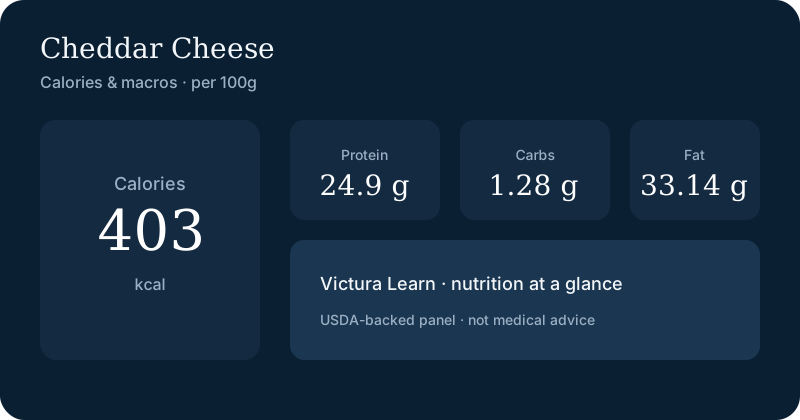
A 100g serving of cheddar cheese provides about 403 kcal. Per 100g you get about 1.28g carbs and 24.9g protein.
Cheddar Cheese is a whole food with approximately 403 calories per 100g, tracked in Victura for macro-aware meal logging.
- Calories (100g serving)
- 403 kcal
- Carbs (100g)
- 1.28g
- Protein (100g)
- 24.9g
- Serving reference
- 100g · 100g serving

Where the calories come from
Per 100g · protein & carbs 4 kcal/g, fat 9 kcal/g
- Protein24.9 g · 24.7%
- Carbs1.3 g · 1.3%
- Fat33.1 g · 74%
Serving calculator
How much did you eat or drink — Cheddar Cheese?
403
Calories
24.9g
Protein
1.3g
Carbs
33.1g
Fat
Nutrition facts
per 100g · Source: USDA FoodData Central (seeded Phase 0)
403 kcal
Calories
Vitamins
- Vitamin A: 265mcg RAE
Minerals
- Calcium: 710mg
Scientific explanation
Research-backedCheddar Cheese provides approximately 403 kcal per 100g, along with 24.9g of high-quality protein, 1.28g of carbohydrates, and 33.14g of fat. Sourced from USDA FoodData Central, these values highlight cheddar as an energy-dense, nutrient-rich dairy product. The protein in cheddar cheese is complete, meaning it contains all nine essential amino acids necessary for muscle repair, tissue maintenance, and immune function. Beyond macronutrients, the micronutrient profile of cheddar cheese is highly significant. A 100g serving delivers 710mg of calcium, representing approximately 55% of the Daily Value (DV). Calcium is critical not only for maintaining bone mineral density and preventing osteoporosis but also for facilitating vascular contraction, muscle function, and nerve transmission. Additionally, cheddar contains 265mcg RAE of Vitamin A (29% DV), which supports healthy vision, immune defense, and cellular communication. The lipid profile of cheddar cheese consists primarily of saturated fatty acids (approximately 21g per 100g). While historical dietary guidelines recommended strict limitation of saturated fats, modern nutritional science suggests that the dairy matrix—the complex physical structure of cheese containing proteins, calcium, and lipids—may modulate how these fats are digested and absorbed. Research indicates that the calcium in cheese can bind to fatty acids in the digestive tract, forming insoluble soaps that are excreted, thereby reducing the overall absorption of saturated fat and mitigating its impact on LDL cholesterol levels. Furthermore, aged cheeses like cheddar contain bioactive peptides formed during the fermentation process, which have been studied for their potential blood pressure-lowering effects through ACE inhibition.

Community insights
Community insightAmong Victura meal logs, cheddar cheese appears frequently as a versatile, satisfying snack and a key ingredient in low-carb meal preparation. Many users log cheddar cheese as a convenient, portable protein source to curb mid-afternoon hunger. Analysis of user patterns shows that pairing a cheddar cheese portion with high-fiber foods, such as raw apple slices, celery sticks, or a handful of almonds, results in significantly higher self-reported satiety scores and steadier energy levels compared to consuming cheese in isolation. In culinary applications, community members frequently use grated cheddar to add rich flavor and creaminess to vegetable-heavy dishes, such as broccoli bakes or cauliflower mash. This strategy helps increase the palatability of nutrient-dense vegetables for children and picky eaters. Additionally, athletes and fitness enthusiasts within the Victura community often utilize cheddar cheese as a post-workout recovery snack, valuing its sodium content (which helps replenish electrolytes lost in sweat) alongside its muscle-repairing proteins.
Pros
- Cheddar Cheese is a whole food with measurable macro nutrients
- Excellent source of calcium (55% DV per 100g) and complete protein
- Highly compatible with ketogenic and low-carb lifestyles
Cons
- Portion size still matters for calorie goals due to high energy density
- Contains significant sodium and saturated fat which must be monitored
Best time to eat
Pair with protein and fiber for balanced meals.
Good windows
- With main meals
- Post-workout for recovery
Consider avoiding
- Very large portions without activity
Diet compatibility
Weight loss
Use caution
At 403 kcal and 0.0g fiber per 100g, this food is energy-dense - watch portions.
Keto
Friendly
Net carbs ~1.28g per 100g - compatible with strict keto.
Diabetic friendly
Friendly
GI is negligible with 0.52g sugar - generally blood-sugar friendly in moderation.
Frequently asked questions
People also ask
Is a cheddar cheese healthy?
Yes — a cheddar cheese is a whole food with measurable nutrients. Healthiness depends on overall diet, portions, and your goals.
Can I eat a cheddar cheese every day?
Most people can include a cheddar cheese daily as part of a balanced diet, as long as total calories and carbs fit their plan.
Are Cheddar Cheeses good for weight loss?
At 403 kcal and 0.0g fiber per 100g, this food is energy-dense - watch portions.
How many calories are in a cheddar cheese?
A typical medium serving of cheddar cheese has about 403 calories, while 100g contains about 403 calories (USDA reference).
Are Cheddar Cheeses good before a workout?
Cheddar cheeses can work before activity when you want easy carbs; pair a cheddar cheese with protein if your session is long.
Are Cheddar Cheeses high in sugar?
Cheddar cheeses contain about 0.5g sugar per 100g — mostly natural sugars when whole.
Is cheddar cheese keto-friendly?
Yes, cheddar cheese is highly keto-friendly. With only 1.28g of total carbohydrates (and virtually the same amount of net carbs) per 100g, it fits perfectly within strict ketogenic macro limits. Its high fat content (33.14g) and moderate protein content (24.9g) help support ketone production and maintain ketosis.
What is the glycemic index of cheddar cheese?
The glycemic index (GI) of cheddar cheese is considered negligible or close to zero. Because it contains almost no carbohydrates (only 1.28g per 100g), it does not cause a rapid rise in blood glucose levels. Pairing cheddar cheese with higher-glycemic foods can actually help blunt the overall glycemic response of the meal.
Is cheddar cheese safe for people with diabetes?
Yes, cheddar cheese is generally safe and beneficial for people with diabetes when consumed in moderation. Because of its low carbohydrate content and negligible glycemic index, it does not cause blood sugar spikes. The protein and fat content can also help slow down the absorption of glucose from other foods eaten during the same meal, promoting more stable blood sugar levels.
How many calories does cheddar cheese have?
Cheddar cheese contains 403 calories (kcal) per 100g. A standard 1-ounce (28g) serving provides approximately 113 calories, along with 7g of protein and 9.3g of fat. This makes it a calorie-dense but highly nutrient-rich food option.
How we review this guide
- Written by
- Victura Nutrition Team
- Reviewed by
- Victura Editorial Review
- Reference sources
- 4
- Last updated
- Aug 10, 2026
References
Ready to track your meals with AI?
Victura scans your plate, logs macros automatically, and coaches you toward your goals — halal, keto, diabetic-friendly, and more.