
Kombucha Nutrition Facts: How Many Calories Does Kombucha Have?
Per 100 g, per cup, and per bottle: 13 calories, 3 g carbs, and 2 g sugar — plus alcohol, caffeine, gut-health evidence, and daily serving guidance for US and Canadian shoppers.
Written by Victura Nutrition TeamReviewed by Victura Editorial ReviewLast updated Oct 14, 2026
13
Calories
0.0g
Protein
3.0g
Carbs
Generally yes
Is it healthy?
per 100g · per panel values
Track this food in VicturaQuick answer
A 100g serving of kombucha provides about 13 kcal. Per 100g you get about 3g carbs and 0g protein.
Kombucha is a whole food with approximately 13 calories per 100g, tracked in Victura for macro-aware meal logging.
- Calories (100g serving)
- 13 kcal
- Carbs (100g)
- 3.0g
- Protein (100g)
- 0.0g
- Serving reference
- 100g · 100g serving
Key takeaways
- Commercial kombucha has 13 kcal, 3 g carbs, and 2 g sugar per 100 g.
- A 16 oz bottle is about 62 kcal and 14.4 g carbs, with no fiber or protein.
- Human gut-health evidence is limited; only raw products may contain live cultures.
- Start with 4–8 fl oz daily and check labels for sugar and alcohol.
- Kombucha is low in calories but not a weight-loss or probiotic guarantee.

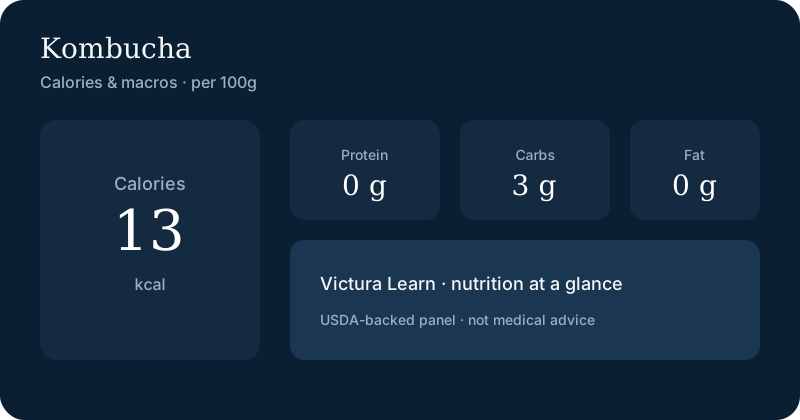
Where the calories come from
Per 100g · protein & carbs 4 kcal/g, fat 9 kcal/g
- Protein0 g · 0%
- Carbs3 g · 100%
- Fat0 g · 0%
Serving calculator
How much did you eat or drink — Kombucha?
13
Calories
0.0g
Protein
3.0g
Carbs
0.0g
Fat
Nutrition facts
per 100g · Source: USDA FoodData Central (seeded Phase 0)
13 kcal
Calories
Minerals
- Sodium: 5mg
Scientific explanation
Research-backed🥗 What Is Kombucha and What's in It?
Kombucha provides a fizzy, tart, low-calorie fermented drink made from sweet tea. A symbiotic culture of bacteria and yeast (often called a SCOBY) consumes most of the sugar, producing carbon dioxide, organic acids, and a small amount of alcohol. That is why finished kombucha tastes sour and only lightly sweet.
The commercial ready-to-drink kombucha measured by the USDA is mostly water, with a modest amount of carbohydrate and almost no protein or fat. The USDA panel lists 13 kcal, 3.0 g carbohydrate, 2.0 g total sugar, 0 g protein, 0 g fat, and 0 g fiber per 100 g (about 3.4 fl oz), with 5 mg sodium.
Nearly all of kombucha's calories come from the sugar the yeast leaves behind, not from the cultures themselves. A fully fermented, dry batch tastes sharply sour, while a sweet, fruity bottle may carry several times more sugar.
- 🫧 Fermentation byproducts: organic acids (acetic, gluconic, glucuronic), carbon dioxide, trace alcohol, and small, variable amounts of B vitamins and polyphenol metabolites.
- 🧾 Label words to know: 'raw' or 'unpasteurized' means live cultures may be present; 'pasteurized' usually means they are not.
- 💧 Water does the heavy lifting — kombucha is roughly 95% water, so calories per ounce stay very low.
🔥 How Many Calories Does Kombucha Have?
So how many calories does kombucha have? At 13 kcal per 100 g, it is one of the lightest fermented drinks you can buy — an 8 fl oz cup has about 31 calories, and even a full 16 oz bottle stays under 65 calories. The table below shows the USDA reference values per 100 g, per standard cup, and per common bottle size.
| Portion | Calories | Protein | Carbs | Fat | Fiber | Sugar |
|---|---|---|---|---|---|---|
| Per 100 g (≈3.4 fl oz) | 13 kcal | 0.0 g | 3.0 g | 0.0 g | 0.0 g | 2.0 g |
| 1 cup (8 fl oz / 240 mL ≈ 240 g) | 31 kcal | 0.0 g | 7.2 g | 0.0 g | 0.0 g | 4.8 g |
| 1 bottle (16 fl oz / 480 mL ≈ 480 g) | 62 kcal | 0.0 g | 14.4 g | 0.0 g | 0.0 g | 9.6 g |
Sodium is low too: 5 mg per 100 g (≈3.4 fl oz), about 12 mg per 8 fl oz cup (240 g), and about 24 mg in a 16 fl oz bottle (480 g) — a small fraction of the 2,300 mg daily limit for most adults.
- 📏 Serving math: many 16 fl oz bottles hold two servings, so a full bottle doubles the numbers printed on the label.
- 🏷️ Brand variation: the USDA value describes commercial ready-to-drink kombucha, but added juice, sweeteners, or extra fermentation change the totals.
- 🥤 Swap value: replacing one 12 fl oz soda (about 140 kcal) with a cup of kombucha saves roughly 110 calories.
🍞 Sugar, Carbs, and Glycemic Impact
Kombucha's carbohydrate content is small but not zero. The USDA panel lists 3.0 g total carbs and 2.0 g sugar per 100 g, which equals about 7.2 g carbs and 4.8 g sugar in an 8 fl oz cup (240 g), or 14.4 g carbs and 9.6 g sugar in a 16 oz bottle (480 g).
- 🧃 Plain, unflavored kombucha: sugar is whatever fermentation left behind, typically low per cup.
- 🍓 Flavored or juice-added kombucha: added fruit juice can multiply the sugar in a single bottle, so compare the 'total sugars' line per bottle.
- 🍸 Hard kombucha: added alcohol contributes about 7 kcal per gram on top of any remaining sugar.
No glycemic index value is published for kombucha in the USDA dataset, so it is listed as not established. With only 2 g sugar per 100 g, the glycemic load of one cup is likely small, but kombucha contains no fiber or protein to slow absorption. If you monitor blood sugar, treat kombucha as a carbohydrate-containing drink and check your own response.
Watch out: A flavored 16 oz bottle can carry far more sugar than the plain reference value suggests. Read the per-bottle total sugars, not the per-100 g figure.

✅ Probiotics and Gut Health: What the Evidence Shows
Kombucha is widely marketed as a probiotic, yet the human evidence remains thin. A systematic review of the empirical evidence on kombucha and human health concluded that well-controlled human trials are scarce and that health benefits in people are not established (Kapp & Sumner, Annals of Epidemiology, 2019).
- 🧫 Live cultures: raw, unpasteurized kombucha may contain yeasts and acetic-acid bacteria, but strains and counts vary widely between brands and batches.
- 🔬 Early research: small trials and animal studies report shifts in gut microbiota, blood glucose, and inflammation markers — interesting, but not proof of benefit.
- 🚫 What it is not: kombucha is not a replacement for a fiber-rich diet and cannot substitute for medical care of a digestive condition.
If a reliable probiotic dose is your goal, compare kombucha with kefir and plain yogurt, which have more standardized culture counts, plus protein and calcium.
🥗 Alcohol, Caffeine, and Safety Notes
Two things in kombucha deserve a closer look: alcohol and caffeine.
- 🍷 Alcohol: fermentation creates ethanol. Commercial kombucha is usually under 0.5% alcohol by volume, and in the US a product that reaches 0.5% ABV or higher must be regulated and labeled as an alcoholic beverage. Home-brewed kombucha is harder to control and can exceed that level.
- ⚡ Caffeine: because it is brewed from tea, kombucha contains some caffeine. The amount is not reported in the USDA panel and depends on the tea used and the fermentation time.
- 👶 Higher-risk groups: general clinical guidance advises that people who are pregnant or breastfeeding, young children, and anyone with a weakened immune system avoid or limit unpasteurized kombucha because of contamination, alcohol, and caffeine concerns.
- 🦷 Oral health: kombucha is acidic, so sipping it all day may contribute to enamel erosion.
🥄 How Much Kombucha Should You Drink Per Day?
There is no official daily recommendation for kombucha. A commonly used conservative approach is 4–8 fl oz (about 120–240 mL) per day, taken with a meal, with most people starting at 2–4 fl oz (60–120 mL) to gauge tolerance.
- 🥛 Start small: 2–4 fl oz (60–120 mL) for the first few days.
- 🍽️ Drink it with food: pairing it with a meal slows sipping and may reduce stomach discomfort.
- 🧊 Store it cold: an unrefrigerated bottle can keep fermenting, building pressure and alcohol.
- 🔍 Choose deliberately: look for 'raw' if you want live cultures, or a low-sugar label if you are limiting carbohydrates.
If you track your intake, log kombucha as a beverage with carbs and use the calorie calculator to see how it fits your daily target.
Community insights
Community insight🥗 How Members Log Kombucha
Anonymized Victura meal logs show kombucha is most often logged in the afternoon or alongside lunch, usually as a replacement for soda or sweetened iced tea. Members who log it consistently tend to treat it as a beverage with carbs rather than a free drink.
- ⏰ Most common log times: mid-afternoon (2–4 pm) and with lunch.
- 🥗 Most common reason logged: swapping out soda or sweet tea.
- 📏 Most common portion: one 16 oz bottle (480 g), which works out to about 62 kcal and 14.4 g carbs at the USDA reference values.
🥗 Pitfalls Members Report
- 🫧 Bloating: several members note discomfort when a large bottle is finished quickly, especially on an empty stomach.
- 🍬 Sugar surprises: flavored bottles often contain more sugar than members expect from a fermented drink.
- 💸 Cost: at roughly $3–4 per bottle, daily kombucha adds up, so many members alternate with plain sparkling water.
- 🌡️ Warm bottles: leaving kombucha unrefrigerated makes it fizzier and sharper-tasting over time.
🥗 Logging Tips for Better Accuracy
- Scan the barcode when you can — brands differ widely in sugar and calories.
- Log half a bottle if you drink half; 16 oz bottles usually hold two servings.
- Record the flavor so you can spot which ones push your daily sugar up.
- Pair it with a protein or fiber source if you use kombucha as an afternoon snack.
🥗 Community Favorites and Swaps
- 🍋 Ginger-lemon kombucha with a handful of almonds
- 🫐 Berry kombucha mixed 50/50 with sparkling water to lower sugar per glass
- 🥤 Kombucha in place of fountain soda at lunch
- 🥛 Kefir or plain yogurt when the goal is a more dependable probiotic dose
Exploring fermented options? See the fermented foods guide and compare with green tea for a lower-sugar, caffeine-containing alternative.
Pros
Cons
Best time to eat
Good windows
Consider avoiding
Diet compatibility
Weight loss
Friendly
Consult your healthcare provider for personalized guidance.
Keto
Friendly
Consult your healthcare provider for personalized guidance.
Diabetes
Friendly
Consult your healthcare provider for personalized guidance.
Frequently asked questions
People also ask
Is a kombucha healthy?
Yes — a kombucha is a whole food with measurable nutrients. Healthiness depends on overall diet, portions, and your goals.
Can I eat a kombucha every day?
Most people can include a kombucha daily as part of a balanced diet, as long as total calories and carbs fit their plan.
Are Kombuchas good for weight loss?
Kombuchas can fit a calorie-controlled diet when portions are measured.
How many calories are in a kombucha?
A typical medium serving of kombucha has about 13 calories, while 100g contains about 13 calories (USDA reference).
Are Kombuchas good before a workout?
Kombuchas can work before activity when you want easy carbs; pair a kombucha with protein if your session is long.
Are Kombuchas high in sugar?
Kombuchas contain about 2.0g sugar per 100g — mostly natural sugars when whole.
How many calories does kombucha have?
Using the USDA reference for commercial ready-to-drink kombucha, 100 g (about 3.4 fl oz) has 13 calories. That equals roughly 31 calories per 8 fl oz cup (240 g) and 62 calories in a 16 oz bottle (480 g). Flavored or juice-added brands can be higher, so check the label.
How much sugar is in kombucha?
The USDA reference lists 2.0 g sugar per 100 g, about 4.8 g per 8 fl oz cup (240 g) and 9.6 g per 16 oz bottle (480 g). Flavored or juice-added kombucha can contain considerably more, so compare the total sugars line per bottle.
Is kombucha healthy?
Kombucha is a low-calorie, low-sugar fermented drink and a reasonable swap for soda, but the human evidence for health benefits is limited. A 2019 systematic review found well-designed human trials are scarce and benefits are not established. It can be part of a healthy diet, not a substitute for one.
Is kombucha good for weight loss?
Kombucha is very low in calories — about 31 per cup — so it can replace higher-calorie drinks like soda. It has no fiber or protein, so it adds no satiety, and its carbs still count toward your daily total. Weight loss depends on overall energy balance, not one drink.
Can I drink kombucha every day?
Many people do. A common conservative amount is 4–8 fl oz (120–240 mL) daily, ideally with a meal. Start smaller to see how your digestion responds, and check with a clinician if you are pregnant, immunocompromised, or managing a medical condition.
Can I drink kombucha before a workout?
You can, but it is not an ideal pre-workout drink. One cup provides about 7 g carbs, no protein, and only about 12 mg sodium, which is little fuel or electrolyte support for hard training. It works better with meals or as a post-workout refreshment.
How we review this guide
- Written by
- Victura Nutrition Team
- Reviewed by
- Victura Editorial Review
- Reference sources
- 8
- Last updated
- Oct 14, 2026
References
- USDA FoodData Central — Kombucha tea, fermented (commercial ready-to-drink)(usda)
- NIH Office of Dietary Supplements — Probiotics fact sheet(nih_ods)
- WHO — Guideline: Sugars intake for adults and children(who)
- Kapp JM, Sumner W. Kombucha: a systematic review of the empirical evidence of human health benefit. Annals of Epidemiology, 2019(pubmed)
- Mayo Clinic — Nutrition and healthy eating: fermented drinks and kombucha safety guidance(mayo_clinic)
- Victura — Anonymized kombucha meal-log patterns(victura)
Ready to track your meals with AI?
Victura scans your plate, logs macros automatically, and coaches you toward your goals — halal, keto, diabetic-friendly, and more.