
Almond Milk Nutrition Facts
Calories, protein, carbs, calcium, and how unsweetened almond milk fits everyday diets.
Written by Victura Nutrition TeamReviewed by Victura Editorial ReviewLast updated Oct 21, 2026
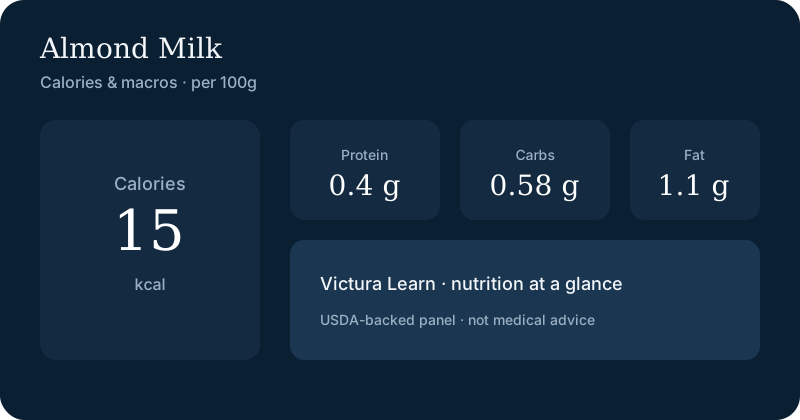
15
Calories
0.4g
Protein
0.6g
Carbs
Generally yes
Is it healthy?
per 100g · per panel values
Track this food in VicturaQuick answer
A cup of almond milk contains around 36 calories, while 100g contains about 15 calories. Per 100g you get about 0.58g carbs and 0.4g protein.
Almond Milk is a whole food with approximately 15 calories per 100g, tracked in Victura for macro-aware meal logging.
- Calories (cup)
- 36 kcal
- Calories (100g)
- 15 kcal
- Carbs (100g)
- 0.58g
- Protein (100g)
- 0.4g
- Serving reference
- 240g · cup
Key takeaways
- Unsweetened almond milk has about 36 calories per 1 cup (240 g).
- It is very low in protein, with about 1 g per cup (240 g).
- Fortified versions can supply calcium and vitamin E; check the label.
- Unsweetened almond milk fits keto and low-sugar diets.
- Not suitable for people with almond or tree nut allergies.

Where the calories come from
Per 100g · protein & carbs 4 kcal/g, fat 9 kcal/g
- Protein0.4 g · 11.6%
- Carbs0.6 g · 16.8%
- Fat1.1 g · 71.6%
Serving calculator
How much did you eat or drink — Almond Milk?
15
Calories
0.4g
Protein
0.6g
Carbs
1.1g
Fat
Nutrition facts
per 100g · Source: USDA FoodData Central (seeded Phase 0)
15 kcal
Calories
Vitamins
- Vitamin E: 2.81mg
Minerals
- Calcium: 188mg
Scientific explanation
Research-backedAlmond Milk provides about 36 calories and 0.96 g protein per 1 cup (8 fl oz; 240 ml; 240 g), or 15 calories and 0.4 g protein per 100 g (3.5 oz). This USDA panel describes unsweetened, shelf-stable almond milk, so sweetened, flavored, and barista-style products can differ substantially. The table below shows a calculated 1-cup serving and the panel values per 100 g.
🔥 Calories and serving size
At 15 kcal per 100 g (3.5 oz), unsweetened almond milk is one of the lowest-calorie plant milks. A typical 1-cup serving (8 fl oz; 240 ml; 240 g) supplies about 36 kcal, which is less than many sodas, juices, and sweetened coffee drinks. Because the panel is per 100 g, using a food scale or measuring cup matters when you track calories.
| Nutrient | Per 1 cup (8 fl oz; 240 ml; 240 g; calculated) | Per 100 g (3.5 oz) |
|---|---|---|
| Calories | 36 kcal | 15 kcal |
| Protein | 0.96 g | 0.4 g |
| Carbs | 1.39 g | 0.58 g |
| Fat | 2.64 g | 1.1 g |
| Fiber | 0.48 g | 0.2 g |
| Sugar | 0.0 g | 0.0 g |
| Calcium | 451 mg | 188 mg |
| Vitamin E | 6.74 mg | 2.81 mg |
💪 Protein, carbs, fat, and fiber
Protein is the main limitation: 0.4 g per 100 g (3.5 oz) and about 1 g per cup (240 g). Carbs are also low at 0.58 g per 100 g (3.5 oz), or about 1.4 g per cup (240 g), with 0.2 g fiber per 100 g (3.5 oz) and 0 g sugar. Fat is 1.1 g per 100 g (3.5 oz), or about 2.6 g per cup (240 g), and it comes from the almonds used to make the drink.
Because protein and fiber are low, almond milk is not a satiety powerhouse on its own. It works better as a low-calorie base for coffee, cereal, smoothies, and oatmeal than as a stand-alone meal. If you need lasting energy, pair it with foods that add protein, fiber, or healthy fats.

💊 Calcium, vitamin E, and fortification
This panel lists 188 mg calcium per 100 g (3.5 oz), or about 451 mg per 1 cup (240 g; roughly 35% DV), plus 2.81 mg vitamin E per 100 g (3.5 oz), or about 6.7 mg per cup (240 g; roughly 45% DV). Those numbers reflect the specific product in the USDA database; fortification levels vary by brand and region. Shake the carton before pouring, because added minerals can settle.
If you use almond milk as your main dairy alternative, look for a product labeled fortified with calcium and vitamin D. Almond milk is not a natural protein substitute for dairy milk, so check the protein line as well. For people with almond or tree nut allergies, almond milk is not an appropriate choice.
🍞 Weight loss, keto, and blood sugar
Unsweetened almond milk fits keto-style eating because it has very few net carbs: about 0.9 g net carbs per cup (240 g) when you subtract fiber from total carbs. It is also low in sugar, which is helpful for blood-sugar-focused eating, but the panel does not provide a glycemic index. For weight loss, the calorie savings are real, but low protein and low fiber mean it may not curb hunger as well as higher-protein foods. Use it as a tool, not a meal replacement, and measure portions if you are tracking calories closely.
🥛 How to choose and use it
Choose unsweetened, unflavored almond milk when you want the lowest sugar and calorie option. Look for a label that states calcium and vitamin D fortification if you are using it as a dairy alternative. Use it in coffee, smoothies, oatmeal, and cereal, but pair it with protein-rich foods such as eggs, yogurt, tofu, or beans if you need a filling meal.
- Check the label for 'unsweetened' and 'fortified.'
- Compare added sugar, protein, calcium, and vitamin D.
- Measure portions if you track calories.
- Avoid it if you have an almond or tree nut allergy.
Bottom line: Unsweetened almond milk is a low-calorie, low-sugar drink with useful calcium and vitamin E when fortified, but it is not a protein substitute for dairy or soy milk.
Community insights
Community insightAlmond milk is popular because it is mild, pourable, and easy to keep in the fridge or pantry. In everyday routines, people use it less as a stand-alone drink and more as a base for coffee, cereal, smoothies, and oatmeal. The practical question is usually which carton to buy and how to make it satisfying.
🥛 Coffee and breakfast routines
Unsweetened almond milk is a common choice for coffee because it adds little sugar and few calories. It can look thin and may curdle in very acidic coffee, so barista-style versions are often preferred for lattes. For cereal and oatmeal, it works best when you add protein and fiber elsewhere in the meal.
- Use barista-style for foaming if texture matters.
- Add nuts, seeds, or Greek yogurt for staying power.
- Choose unsweetened for coffee and tea.
🥛 Smoothies, cereal, and cooking
In smoothies, almond milk contributes liquid and a little creaminess without dominating flavor. It can replace dairy milk in many recipes, but batters and sauces may need extra protein or fat for structure. Because it is low in protein, it is not a one-for-one swap in high-protein recipes.
- Blend with fruit, protein powder, or yogurt.
- Use in oatmeal and chia pudding.
- Check unsweetened vs sweetened for added sugar.
🥛 Label-reading tips from the community
Common label mistakes are choosing flavored almond milk and assuming it is as high in protein as dairy milk. Another is skipping fortified options and then missing calcium and vitamin D that dairy would have supplied. A quick label check takes seconds and prevents most surprises.
- Scan added sugar first.
- Confirm calcium and vitamin D.
- Compare protein per cup.
- Check for almond or tree nut warnings if allergies are a concern.
⚖️ Fitness and weight-loss routines
People watching calories often use unsweetened almond milk to lighten coffee or smoothies. It can help reduce liquid calories, but it is not a meal replacement because it has little protein and fiber. For workouts, pair it with a carbohydrate and protein source rather than relying on it alone.
If you are comparing almond milk with oat milk or dairy milk, use the Nutrition Facts panel rather than assumptions. Added sugar, protein, calcium, and vitamin D can vary widely between products. The best carton is the one that fits your allergy needs, taste, budget, and overall diet.
Pros
Cons
Best time to eat
Good windows
Consider avoiding
Diet compatibility
Weight loss
Friendly
Consult your healthcare provider for personalized guidance.
Keto
Friendly
Consult your healthcare provider for personalized guidance.
Diabetes
Friendly
Consult your healthcare provider for personalized guidance.
Frequently asked questions
People also ask
Is almond milk healthy?
Yes — almond milk is a whole food with measurable nutrients. Healthiness depends on overall diet, portions, and your goals.
Can I eat almond milk every day?
Most people can include almond milk daily as part of a balanced diet, as long as total calories and carbs fit their plan.
Are almond milk good for weight loss?
Almond milk can fit a calorie-controlled diet when portions are measured.
How many calories are in almond milk?
A typical medium serving of almond milk has about 15 calories, while 100g contains about 15 calories (USDA reference).
Are almond milk good before a workout?
Almond milk can work before activity when you want easy carbs; pair almond milk with protein if your session is long.
Are almond milk high in sugar?
Almond milk contain about 0.0g sugar per 100g — mostly natural sugars when whole.
Can I drink almond milk every day?
Yes, for most people unsweetened almond milk can be consumed daily as part of a balanced diet. Choose a fortified version if you rely on it for calcium or vitamin D, and include other protein sources such as beans, eggs, yogurt, tofu, or meat. Vary plant milks if you want a broader nutrient mix.
Is almond milk good for weight loss?
It can help lower calorie intake when it replaces higher-calorie drinks, since 1 cup (240 g) has about 36 calories. It has little protein and fiber, so it may not keep you full on its own. Use measured portions as part of a balanced plan with protein-rich meals.
Is almond milk good before a workout?
Unsweetened almond milk is low in calories and protein, so it is not ideal as a sole pre-workout drink. Pair it with a banana, oats, toast, or a protein-containing food if you need fuel. Some athletes prefer dairy or soy milk for extra protein.
Is almond milk high in sugar?
Unsweetened almond milk has 0 g sugar per 100 g (3.5 oz) and about 0 g per cup (240 g) in this panel. Sweetened, flavored, and chocolate almond milk can contain added sugar, so look for 'unsweetened' on the carton and read the Nutrition Facts.
How much protein is in almond milk?
This panel lists 0.4 g protein per 100 g (3.5 oz), or about 1 g per cup (240 g). That is much lower than dairy milk or soy milk. If protein is a priority, pair almond milk with eggs, yogurt, tofu, beans, or a protein supplement.
Is almond milk keto-friendly?
Yes, unsweetened almond milk is generally keto-friendly. This panel has 0.58 g carbs and 0.2 g fiber per 100 g (3.5 oz), or about 0.9 g net carbs per cup (240 g). Sweetened or flavored versions may add sugar and should be checked.
How we review this guide
- Written by
- Victura Nutrition Team
- Reviewed by
- Victura Editorial Review
- Reference sources
- 6
- Last updated
- Oct 21, 2026
References
- USDA FoodData Central — Beverages, almond milk, unsweetened, shelf stable (FDC ID 174832)(usda)
- NIH Office of Dietary Supplements — Calcium Fact Sheet for Health Professionals(nih_ods)
- NIH Office of Dietary Supplements — Vitamin E Fact Sheet for Health Professionals(nih_ods)
- Mayo Clinic — Tree nut allergy: Symptoms and causes(mayo_clinic)
Ready to track your meals with AI?
Victura scans your plate, logs macros automatically, and coaches you toward your goals — halal, keto, diabetic-friendly, and more.