
Coconut Oil Nutrition Facts
Complete coconut oil nutrition breakdown with 862 kcal per 100g, glycemic index, and diet compatibility.
Written by Victura Nutrition TeamReviewed by Victura Editorial ReviewLast updated Aug 10, 2026
862
Calories
0.0g
Protein
0.0g
Carbs
Use caution
Is it healthy?
per 100g · per panel values
Track this food in VicturaQuick answer
A 100g serving of coconut oil provides about 862 kcal. Per 100g you get about 0g carbs and 0g protein.
Coconut Oil is a whole food with approximately 862 calories per 100g, tracked in Victura for macro-aware meal logging.
- Calories (100g serving)
- 862 kcal
- Carbs (100g)
- 0.0g
- Protein (100g)
- 0.0g
- Serving reference
- 100g · 100g serving

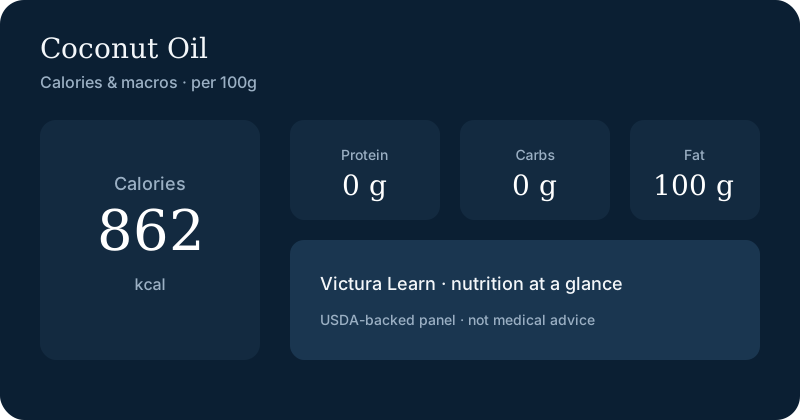
Where the calories come from
Per 100g · protein & carbs 4 kcal/g, fat 9 kcal/g
- Protein0 g · 0%
- Carbs0 g · 0%
- Fat100 g · 100%
Serving calculator
How much did you eat or drink — Coconut Oil?
862
Calories
0.0g
Protein
0.0g
Carbs
100.0g
Fat
Nutrition facts
per 100g · Source: USDA FoodData Central (seeded Phase 0)
862 kcal
Calories
Scientific explanation
Research-backedCoconut Oil provides approximately 862 kcal per 100g with 0.0g protein, 0.0g carbohydrates, and 100.0g fat. Sourced from USDA FoodData Central, these values reflect a pure lipid profile devoid of water, proteins, or carbohydrates. The primary interest in coconut oil from a metabolic perspective centers on its unique fatty acid composition. Unlike most plant-derived oils which are rich in long-chain fatty acids (LCFAs), coconut oil contains a high concentration of medium-chain fatty acids (MCFAs), specifically lauric acid (which makes up about 49% of its total fat content), myristic acid, and palmitic acid. MCFAs are absorbed directly into the portal vein and transported straight to the liver, where they are rapidly oxidized for energy rather than stored as adipose tissue. This rapid metabolic pathway mimics carbohydrate oxidation to some extent, providing a quick source of cellular energy. However, it is crucial to note that coconut oil is highly saturated—approximately 82% to 90% of its fats are saturated. While historical dietary guidelines recommended strict limitation of all saturated fats due to cardiovascular disease (CVD) risks, modern nutritional science presents a more nuanced view. Research indicates that while coconut oil raises low-density lipoprotein (LDL) cholesterol, it also simultaneously increases high-density lipoprotein (HDL) cholesterol. The clinical implications of this dual elevation remain a subject of ongoing scientific debate, and individuals with pre-existing cardiovascular risk factors or hyperlipidemia should consult healthcare professionals. From a culinary standpoint, coconut oil has a moderate smoke point of approximately 177°C (350°F) for unrefined varieties and up to 232°C (450°F) for refined versions, making it highly stable for baking and medium-heat cooking without undergoing rapid oxidation.

Community insights
Community insightAmong Victura meal logs, coconut oil appears frequently as a versatile staple in low-carbohydrate, ketogenic, and paleo dietary patterns. Our community insights show that users most commonly log coconut oil as an addition to morning coffee (often referred to as 'bulletproof coffee') or as a primary fat source in homemade keto fat bombs and protein bars. Many users report that incorporating a tablespoon of coconut oil into their morning routine helps promote a sustained feeling of satiety and prevents mid-morning energy crashes, particularly when transitioning into a state of nutritional ketosis. However, experienced trackers within the Victura community emphasize the importance of strict portion control. Because a single tablespoon (approximately 13.6 grams) contains roughly 117 to 120 calories, it is incredibly easy to overshoot daily caloric targets if the oil is poured directly from the jar without measuring. Additionally, some users note that consuming coconut oil on an empty stomach can occasionally cause mild gastrointestinal discomfort or nausea; they recommend starting with small doses (such as half a teaspoon) and gradually increasing the portion size, or pairing it with solid foods like roasted vegetables or protein-rich dishes to ease digestion.
Pros
- Rich in medium-chain triglycerides (MCTs) for rapid energy
- Highly heat-stable with a high smoke point, ideal for cooking
- Completely free of carbohydrates, sugars, and gluten
Cons
- Extremely calorie-dense, requiring strict portion control
- High in saturated fats, which may affect blood lipid profiles in some individuals
- Lacks essential vitamins, minerals, and dietary fiber
Best time to eat
Best consumed in measured amounts before workouts or integrated into balanced meals to support satiety.
Good windows
- Pre-workout for quick energy
- With breakfast to promote morning satiety
Consider avoiding
- Excessive portions late at night
- Unmeasured quantities directly from the jar
Diet compatibility
Weight loss
Use caution
At 862 kcal and 0.0g fiber per 100g, this food is energy-dense - watch portions.
Keto
Friendly
Net carbs ~0.0g per 100g - compatible with strict keto.
Diabetic friendly
Friendly
GI N/A with 0.0g sugar - generally blood-sugar friendly in moderation.
Frequently asked questions
People also ask
Is a coconut oil healthy?
Yes — a coconut oil is a whole food with measurable nutrients. Healthiness depends on overall diet, portions, and your goals.
Can I eat a coconut oil every day?
Most people can include a coconut oil daily as part of a balanced diet, as long as total calories and carbs fit their plan.
Are Coconut Oils good for weight loss?
At 862 kcal and 0.0g fiber per 100g, this food is energy-dense - watch portions.
How many calories are in a coconut oil?
A typical medium serving of coconut oil has about 862 calories, while 100g contains about 862 calories (USDA reference).
Are Coconut Oils good before a workout?
Coconut oils can work before activity when you want easy carbs; pair a coconut oil with protein if your session is long.
Are Coconut Oils high in sugar?
Coconut oils contain about 0.0g sugar per 100g — mostly natural sugars when whole.
Is coconut oil good for weight loss?
At 862 kcal and 0.0g fiber per 100g, this food is energy-dense, so watching portions is critical. While the MCTs in coconut oil may offer minor metabolic benefits by increasing thermogenesis, these effects are small. To successfully lose weight, coconut oil should be used as a replacement for other dietary fats rather than as an addition to your current diet, ensuring you remain in a caloric deficit.
Is coconut oil keto-friendly?
Yes, coconut oil is highly keto-friendly. With net carbs at 0.0g per 100g, it is one of the most compatible fat sources for strict ketogenic diets. The medium-chain fatty acids in coconut oil are readily converted by the liver into ketones, which serve as an alternative energy source for the brain and muscles when carbohydrate intake is restricted. It helps keto-adapted individuals maintain stable energy levels throughout the day.
What is the glycemic index of coconut oil?
The estimated glycemic index (GI) of coconut oil is 0. Because it contains zero carbohydrates, sugars, or starches, it does not trigger an insulin response or affect blood glucose levels. When consumed alongside carbohydrate-rich foods, the fat in coconut oil can actually help slow down gastric emptying, which blunts the overall glycemic impact of the meal and prevents rapid blood sugar spikes.
Is coconut oil safe for people with diabetes?
Yes, coconut oil is generally safe for people with diabetes because it has a glycemic index of zero and contains 0.0g of sugar, meaning it will not raise blood glucose levels. However, individuals with diabetes are at a higher statistical risk for cardiovascular complications, so the high saturated fat content of coconut oil should be balanced carefully with heart-healthy monounsaturated and polyunsaturated fats.
How many calories does coconut oil have?
Coconut oil contains 862 calories (kcal) per 100g. A standard single tablespoon serving (approximately 13.6g) provides about 117 to 120 calories, which come entirely from fat. Because it is a pure lipid source, it is one of the most calorically dense foods available, requiring careful tracking for those managing their daily energy intake.
How we review this guide
- Written by
- Victura Nutrition Team
- Reviewed by
- Victura Editorial Review
- Reference sources
- 4
- Last updated
- Aug 10, 2026
References
Ready to track your meals with AI?
Victura scans your plate, logs macros automatically, and coaches you toward your goals — halal, keto, diabetic-friendly, and more.