
Oats Nutrition Facts
Complete oats nutrition breakdown with 389 kcal per 100g, glycemic index, and diet compatibility.
Written by Victura Nutrition TeamReviewed by Victura Editorial ReviewLast updated Aug 9, 2026
389
Calories
16.9g
Protein
66.3g
Carbs
Use caution
Is it healthy?
per 100g · per panel values
Track this food in VicturaQuick answer
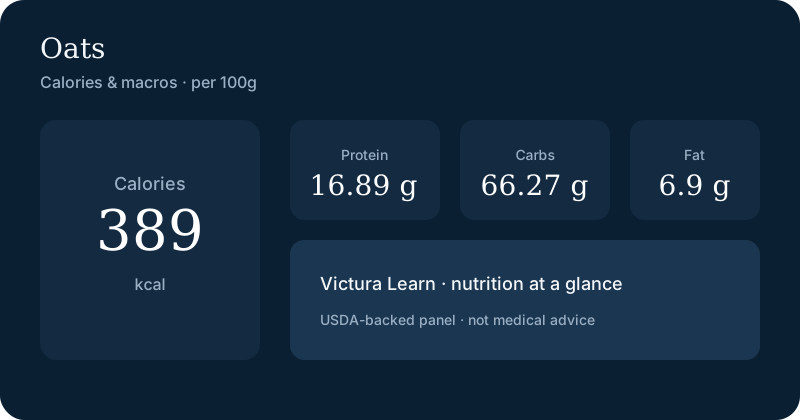
A half cup dry of oats contains around 156 calories, while 100g contains about 389 calories. Per 100g you get about 66.27g carbs and 16.89g protein. Glycemic index is around 55.
Oats is a whole food with approximately 389 calories per 100g, tracked in Victura for macro-aware meal logging.
- Calories (half cup dry)
- 156 kcal
- Calories (100g)
- 389 kcal
- Carbs (100g)
- 66.27g
- Protein (100g)
- 16.89g
- Serving reference
- 40g · half cup dry
- Glycemic index
- 55

Where the calories come from
Per 100g · protein & carbs 4 kcal/g, fat 9 kcal/g
- Protein16.9 g · 17.1%
- Carbs66.3 g · 67.2%
- Fat6.9 g · 15.7%
Serving calculator
How much did you eat or drink — Oats?
389
Calories
16.9g
Protein
66.3g
Carbs
6.9g
Fat
Nutrition facts
per 100g · Source: USDA FoodData Central (seeded Phase 0)
389 kcal
Calories
Minerals
- Magnesium: 177mg
Scientific explanation
Research-backedOats provides a robust nutritional profile that makes it a staple in health-conscious diets worldwide. According to USDA FoodData Central, a 100g serving of raw oats delivers 389 calories, 16.89g of high-quality plant-based protein, 66.27g of carbohydrates, and 6.9g of total fats. This macronutrient distribution is highly favorable compared to other cereal grains, particularly due to its elevated protein and healthy fat content. One of the standout features of oats is its dietary fiber profile. It contains 10.6g of fiber per 100g, a significant portion of which consists of beta-glucan, a highly viscous soluble fiber. Peer-reviewed clinical trials consistently demonstrate that beta-glucan forms a gel-like substance in the digestive tract. This gel delays gastric emptying and slows down the absorption of glucose into the bloodstream, contributing to its moderate glycemic index (GI) of approximately 55. This moderate GI rating means oats provide sustained energy release rather than rapid blood sugar spikes, making them a valuable carbohydrate source for metabolic health. In terms of micronutrients, oats are exceptionally rich in essential minerals. A 100g serving provides 177mg of Magnesium, which fulfills approximately 42% of the daily recommended value. Magnesium plays a critical role in over 300 enzymatic reactions in the human body, including glycolysis, muscle contraction, and insulin sensitivity. Additionally, oats contain notable amounts of phosphorus, iron, zinc, and B-vitamins (such as thiamine and folate), which support cellular energy production and overall neurological function. The lipid profile of oats is primarily composed of unsaturated fatty acids, including oleic and linoleic acids, which support cardiovascular health. Furthermore, oats contain unique antioxidant compounds known as avenanthramides. These polyphenols have been shown in clinical studies to exhibit anti-inflammatory properties, while also aiding in the production of nitric oxide, which helps dilate blood vessels and improve systemic circulation. When incorporating oats into a structured dietary regimen, understanding these biochemical properties allows for precise macronutrient targeting and optimal physiological outcomes.

Community insights
Community insightWithin the Victura user ecosystem, oats is one of the most frequently logged whole-food carbohydrates, prized for its versatility, cost-effectiveness, and preparation simplicity. Anonymized meal log data indicates that oats are predominantly consumed during breakfast hours, though a growing cohort of active users utilizes them as a pre- or post-workout fuel source. A common pattern observed in community logs is the customization of preparation methods to match specific glycemic and digestive preferences. While traditional warm oatmeal remains popular, 'overnight oats'—where raw oats are soaked in liquid overnight—have surged in popularity due to convenience. Interestingly, users who consume soaked or raw oats blended into smoothies frequently report sustained satiety levels. However, community feedback also highlights a critical metabolic nuance: eating oats in isolation, particularly instant or highly processed varieties, can sometimes lead to premature hunger or mild energy fluctuations in sensitive individuals. To counteract this, experienced Victura users frequently employ 'macronutrient pairing' strategies. By combining oats with high-quality protein sources (such as whey isolate, collagen peptides, or Greek yogurt) and healthy fats (such as almond butter, chia seeds, or flaxseeds), users successfully blunt the glycemic response. This pairing strategy aligns with clinical recommendations to optimize satiety hormones like peptide YY and GLP-1, ensuring that the energy derived from oats is released steadily over several hours.
Pros
- Oats is a whole food with measurable macro nutrients
- Rich in beta-glucan soluble fiber which supports heart health
- Excellent source of magnesium (42% DV per 100g)
Cons
- Portion size still matters for calorie goals
- Too high in carbohydrates for strict ketogenic diets
Best time to eat
Pair with protein and fiber for balanced meals.
Good windows
- With main meals
- Pre-workout (1.5 to 2 hours before training)
Consider avoiding
- Very large portions without activity
Diet compatibility
Weight loss
Use caution
At 389 kcal and 10.6g fiber per 100g, this food is energy-dense - watch portions.
Keto
Use caution
Net carbs ~55.7g per 100g - too high-carb for standard keto.
Diabetic friendly
Friendly
GI 55 with 1.0g sugar - generally blood-sugar friendly in moderation.
Frequently asked questions
People also ask
Is oats healthy?
Yes — oats is a whole food with measurable nutrients. Healthiness depends on overall diet, portions, and your goals. Estimated GI is 55.
Can I eat oats every day?
Most people can include oats daily as part of a balanced diet, as long as total calories and carbs fit their plan.
Are oats good for weight loss?
At 389 kcal and 10.6g fiber per 100g, this food is energy-dense - watch portions.
How many calories are in oats?
A typical medium serving of oats has about 389 calories, while 100g contains about 389 calories (USDA reference).
Are oats good before a workout?
Oats can work before activity when you want easy carbs; pair oats with protein if your session is long.
Are oats high in sugar?
Oats contain about 1.0g sugar per 100g — mostly natural sugars when whole.
Is oats keto-friendly?
No, oats are not considered keto-friendly. With approximately 66.27g of total carbohydrates and 55.67g of net carbohydrates per 100g, a single standard serving of oats would likely exceed the daily carbohydrate limit required to maintain nutritional ketosis (typically under 20g to 50g of net carbs per day). Those following a strict ketogenic diet should look for low-carb alternatives such as hemp hearts, chia seeds, or flaxseed-based warm cereals.
What is the glycemic index of oats?
The glycemic index (GI) of whole rolled oats is estimated to be approximately 55, placing it at the low-to-medium boundary. This means it has a moderate impact on blood glucose levels compared to refined grains. The glycemic response can be further optimized by choosing steel-cut oats (which have a lower GI due to less processing) and by pairing your oats with healthy fats, fiber, or protein, which slows down digestion and glucose absorption.
Is oats safe for people with diabetes?
Yes, oats are generally safe and highly beneficial for individuals with diabetes when consumed in controlled portions. The soluble fiber beta-glucan helps improve insulin sensitivity and blunts postprandial blood glucose spikes. To manage diabetes effectively, opt for minimally processed steel-cut or rolled oats instead of instant varieties, keep portions moderate, and always pair them with a protein or healthy fat to minimize glycemic impact.
How we review this guide
- Written by
- Victura Nutrition Team
- Reviewed by
- Victura Editorial Review
- Reference sources
- 4
- Last updated
- Aug 9, 2026
References
Ready to track your meals with AI?
Victura scans your plate, logs macros automatically, and coaches you toward your goals — halal, keto, diabetic-friendly, and more.