
Walnuts Nutrition Facts
Complete walnuts nutrition breakdown with 654 kcal per 100g, glycemic index, and diet compatibility.
Written by Victura Nutrition TeamReviewed by Victura Editorial ReviewLast updated Jul 18, 2026
654
Calories
15.2g
Protein
13.7g
Carbs
Use caution
Is it healthy?
per 100g · per panel values
Track this food in VicturaQuick answer
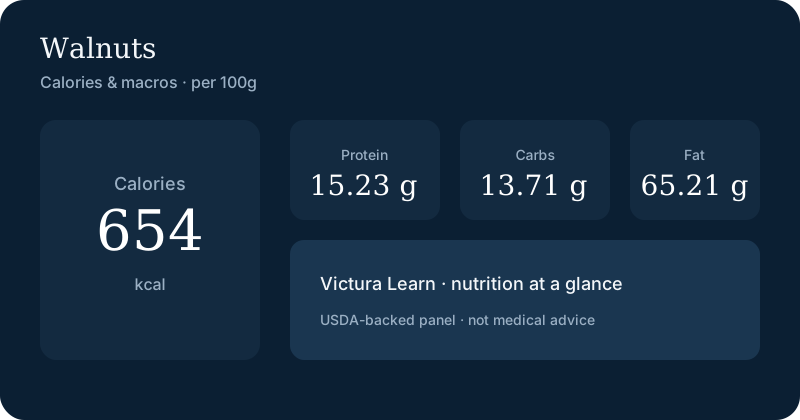
A 100g serving of walnuts provides about 654 kcal. Per 100g you get about 13.71g carbs and 15.23g protein. Glycemic index is around 15.
Walnuts is a whole food with approximately 654 calories per 100g, tracked in Victura for macro-aware meal logging.
- Calories (100g serving)
- 654 kcal
- Carbs (100g)
- 13.71g
- Protein (100g)
- 15.23g
- Serving reference
- 100g · 100g serving
- Glycemic index
- 15

Where the calories come from
Per 100g · protein & carbs 4 kcal/g, fat 9 kcal/g
- Protein15.2 g · 8.7%
- Carbs13.7 g · 7.8%
- Fat65.2 g · 83.5%
Serving calculator
How much did you eat or drink — Walnuts?
654
Calories
15.2g
Protein
13.7g
Carbs
65.2g
Fat
Nutrition facts
per 100g · Source: USDA FoodData Central (seeded Phase 0)
654 kcal
Calories
Minerals
- Manganese: 3.41mg
Scientific explanation
Research-backedWalnuts provides approximately 654 kcal per 100g with 15.23g protein, 13.71g carbohydrates, and 65.21g fat. Dietary fiber is 6.7g per 100g. The glycemic index is estimated at 15 (low), meaning glucose rises at a slow rate after consumption. Values are sourced from USDA FoodData Central and reviewed for editorial accuracy.

Community insights
Community insightAmong Victura meal logs, walnuts appears frequently as a portable snack, salad topper, and smoothie ingredient. Users pairing it with yogurt, oatmeal, or fresh fruit report steadier energy levels and prolonged satiety compared to eating high-carbohydrate snacks alone on an empty stomach. Many in the Victura community utilize walnuts as a strategic tool for portion-controlled healthy fat intake, often pre-portioning them into 1-ounce (28g) silicone bags to prevent mindless overeating. Culinary logs show that lightly toasting walnuts enhances their earthy flavor profile without significantly degrading their heat-sensitive omega-3 fatty acids, provided the temperature is kept moderate. In plant-based and keto meal plans, walnuts are frequently ground into a rustic pesto or used as a meat alternative in taco fillings, showcasing their incredible culinary versatility and high nutritional density.
Pros
- Walnuts is a whole food with measurable macro nutrients
- Rich in plant-based omega-3 fatty acids (ALA)
- Excellent source of manganese and essential minerals
- Very low glycemic index (15), diabetic-friendly
Cons
- Portion size still matters for calorie goals
- High calorie density requires careful tracking
Best time to eat
Pair with protein and fiber for balanced meals, or consume as a portion-controlled snack between meals.
Good windows
- With main meals
- 1-2 hours before endurance exercise
Consider avoiding
- Very large portions without activity
- Immediately before intense high-intensity workouts
Diet compatibility
Weight loss
Use caution
At 654 kcal and 6.7g fiber per 100g, this food is energy-dense - watch portions.
Keto
Friendly
Net carbs ~7.01g per 100g - compatible with strict keto.
Diabetic friendly
Friendly
GI 15 with 2.61g sugar - generally blood-sugar friendly in moderation.
Frequently asked questions
People also ask
Is a walnuts healthy?
Yes — a walnuts is a whole food with measurable nutrients. Healthiness depends on overall diet, portions, and your goals. Estimated GI is 15.
Can I eat a walnuts every day?
Most people can include a walnuts daily as part of a balanced diet, as long as total calories and carbs fit their plan.
Are Walnutses good for weight loss?
At 654 kcal and 6.7g fiber per 100g, this food is energy-dense - watch portions.
How many calories are in a walnuts?
A typical medium serving of walnuts has about 654 calories, while 100g contains about 654 calories (USDA reference).
Are Walnutses good before a workout?
Walnutses can work before activity when you want easy carbs; pair a walnuts with protein if your session is long.
Are Walnutses high in sugar?
Walnutses contain about 2.6g sugar per 100g — mostly natural sugars when whole.
Is a walnut healthy?
Yes, walnuts are highly nutritious whole foods packed with essential nutrients. They are rich in heart-healthy polyunsaturated fats, including plant-based omega-3 fatty acids (alpha-linolenic acid), which support cardiovascular and brain health. They also provide dietary fiber, plant protein, and essential minerals like manganese. However, because they are highly energy-dense, their healthiness in your specific diet depends on portion control and how they fit into your overall daily caloric and macronutrient goals.
Can I eat walnuts every day?
Yes, you can eat walnuts every day as part of a balanced diet. A daily serving of about 1 ounce (28 grams, or roughly 12 to 14 halves) provides a steady supply of essential fatty acids, fiber, and antioxidants without contributing to excessive calorie intake. Daily consumption has been linked in clinical studies to improved cholesterol profiles and better endothelial function. Just ensure you adjust your overall calorie intake to accommodate the 183 calories per serving.
Are walnuts good for weight loss?
Yes, walnuts can be highly beneficial for weight loss when consumed in moderation. Although they are energy-dense at 654 kcal per 100g, their high protein (15.23g) and fiber (6.7g) content promotes satiety by stimulating the release of hunger-suppressing hormones like peptide YY. This helps reduce overall calorie intake throughout the day. The key is strict portion control; measuring out a single 1-ounce serving prevents accidental overconsumption while keeping you full.
How many calories are in a walnut?
A single whole walnut kernel (about 2 grams) contains approximately 13 to 15 calories. A standard 1-ounce (28-gram) serving, which is about 12 to 14 halves, contains approximately 183 calories. For larger quantities, 100 grams of walnuts provides 654 calories. Knowing these portion sizes helps you easily track your energy intake whether you are grabbing a quick handful or adding them to a recipe.
Are walnuts good before a workout?
Walnuts can be a good pre-workout option, but timing is key. Because they are high in fats (65.21g per 100g) and fiber, they digest slowly. Eating them immediately before exercise might cause gastrointestinal discomfort. However, consuming a small portion of walnuts paired with a fast-acting carbohydrate (like a banana or dried fruit) 1 to 2 hours before your workout provides sustained, slow-release energy that is ideal for long-endurance training sessions.
Are walnuts high in sugar?
No, walnuts are exceptionally low in sugar, containing only about 2.61g of total sugar per 100g. This sugar is entirely natural and is bound within a complex matrix of fiber and healthy fats. This minimal sugar content, combined with a low glycemic index of 15, ensures that eating walnuts will not cause rapid spikes or crashes in blood glucose levels, making them an ideal snack for blood sugar management.
How we review this guide
- Written by
- Victura Nutrition Team
- Reviewed by
- Victura Editorial Review
- Reference sources
- 4
- Last updated
- Jul 18, 2026
References
Ready to track your meals with AI?
Victura scans your plate, logs macros automatically, and coaches you toward your goals — halal, keto, diabetic-friendly, and more.