
Pumpkin Seeds Nutrition Facts
A comprehensive, evidence-based guide to the calories, macronutrients, and health benefits of pumpkin seed kernels.
Written by Victura Nutrition TeamReviewed by Victura Editorial ReviewLast updated Aug 26, 2026
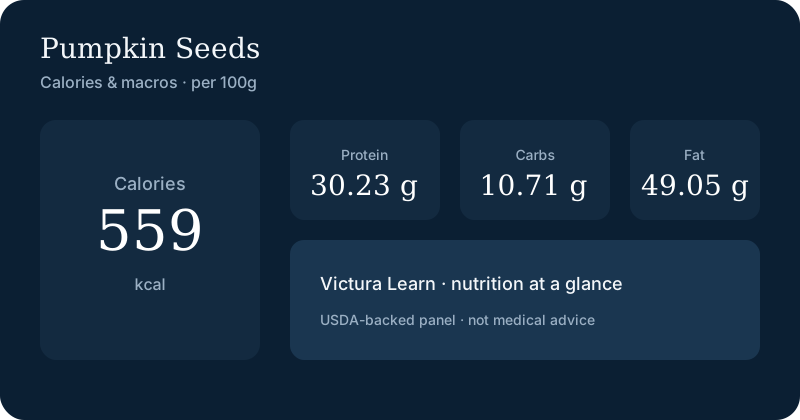
559
Calories
30.2g
Protein
10.7g
Carbs
Generally yes
Is it healthy?
per 100g · per panel values
Track this food in VicturaQuick answer
A 30g serving of pumpkin seeds contains around 168 calories, while 100g contains about 559 calories. Per 100g you get about 10.71g carbs and 30.23g protein. Glycemic index is around 15.
Pumpkin Seeds is a whole food with approximately 559 calories per 100g, tracked in Victura for macro-aware meal logging.
- Calories (30g serving)
- 168 kcal
- Calories (100g)
- 559 kcal
- Carbs (100g)
- 10.71g
- Protein (100g)
- 30.23g
- Serving reference
- 30g · 30g serving
- Glycemic index
- 15

Where the calories come from
Per 100g · protein & carbs 4 kcal/g, fat 9 kcal/g
- Protein30.2 g · 20%
- Carbs10.7 g · 7.1%
- Fat49.1 g · 72.9%
Serving calculator
How much did you eat or drink — Pumpkin Seeds?
168
Calories
9.1g
Protein
3.2g
Carbs
14.7g
Fat
Calories and macros by serving
Values are calculated from the page's USDA per-100g reference. Prepared or branded products may vary.
| Serving | Calories | Protein | Carbs | Fat |
|---|---|---|---|---|
| 30g serving | 168 | 9.1g | 3.2g | 14.7g |
| 1 oz (28g) | 157 | 8.5g | 3.0g | 13.7g |
| 100g | 559 | 30.2g | 10.7g | 49.0g |
Nutrition facts
per 100g · Source: USDA FoodData Central (seeded Phase 0)
559 kcal
Calories
Minerals
- Magnesium: 592mg
Scientific explanation
Research-backedPumpkin Seeds provides an exceptionally dense source of essential nutrients, healthy fats, and plant-based protein. According to the USDA FoodData Central (FDC ID 170556), a standard 100g serving of dried pumpkin and squash seed kernels delivers 559.0 calories, 30.23 grams of high-quality protein, 49.05 grams of dietary fat, and 10.71 grams of total carbohydrates. With 6.0 grams of dietary fiber and only 1.4 grams of simple sugars, the net carbohydrate impact is remarkably low at approximately 4.71 grams per 100g. This makes pumpkin seeds highly compatible with ketogenic and low-carbohydrate diets.
One of the most outstanding features of pumpkin seeds is their mineral density, particularly magnesium. A 100g serving contains 592 mg of magnesium, which represents 141% of the daily recommended value. Magnesium is a critical cofactor in over 300 enzymatic reactions in the human body, including energy production, protein synthesis, muscle and nerve function, blood glucose control, and blood pressure regulation.
🍞 Glycemic Index and Metabolic Health
With a glycemic index (GI) of 15, pumpkin seeds are classified as a low-glycemic food. The combination of high protein, healthy fats, and dietary fiber slows down digestion and prevents rapid spikes in blood glucose. This makes them an excellent dietary choice for individuals managing type 2 diabetes or insulin resistance.

⚖️ Comparison Table: Pumpkin Seeds vs. Other Popular Seeds
To help you understand how pumpkin seeds compare to other nutrient-dense seeds, here is a structured comparison per 100g:
| Nutrient | Pumpkin Seeds (Dried) | Chia Seeds | Flaxseeds | Sunflower Seeds |
|---|---|---|---|---|
| Calories | 559.0 kcal | 486 kcal | 534 kcal | 584 kcal |
| Protein | 30.23 g | 16.5 g | 18.3 g | 20.8 g |
| Fat | 49.05 g | 30.7 g | 42.2 g | 51.5 g |
| Carbohydrates | 10.71 g | 42.1 g | 28.9 g | 20.0 g |
| Fiber | 6.0 g | 34.4 g | 27.3 g | 8.6 g |
| Magnesium | 592 mg (141% DV) | 335 mg | 392 mg | 325 mg |
| Glycemic Index | 15 (Low) | 15 (Low) | 15 (Low) | 20 (Low) |
| Pros | Extremely high protein & magnesium | Exceptional fiber & Omega-3 | High lignans & soluble fiber | Rich in Vitamin E & Selenium |
| Cons | High calorie density | Can absorb too much liquid | Must be ground for absorption | Higher Omega-6 ratio |
| Best For | Muscle recovery & sleep support | Digestive health & hydration | Cardiovascular health | Antioxidant support |
🔥 How many calories does pumpkin seeds have?
A common question among health-conscious individuals is: how many calories does pumpkin seeds have? A standard single serving of pumpkin seeds is typically 1 ounce (about 28 grams or a small handful), which contains approximately 158 calories. If you consume a full 100g portion, pumpkin seeds have 559.0 calories. Because of this high energy density, portion control is essential, especially if your primary goal is weight loss.
Community insights
Community insightIn the Victura community, pumpkin seeds (often referred to as pepitas) are highly celebrated for their versatility and nutritional density. Anonymized meal logs show that users frequently incorporate pumpkin seeds into their daily routines as a crunchy salad topper, a protein boost for morning oatmeal, or a convenient grab-and-go snack.
⚖️ Weight Loss and Portion Control
While pumpkin seeds are packed with beneficial nutrients, their high calorie density (559.0 kcal per 100g) means they must be consumed mindfully on a weight loss diet. Community members tracking their macros on Victura often pre-portion pumpkin seeds into 15g or 28g (1 oz) bags to avoid mindless overeating. The high fiber (6.0g) and protein (30.23g) content helps promote satiety, keeping you full for longer periods and reducing the urge to snack on empty calories later in the day.
🥗 Culinary Preparation: Raw vs. Roasted
Our community discussions often highlight the differences between raw and roasted pumpkin seeds. Raw pumpkin seeds preserve the maximum amount of heat-sensitive vitamins and healthy unsaturated fats. However, light roasting can improve digestibility by reducing phytic acid—an antinutrient that can bind to minerals like magnesium and zinc, reducing their absorption. If roasting at home, we recommend using low heat (under 300°F or 150°C) for 15-20 minutes to minimize damage to the delicate fatty acids.
🥗 Athletic Performance and Recovery
Many active Victura users log pumpkin seeds as a pre- or post-workout snack. The high magnesium content is particularly beneficial for athletes, as magnesium plays a vital role in muscle contraction, relaxation, and the prevention of muscle cramps. Combining pumpkin seeds with a small piece of fruit provides a balanced mix of quick-digesting carbohydrates and sustained-release fats and proteins, making it an ideal fuel source for endurance training.
Pros
Cons
Best time to eat
Good windows
Consider avoiding
Diet compatibility
Weight loss
Friendly
Consult your healthcare provider for personalized guidance.
Keto
Friendly
Consult your healthcare provider for personalized guidance.
Diabetes
Friendly
Consult your healthcare provider for personalized guidance.
Frequently asked questions
People also ask
Is a pumpkin seeds healthy?
Yes — a pumpkin seeds is a whole food with measurable nutrients. Healthiness depends on overall diet, portions, and your goals. Estimated GI is 15.
Can I eat a pumpkin seeds every day?
Most people can include a pumpkin seeds daily as part of a balanced diet, as long as total calories and carbs fit their plan.
Are Pumpkin Seedses good for weight loss?
Pumpkin seedses can fit a calorie-controlled diet when portions are measured.
How many calories are in a pumpkin seeds?
A typical medium serving of pumpkin seeds has about 559 calories, while 100g contains about 559 calories (USDA reference).
Are Pumpkin Seedses good before a workout?
Pumpkin seedses can work before activity when you want easy carbs; pair a pumpkin seeds with protein if your session is long.
Are Pumpkin Seedses high in sugar?
Pumpkin seedses contain about 1.4g sugar per 100g — mostly natural sugars when whole.
Are pumpkin seeds healthy?
Yes, pumpkin seeds are exceptionally healthy. They are an outstanding source of plant-based protein (30.23g per 100g), healthy monounsaturated and polyunsaturated fats, and essential minerals. Most notably, they are incredibly rich in magnesium, providing 141% of the daily value per 100g, which supports heart health, bone density, and blood sugar regulation.
Can you eat pumpkin seeds every day?
Yes, you can eat pumpkin seeds every day. A daily serving of 1 ounce (about 28 grams or a small handful) is an excellent way to consistently obtain essential nutrients like magnesium, zinc, and healthy fats. However, because they are energy-dense (559.0 calories per 100g), it is important to monitor your overall portion sizes to align with your daily caloric needs.
Are pumpkin seeds good for weight loss?
Pumpkin seeds can be highly beneficial for weight loss when consumed in moderation. Although they are calorie-dense, their high protein (30.23g per 100g) and dietary fiber (6.0g per 100g) content promotes satiety and helps curb appetite. To support weight loss, limit your portion to a single ounce (about 158 calories) and avoid heavily salted or oil-roasted varieties.
How many calories are in a typical serving of pumpkin seeds?
A standard 1-ounce serving (about 28 grams or a small handful) contains approximately 158 calories. A full 100g serving contains 559.0 calories (USDA reference).
Should you eat pumpkin seeds before a workout?
Yes, eating pumpkin seeds before a workout is an excellent choice. The combination of healthy fats and plant-based protein provides sustained, slow-burning energy that prevents fatigue during long training sessions. Additionally, the high magnesium content (592 mg per 100g) supports optimal muscle function and helps prevent cramping during intense physical activity.
Are pumpkin seeds high in sugar?
No, pumpkin seeds are extremely low in sugar. They contain only 1.4 grams of sugar per 100g serving. With a very low glycemic index of 15, they have a negligible impact on blood glucose levels, making them an ideal snack for individuals on low-carb, ketogenic, or diabetic-friendly diets.
How we review this guide
- Written by
- Victura Nutrition Team
- Reviewed by
- Victura Editorial Review
- Reference sources
- 5
- Last updated
- Aug 26, 2026
References
Ready to track your meals with AI?
Victura scans your plate, logs macros automatically, and coaches you toward your goals — halal, keto, diabetic-friendly, and more.