
Almonds Nutrition Facts
A complete scientific breakdown of calories, macronutrients, and micronutrients in almonds.
Written by Victura Nutrition TeamReviewed by Victura Editorial ReviewLast updated Sep 9, 2026
579
Calories
21.1g
Protein
21.6g
Carbs
Generally yes
Is it healthy?
per 100g · per panel values
Track this food in VicturaQuick answer
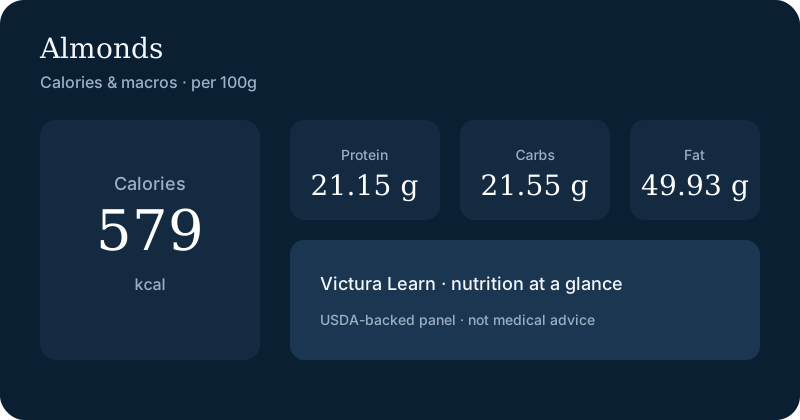
A 100g serving of almonds provides about 579 kcal. Per 100g you get about 21.55g carbs and 21.15g protein. Glycemic index is around 15.
Almonds is a whole food with approximately 579 calories per 100g, tracked in Victura for macro-aware meal logging.
- Calories (100g serving)
- 579 kcal
- Carbs (100g)
- 21.55g
- Protein (100g)
- 21.15g
- Serving reference
- 100g · 100g serving
- Glycemic index
- 15

Where the calories come from
Per 100g · protein & carbs 4 kcal/g, fat 9 kcal/g
- Protein21.2 g · 13.6%
- Carbs21.6 g · 13.9%
- Fat49.9 g · 72.5%
Serving calculator
How much did you eat or drink — Almonds?
579
Calories
21.1g
Protein
21.6g
Carbs
49.9g
Fat
Nutrition facts
per 100g · Source: USDA FoodData Central (seeded Phase 0)
579 kcal
Calories
Vitamins
- Vitamin E: 25.63mg
Minerals
- Magnesium: 270mg
Scientific explanation
Research-backedAlmonds provide an exceptional density of essential nutrients, making them a cornerstone of health-conscious diets. According to the USDA FoodData Central (FDC ID 170567), a 100g serving of raw almonds delivers 579.0 calories, 21.15g of high-quality plant-based protein, 49.93g of total fat, and 21.55g of carbohydrates. Of these carbohydrates, a significant portion is dietary fiber (12.5g), leaving a net carbohydrate count of approximately 9.05g. The sugar content is remarkably low at just 4.35g per 100g.

🔥 How Many Calories Do Almonds Have?
When planning meals, a common question is: how many calories do almonds have? While the raw value is 579.0 calories per 100g, a standard single serving of almonds is typically 1 ounce (about 28 grams or 23 whole almonds). This standard portion contains approximately 162 calories. This distinction is vital for portion control, as the high energy density of almonds means that mindless snacking can quickly lead to an unintentional surplus of calories.
Beyond macronutrients, almonds are a powerhouse of micronutrients. A 100g serving provides 25.63 mg of Vitamin E (alpha-tocopherol), representing an outstanding 171% of the Daily Value (DV). Vitamin E acts as a potent fat-soluble antioxidant, protecting cell membranes from oxidative damage. Additionally, almonds contain 270 mg of Magnesium per 100g (64% DV), a mineral crucial for over 300 enzymatic reactions, including muscle function, nerve transmission, and blood glucose regulation.
With a Glycemic Index (GI) of 15, almonds are classified as a low-glycemic food. This low GI, combined with the high fiber and healthy fat content, ensures a slow, sustained release of glucose into the bloodstream, preventing rapid insulin spikes. This makes them highly suitable for individuals managing diabetes or insulin resistance.
Community insights
Community insightIn the Victura community, tracking almonds is highly popular among users pursuing diverse fitness goals. Analysis of anonymized meal logs reveals that almonds are most frequently consumed as a mid-morning snack or as a nutrient-dense topping for oatmeal, Greek yogurt, and salads.
Because almonds are energy-dense, successful weight management users often pre-portion their almonds rather than eating directly from a large bag. A single handful (roughly 28 grams) is the most common logged entry. While raw almonds are preferred for their clean nutritional profile, dry-roasted almonds are also popular. However, community members are advised to check labels for added oils or sodium, which can alter the health profile.
For those on ketogenic diets, the net carbohydrate content of ~9.05g per 100g (or about 2.5g per 1-ounce serving) means almonds can fit into daily macro limits, but strict portion control is necessary to avoid exceeding carbohydrate thresholds. Conversely, those focused on heart health and diabetic management frequently leverage almonds' high magnesium and monounsaturated fat content to support metabolic health.
Pros
Cons
Best time to eat
Good windows
Consider avoiding
Diet compatibility
Weight loss
Friendly
Consult your healthcare provider for personalized guidance.
Keto
Friendly
Consult your healthcare provider for personalized guidance.
Diabetes
Friendly
Consult your healthcare provider for personalized guidance.
Frequently asked questions
People also ask
Is an almonds healthy?
Yes — an almonds is a whole food with measurable nutrients. Healthiness depends on overall diet, portions, and your goals. Estimated GI is 15.
Can I eat an almonds every day?
Most people can include an almonds daily as part of a balanced diet, as long as total calories and carbs fit their plan.
Are Almondses good for weight loss?
Almondses can fit a calorie-controlled diet when portions are measured.
How many calories are in an almonds?
A typical medium serving of almonds has about 579 calories, while 100g contains about 579 calories (USDA reference).
Are Almondses good before a workout?
Almondses can work before activity when you want easy carbs; pair an almonds with protein if your session is long.
Are Almondses high in sugar?
Almondses contain about 4.3g sugar per 100g — mostly natural sugars when whole.
Are almonds healthy?
Yes, almonds are exceptionally healthy. They are rich in monounsaturated fats, plant-based protein, dietary fiber, and essential micronutrients like Vitamin E (25.63 mg per 100g) and Magnesium (270 mg per 100g). Regular consumption supports cardiovascular health, helps manage oxidative stress, and aids in blood sugar regulation.
Can you eat almonds every day?
Yes, you can eat almonds every day as part of a balanced diet. A daily serving of 1 ounce (about 28 grams or 23 almonds) provides substantial health benefits without excessive calorie intake. However, because almonds are energy-dense (579.0 calories per 100g), eating them in unlimited quantities may lead to weight gain.
Are almonds good for weight loss?
Almonds can be highly beneficial for weight loss when consumed in moderation. Although they are energy-dense at 579.0 calories per 100g, their high protein (21.15g) and fiber (12.5g) content promotes satiety and reduces overall daily calorie intake. Portion control is key to successfully incorporating them into a weight loss plan.
How many calories in one almond?
A single raw almond contains approximately 7 calories. A typical 1-ounce serving (about 23 almonds) contains roughly 162 calories, while a 100g portion contains exactly 579.0 calories.
Are almonds good before a workout?
Yes, almonds make an excellent pre-workout snack. The combination of healthy fats, plant protein, and fiber provides a slow, sustained release of energy, preventing blood sugar crashes during exercise. Eating a small handful about 30 to 60 minutes before your workout can help sustain endurance.
Are almonds high in sugar?
No, almonds are very low in sugar. They contain only 4.35g of sugar per 100g (less than 1.3 grams per standard 1-ounce serving). This low sugar content, combined with a low glycemic index of 15, makes them an ideal snack for maintaining stable blood glucose levels.
How we review this guide
- Written by
- Victura Nutrition Team
- Reviewed by
- Victura Editorial Review
- Reference sources
- 4
- Last updated
- Sep 9, 2026
References
Ready to track your meals with AI?
Victura scans your plate, logs macros automatically, and coaches you toward your goals — halal, keto, diabetic-friendly, and more.