
Tahini Nutrition Facts
A complete guide to calories, macronutrients, and health benefits of sesame butter
Written by Victura Nutrition TeamReviewed by Victura Editorial ReviewLast updated Aug 26, 2026
595
Calories
17.0g
Protein
21.2g
Carbs
Generally yes
Is it healthy?
per 100g · per panel values
Track this food in VicturaQuick answer
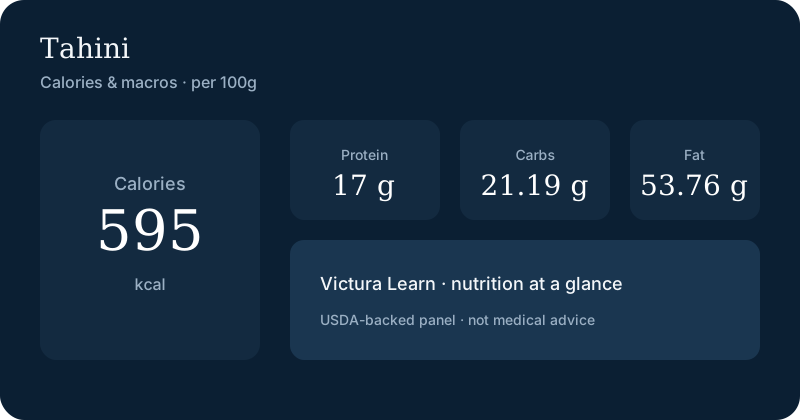
A 100g serving of tahini provides about 595 kcal. Per 100g you get about 21.19g carbs and 17g protein. Glycemic index is around 15.
Tahini is a whole food with approximately 595 calories per 100g, tracked in Victura for macro-aware meal logging.
- Calories (100g serving)
- 595 kcal
- Carbs (100g)
- 21.19g
- Protein (100g)
- 17.0g
- Serving reference
- 100g · 100g serving
- Glycemic index
- 15

Where the calories come from
Per 100g · protein & carbs 4 kcal/g, fat 9 kcal/g
- Protein17 g · 10.7%
- Carbs21.2 g · 13.3%
- Fat53.8 g · 76%
Serving calculator
How much did you eat or drink — Tahini?
595
Calories
17.0g
Protein
21.2g
Carbs
53.8g
Fat
Nutrition facts
per 100g · Source: USDA FoodData Central (seeded Phase 0)
595 kcal
Calories
Minerals
- Calcium: 426mg
- Iron: 8.95mg
Scientific explanation
Research-backedTahini provides a rich source of plant-based fats, protein, and essential minerals. Derived from ground sesame seeds, this nutrient-dense paste is a staple of Mediterranean and Middle Eastern cuisines. According to the USDA FoodData Central (FDC ID 168604), a standard 100g serving of tahini contains 595.0 calories, 53.76g of total fat, 17.0g of protein, 21.19g of carbohydrates, 9.3g of dietary fiber, and a negligible 0.49g of sugar. This macronutrient distribution makes tahini an exceptionally energy-dense food, meaning portion control is essential for those managing their daily energy intake.
🔥 How Many Calories Does Tahini Have?
When planning meals, understanding portion sizes is key. While 100g of tahini contains 595.0 calories, a typical single serving is much smaller. One tablespoon of tahini (approximately 15 grams) contains about 89 calories and 8.06 grams of fat. This makes it easy to incorporate into balanced meals without overconsuming calories, provided you measure your portions accurately.
💊 Micronutrient Profile and Health Benefits
Beyond macronutrients, tahini is highly valued for its mineral content. A 100g serving delivers 426 mg of Calcium (33% of the Daily Value) and 8.95 mg of Iron (50% of the Daily Value). Calcium is vital for maintaining bone density and cardiovascular function, while iron is crucial for oxygen transport and energy production. Furthermore, tahini has a glycemic index (GI) of 15, placing it firmly in the low-glycemic category. This low GI, combined with its minimal sugar content (0.49g per 100g), makes it an excellent option for individuals managing diabetes, as it promotes stable blood glucose levels.

⚖️ Nutrient-Dense Alternatives and Complements (Weight-Loss Hub)
For individuals looking to balance their fat intake or manage weight, here are 8 specific whole foods with portion sizes to consider as part of a structured diet:
- Tahini: 1 tablespoon (15g) — 89 kcal, rich in calcium and iron.
- Almonds: 1 ounce (28g) — 164 kcal, high in vitamin E and fiber.
- Chia Seeds: 2 tablespoons (24g) — 120 kcal, excellent source of omega-3 fatty acids.
- Avocado: 1/2 medium (75g) — 120 kcal, provides monounsaturated fats and potassium.
- Flaxseeds: 2 tablespoons (14g) — 75 kcal, high in lignans and soluble fiber.
- Peanut Butter: 1 tablespoon (16g) — 94 kcal, high in protein and niacin.
- Pumpkin Seeds: 1 ounce (28g) — 158 kcal, rich in magnesium and zinc.
- Walnuts: 1 ounce (28g) — 185 kcal, high in alpha-linolenic acid (ALA).
🔥 Tahini Portion and Calorie Calculator Formula
To tailor your tahini consumption to your specific fitness goals, you can use a simple mathematical formula to calculate calories and macronutrients based on weight:
- Formula:
Calories (kcal) = Weight (g) * 5.95Fat (g) = Weight (g) * 0.5376Protein (g) = Weight (g) * 0.17
- Inputs: Enter the weight of your tahini portion in grams (g). If using tablespoons, assume 1 tablespoon equals approximately 15 grams.
- Interpretation: Use these values to fit tahini into your daily macronutrient targets. For weight loss, limit portions to 10-15g per meal. For muscle building or high-energy demands, portions can be increased to 30g.
- Example Scenario: A user on a 1,800-calorie diet wants to allocate 5% of their daily calories to tahini.
Target Calories = 1,800 * 0.05 = 90 kcalRequired Portion = 90 / 5.95 ≈ 15.1 grams(approximately 1 tablespoon).
⚖️ Structured Comparison Table
To see how tahini compares to other popular nut and seed butters, review the structured comparison below (values per 100g):
| Nutrient / Attribute | Tahini (Sesame Butter) | Peanut Butter (Smooth) | Almond Butter (Plain) |
|---|---|---|---|
| Calories | 595.0 kcal | 588.0 kcal | 614.0 kcal |
| Protein | 17.0 g | 25.1 g | 21.0 g |
| Fat | 53.76 g | 50.4 g | 55.5 g |
| Carbs | 21.19 g | 20.0 g | 18.8 g |
| Fiber | 9.3 g | 6.0 g | 10.3 g |
| Key Vitamins | Thiamin, Vitamin B6 | Niacin, Vitamin E | Vitamin E, Riboflavin |
| Key Minerals | Calcium (426mg), Iron (8.95mg) | Magnesium, Phosphorus | Calcium (268mg), Magnesium |
| Glycemic Index | 15 (Low) | 14 (Low) | 15 (Low) |
| Pros | Exceptionally high calcium & iron; nut-free | Highest protein content; affordable | Highest vitamin E & fiber content |
| Cons | Bitter flavor profile if unpeeled | Common allergen; high in omega-6 | Expensive; high calorie density |
| Best For | Savory dressings, hummus, mineral boost | Budget-friendly protein, classic snacks | Keto diets, vitamin E supplementation |
Community insights
Community insightIn culinary communities, tahini is celebrated for its incredible versatility. Unlike sweet nut butters, tahini brings a savory, slightly bitter, and deeply nutty flavor profile that anchors classic dishes like hummus and baba ganoush. Victura community meal logs show that users frequently utilize tahini as a dairy-free base for creamy salad dressings, combining it with lemon juice, garlic, and warm water to create an emulsion.
Because tahini is highly emulsifiable, it acts as an excellent binder in vegan baking and raw energy bites. However, because of its high calorie density, experienced meal planners in the Victura community recommend drizzling it using a squeeze bottle or measuring it with a digital scale rather than free-pouring. This simple habit prevents accidental overconsumption while still delivering the rich mouthfeel and satiety benefits of sesame fats.
Pros
Cons
Best time to eat
Good windows
Consider avoiding
Diet compatibility
Weight loss
Friendly
Consult your healthcare provider for personalized guidance.
Keto
Friendly
Consult your healthcare provider for personalized guidance.
Diabetes
Friendly
Consult your healthcare provider for personalized guidance.
Frequently asked questions
People also ask
Is a tahini healthy?
Yes — a tahini is a whole food with measurable nutrients. Healthiness depends on overall diet, portions, and your goals. Estimated GI is 15.
Can I eat a tahini every day?
Most people can include a tahini daily as part of a balanced diet, as long as total calories and carbs fit their plan.
Are Tahinis good for weight loss?
Tahinis can fit a calorie-controlled diet when portions are measured.
How many calories are in a tahini?
A typical medium serving of tahini has about 595 calories, while 100g contains about 595 calories (USDA reference).
Are Tahinis good before a workout?
Tahinis can work before activity when you want easy carbs; pair a tahini with protein if your session is long.
Are Tahinis high in sugar?
Tahinis contain about 0.5g sugar per 100g — mostly natural sugars when whole.
Is tahini healthy?
Yes, tahini is highly healthy when consumed in moderation. It provides a wealth of heart-healthy monounsaturated and polyunsaturated fats, plant-based protein, and essential minerals like calcium and iron. Its low glycemic index of 15 supports stable blood sugar, making it an excellent addition to nutrient-dense diets.
Can you eat tahini every day?
Yes, you can enjoy tahini every day, but portion control is critical. Because tahini provides 595.0 calories per 100g (about 89 calories per tablespoon), daily consumption should be limited to 1 to 2 tablespoons to avoid exceeding your daily energy requirements.
Is tahini good for weight loss?
Tahini can be incorporated into a weight loss plan, but it is not a low-calorie food. With 595.0 calories and 53.76g of fat per 100g, it is highly energy-dense. However, its 9.3g of fiber and 17.0g of protein promote satiety, which can help control appetite when consumed in small, measured portions (such as 1 tablespoon).
How many calories are in one tablespoon of tahini?
One tablespoon of tahini (approximately 15 grams) contains about 89 calories. This portion also delivers roughly 8.06 grams of fat, 2.55 grams of protein, and 3.18 grams of carbohydrates, making it a convenient way to add healthy fats to a meal.
Should you eat tahini before a workout?
Eating tahini before a workout can provide sustained energy due to its high fat and moderate protein content. However, because fats digest slowly, it is best to consume tahini 1.5 to 2 hours before exercising to avoid gastrointestinal discomfort, or keep the portion very small.
Does tahini have high sugar?
No, tahini does not have high sugar. It contains only 0.49g of sugar per 100g, which is practically negligible. This makes it an ideal food for low-sugar, diabetic-friendly, and low-glycemic diets.
How we review this guide
- Written by
- Victura Nutrition Team
- Reviewed by
- Victura Editorial Review
- Reference sources
- 4
- Last updated
- Aug 26, 2026
References
Ready to track your meals with AI?
Victura scans your plate, logs macros automatically, and coaches you toward your goals — halal, keto, diabetic-friendly, and more.