
Hummus Nutrition Facts
A comprehensive scientific guide to calories, macronutrients, and health benefits of this Mediterranean staple.
Written by Victura Nutrition TeamReviewed by Victura Editorial ReviewLast updated Aug 26, 2026
166
Calories
7.9g
Protein
14.3g
Carbs
Generally yes
Is it healthy?
per 100g · per panel values
Track this food in VicturaQuick answer
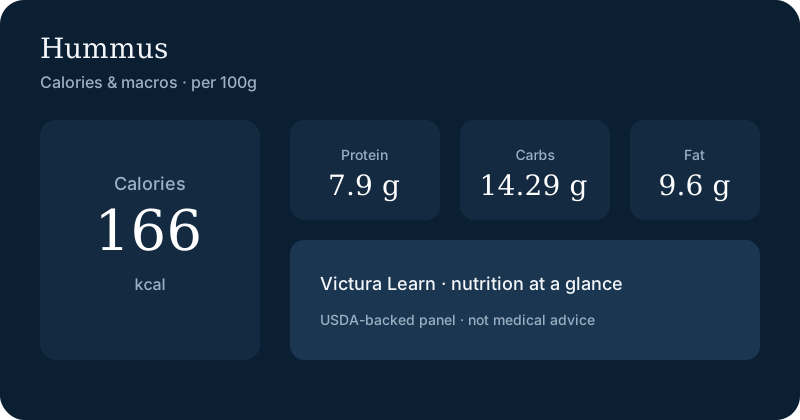
A 2-tablespoon serving of hummus contains around 50 calories, while 100g contains about 166 calories. Per 100g you get about 14.29g carbs and 7.9g protein. Glycemic index is around 6.
Hummus is a whole food with approximately 166 calories per 100g, tracked in Victura for macro-aware meal logging.
- Calories (2-tablespoon serving)
- 50 kcal
- Calories (100g)
- 166 kcal
- Carbs (100g)
- 14.29g
- Protein (100g)
- 7.9g
- Serving reference
- 30g · 2-tablespoon serving
- Glycemic index
- 6

Where the calories come from
Per 100g · protein & carbs 4 kcal/g, fat 9 kcal/g
- Protein7.9 g · 18%
- Carbs14.3 g · 32.6%
- Fat9.6 g · 49.3%
Serving calculator
How much did you eat or drink — Hummus?
50
Calories
2.4g
Protein
4.3g
Carbs
2.9g
Fat
Nutrition facts
per 100g · Source: USDA FoodData Central (seeded Phase 0)
166 kcal
Calories
Minerals
- Iron: 2.44mg
Scientific explanation
Research-backedHummus provides an excellent balance of macronutrients, dietary fiber, and essential minerals. Based on the USDA FoodData Central database (FDC ID 174289), a standard 100-gram serving of commercial hummus contains 166 calories, 7.9 grams of protein, 9.6 grams of fat, and 14.29 grams of carbohydrates. Notably, it delivers 6.0 grams of dietary fiber and contains 0.0 grams of sugar, making it a highly satiating option that supports digestive health and glycemic control.
The primary ingredients in traditional hummus—chickpeas (garbanzo beans), tahini (sesame paste), olive oil, garlic, and lemon juice—contribute synergistically to its nutritional value. The fat content (9.6g per 100g) consists primarily of heart-healthy monounsaturated and polyunsaturated fatty acids derived from olive oil and tahini. These unsaturated fats are well-documented to support cardiovascular health by helping to maintain optimal cholesterol levels.
With a glycemic index (GI) of 6, hummus is classified as a very low-glycemic food. This is primarily due to the combination of complex carbohydrates, high fiber content, and healthy fats, which slow down digestion and the absorption of glucose into the bloodstream. Consequently, hummus is highly suitable for individuals managing diabetes or insulin resistance, as it prevents rapid blood sugar spikes.
In terms of micronutrients, hummus is a notable source of non-heme iron, providing 2.44 mg per 100g, which represents approximately 14% of the Daily Value (DV). Iron is essential for oxygen transport, energy production, and cognitive function. Because non-heme iron from plant sources is less readily absorbed than heme iron from animal products, the vitamin C naturally present in the lemon juice of hummus plays a crucial role in enhancing iron absorption.
While hummus is highly nutritious, it is relatively energy-dense. For individuals focusing on weight management, portion control is key. A typical single serving of hummus is about 2 tablespoons (approximately 30 grams), which contains roughly 50 calories. Consuming hummus in large quantities can quickly contribute to a calorie surplus, despite its high fiber and protein content.

Community insights
Community insightWhen incorporating this dip into your daily diet, a common question arises: how many calories does hummus have in a typical serving? While 100 grams of commercial hummus contains 166 calories, most people consume it in smaller portions. A single tablespoon (approx. 15 grams) contains about 25 calories, while a standard 2-tablespoon serving (30 grams) contains approximately 50 calories. Understanding these portion sizes is essential for tracking daily energy intake.
Victura community meal logs indicate that hummus is most frequently used as a vegetable dip, a spread for wraps and sandwiches, or a protein-boosting addition to grain bowls. Users tracking weight loss goals often pair hummus with low-calorie, high-volume vegetables like cucumbers, celery, bell peppers, and carrots rather than pita chips or crackers. This strategy allows them to enjoy the rich, creamy texture of hummus while keeping the overall meal volume high and the calorie density low.
For active individuals and fitness enthusiasts, hummus serves as a versatile pre-workout or post-workout snack. The combination of complex carbohydrates from chickpeas provides a sustained release of energy, while the healthy fats and protein help maintain satiety. However, because of its high fiber content (6.0g per 100g), some individuals with sensitive digestive systems prefer to consume hummus at least 60 to 90 minutes before intense exercise to avoid gastrointestinal discomfort during training.
In culinary applications, homemade hummus allows for direct control over the calorie density. By adjusting the ratio of tahini and olive oil, or by incorporating ingredients like roasted red peppers, spinach, or beetroot, you can modify both the flavor profile and the macronutrient distribution to better align with specific dietary preferences, such as lower-fat or lower-calorie variations.
Pros
Cons
Best time to eat
Good windows
Consider avoiding
Diet compatibility
Weight loss
Friendly
Consult your healthcare provider for personalized guidance.
Keto
Friendly
Consult your healthcare provider for personalized guidance.
Diabetes
Friendly
Consult your healthcare provider for personalized guidance.
Frequently asked questions
People also ask
Is hummus healthy?
Yes — hummus is a whole food with measurable nutrients. Healthiness depends on overall diet, portions, and your goals. Estimated GI is 6.
Can I eat hummus every day?
Most people can include hummus daily as part of a balanced diet, as long as total calories and carbs fit their plan.
Are hummus good for weight loss?
Hummus can fit a calorie-controlled diet when portions are measured.
How many calories are in hummus?
A typical medium serving of hummus has about 166 calories, while 100g contains about 166 calories (USDA reference).
Are hummus good before a workout?
Hummus can work before activity when you want easy carbs; pair hummus with protein if your session is long.
Are hummus high in sugar?
Hummus contain about 0.0g sugar per 100g — mostly natural sugars when whole.
Is hummus healthy to eat every day?
Yes, hummus is highly healthy to eat every day in moderation. It provides a rich source of plant-based protein (7.9g per 100g), dietary fiber (6.0g), heart-healthy monounsaturated fats, and essential minerals like iron. Daily consumption can support cardiovascular health, improve digestion, and help maintain stable blood sugar levels. However, because it is relatively energy-dense (166 calories per 100g), it is important to monitor portion sizes to ensure it fits within your daily caloric needs.
Is hummus good for weight loss?
Hummus can be an excellent addition to a weight loss diet due to its high fiber (6.0g per 100g) and protein (7.9g per 100g) content, which promote satiety and help curb cravings. However, because of its moderate calorie density, portion control is crucial. Pairing a measured 2-tablespoon serving of hummus with raw vegetables instead of refined crackers or pita bread is an effective way to enjoy its nutritional benefits while maintaining a calorie deficit.
How many calories does hummus have in a typical serving?
A typical 2-tablespoon serving of commercial hummus (approximately 30 grams) contains about 50 calories. In contrast, a larger 100-gram portion contains 166 calories. Knowing how many calories hummus has per serving helps you accurately track your daily energy intake and manage your weight effectively.
Is hummus high in sugar?
No, hummus is not high in sugar. Standard commercial hummus contains 0.0 grams of sugar per 100g. Its carbohydrates consist almost entirely of complex starches and dietary fiber, resulting in an exceptionally low glycemic index of 6. This makes it an ideal food choice for individuals managing diabetes or those looking to avoid blood sugar spikes.
Can I eat hummus before a workout?
Yes, hummus makes a great pre-workout snack when consumed in moderation. The complex carbohydrates in chickpeas provide a steady, slow-burning source of energy, while the healthy fats help sustain stamina. To prevent digestive heaviness or cramping during exercise due to its high fiber content, it is best to eat hummus about 1 to 2 hours before your workout session.
Is hummus keto-friendly?
Hummus is generally not considered keto-friendly. With 14.29g of total carbohydrates and 6.0g of fiber per 100g, it contains approximately 8.29g of net carbs per 100g. A standard 2-tablespoon serving contains about 2.5g of net carbs, which can fit into some liberal low-carb diets, but larger portions can easily exceed the strict daily carbohydrate limits of a standard ketogenic diet.
How we review this guide
- Written by
- Victura Nutrition Team
- Reviewed by
- Victura Editorial Review
- Reference sources
- 4
- Last updated
- Aug 26, 2026
References
Ready to track your meals with AI?
Victura scans your plate, logs macros automatically, and coaches you toward your goals — halal, keto, diabetic-friendly, and more.