
Whole Wheat Bread Nutrition Facts
A scientific analysis of calories, macronutrients, glycemic index, and metabolic impact
Written by Victura Nutrition TeamReviewed by Victura Editorial ReviewLast updated Jul 22, 2026
247
Calories
12.4g
Protein
41.3g
Carbs
Generally yes
Is it healthy?
per 100g · per panel values
Track this food in VicturaQuick answer
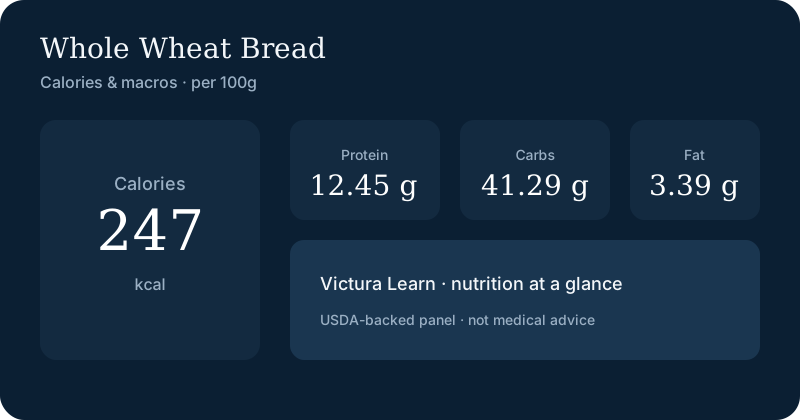
A slice of whole wheat bread contains around 69 calories, while 100g contains about 247 calories. Per 100g you get about 41.29g carbs and 12.45g protein. Glycemic index is around 74.
Whole Wheat Bread is a whole food with approximately 247 calories per 100g, tracked in Victura for macro-aware meal logging.
- Calories (slice)
- 69 kcal
- Calories (100g)
- 247 kcal
- Carbs (100g)
- 41.29g
- Protein (100g)
- 12.45g
- Serving reference
- 28g · slice
- Glycemic index
- 74

Where the calories come from
Per 100g · protein & carbs 4 kcal/g, fat 9 kcal/g
- Protein12.5 g · 20.3%
- Carbs41.3 g · 67.3%
- Fat3.4 g · 12.4%
Serving calculator
How much did you eat or drink — Whole Wheat Bread?
69
Calories
3.5g
Protein
11.6g
Carbs
0.9g
Fat
Calories and macros by serving
Values are calculated from the page's USDA per-100g reference. Prepared or branded products may vary.
| Serving | Calories | Protein | Carbs | Fat |
|---|---|---|---|---|
| 1 slice (28g) | 69 | 3.5g | 11.6g | 0.9g |
| 2 slices (56g) | 138 | 7.0g | 23.1g | 1.9g |
| 100g | 247 | 12.4g | 41.3g | 3.4g |
Nutrition facts
per 100g · Source: USDA FoodData Central (seeded Phase 0)
247 kcal
Calories
Minerals
- Selenium: 25.7mcg
Scientific explanation
Research-backedWhole Wheat Bread provides a dense source of complex carbohydrates, plant-based protein, and essential micronutrients. According to USDA FoodData Central (FDC ID 172688), a standard 100-gram serving of commercially prepared whole wheat bread delivers 247 calories, 12.45 grams of protein, 3.39 grams of fat, and 41.29 grams of total carbohydrates. Notably, it contains 6.0 grams of dietary fiber, which reduces the net carbohydrate load to approximately 35.29 grams. This fiber content is crucial for supporting gastrointestinal motility and promoting a healthy gut microbiome.

🔥 How Many Calories Does Whole Wheat Bread Have?
When evaluating daily energy intake, individuals frequently ask: how many calories does whole wheat bread have? A standard commercial slice weighing 28 grams contains approximately 69 calories. This makes it a highly manageable addition to most calorie-controlled diets, provided portion sizes are monitored. However, because whole wheat bread is relatively energy-dense (2.47 kcal/g), consuming multiple thick-cut slices can rapidly increase total caloric intake.
From a micronutrient perspective, whole wheat bread is an exceptional source of Selenium, providing 25.7 mcg per 100 grams, which equates to 47% of the Daily Value (DV). Selenium is a critical trace mineral that functions as a cofactor for antioxidant enzymes, such as glutathione peroxidase, and plays an indispensable role in thyroid hormone metabolism.
Despite its high fiber content, commercially prepared whole wheat bread has a Glycemic Index (GI) of 74, placing it in the high-glycemic category. This high GI is primarily due to the industrial milling process, which pulverizes the wheat kernel into extremely fine flour. This fine particle size allows digestive enzymes rapid access to starch molecules, leading to swift enzymatic hydrolysis into glucose and a subsequent rapid rise in blood glucose levels. Consequently, individuals with type 2 diabetes or insulin resistance should pair whole wheat bread with healthy fats, proteins, or acids (such as vinegar or fermented foods) to delay gastric emptying and blunt the postprandial glucose spike.
Community insights
Community insightIn the Victura community, whole wheat bread is one of the most frequently logged staple foods. Analysis of anonymized meal logs reveals that users often struggle with portion estimation, frequently logging a single slice as 20 grams when commercial slices often weigh between 28 and 45 grams depending on the brand and thickness. Accurate tracking using a digital food scale is highly recommended to prevent unintended caloric surpluses.
To optimize the nutritional utility of whole wheat bread, community members are encouraged to move away from eating dry or highly sweetened toast. Because of its high glycemic index of 74, pairing a slice of whole wheat bread with healthy fats and proteins is an excellent strategy. For example, adding avocado (monounsaturated fats) and a poached egg (high-quality protein) significantly slows down digestion. This combination reduces the overall glycemic load of the meal, providing sustained energy levels rather than a rapid spike and subsequent crash. For those tracking macronutrients for muscle synthesis or weight management, the 12.45g of protein per 100g in whole wheat bread offers a helpful baseline, but it lacks the complete amino acid profile of animal proteins, making complementary protein sources essential throughout the day.
Pros
Cons
Best time to eat
Good windows
Consider avoiding
Diet compatibility
Weight loss
Friendly
Consult your healthcare provider for personalized guidance.
Keto
Friendly
Consult your healthcare provider for personalized guidance.
Diabetes
Friendly
Consult your healthcare provider for personalized guidance.
Frequently asked questions
People also ask
Is a whole wheat bread healthy?
Yes — a whole wheat bread is a whole food with measurable nutrients. Healthiness depends on overall diet, portions, and your goals. Estimated GI is 74.
Can I eat a whole wheat bread every day?
Most people can include a whole wheat bread daily as part of a balanced diet, as long as total calories and carbs fit their plan.
Are Whole Wheat Breads good for weight loss?
Whole wheat breads can fit a calorie-controlled diet when portions are measured.
How many calories are in a whole wheat bread?
A typical medium serving of whole wheat bread has about 247 calories, while 100g contains about 247 calories (USDA reference).
Are Whole Wheat Breads good before a workout?
Whole wheat breads can work before activity when you want easy carbs; pair a whole wheat bread with protein if your session is long.
Are Whole Wheat Breads high in sugar?
Whole wheat breads contain about 4.3g sugar per 100g — mostly natural sugars when whole.
Is whole wheat bread healthy?
Yes, whole wheat bread is a nutrient-dense food providing complex carbohydrates, 12.45g of protein, and 6.0g of fiber per 100g. It is also an excellent source of selenium, delivering 47% of the Daily Value. To optimize its health benefits, pair it with healthy fats and proteins to balance its glycemic impact.
How many calories are in a slice of whole wheat bread?
A standard commercially prepared slice of whole wheat bread (weighing approximately 28 grams) contains about 69 calories. Thicker, artisanal, or denser whole-grain slices weighing 40 to 45 grams typically contain between 100 and 120 calories.
Is whole wheat bread good for weight loss?
Whole wheat bread can be a valuable part of a weight loss plan. Its 6.0g of fiber per 100g promotes satiety and helps you feel full longer, which can prevent overeating. To support weight loss, practice portion control and avoid high-calorie spreads.
Does whole wheat bread have a high glycemic index?
Yes, commercially prepared whole wheat bread has a glycemic index (GI) of 74, placing it in the high category. This is because industrial milling finely grinds the grain, allowing rapid digestion. Pairing it with protein, fiber, or healthy fats helps slow down glucose absorption.
Is whole wheat bread a good pre-workout food?
Yes, whole wheat bread is an excellent pre-workout fuel source. It delivers 41.29g of carbohydrates per 100g, providing a steady release of glucose to sustain energy levels and top off muscle glycogen stores when consumed 60 to 90 minutes before exercise.
How much fiber is in whole wheat bread?
Whole wheat bread contains 6.0 grams of dietary fiber per 100-gram serving, which helps reduce the net carbohydrate load to 35.29 grams and supports digestive health.
How we review this guide
- Written by
- Victura Nutrition Team
- Reviewed by
- Victura Editorial Review
- Reference sources
- 4
- Last updated
- Jul 22, 2026
References
Ready to track your meals with AI?
Victura scans your plate, logs macros automatically, and coaches you toward your goals — halal, keto, diabetic-friendly, and more.