
Tortilla Nutrition Facts
A comprehensive guide to calories, macronutrients, and dietary impacts of corn and flour tortillas.
Written by Victura Nutrition TeamReviewed by Victura Editorial ReviewLast updated Sep 2, 2026
218
Calories
5.7g
Protein
44.6g
Carbs
Generally yes
Is it healthy?
per 100g · per panel values
Track this food in VicturaQuick answer
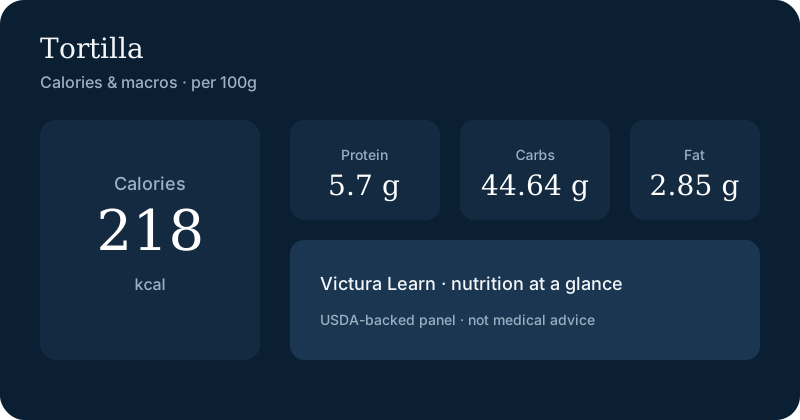
A 100g serving of tortilla provides about 218 kcal. Per 100g you get about 44.64g carbs and 5.7g protein. Glycemic index is around 52.
Tortilla is a whole food with approximately 218 calories per 100g, tracked in Victura for macro-aware meal logging.
- Calories (100g serving)
- 218 kcal
- Carbs (100g)
- 44.64g
- Protein (100g)
- 5.7g
- Serving reference
- 100g · 100g serving
- Glycemic index
- 52

Where the calories come from
Per 100g · protein & carbs 4 kcal/g, fat 9 kcal/g
- Protein5.7 g · 10%
- Carbs44.6 g · 78.7%
- Fat2.9 g · 11.3%
Serving calculator
How much did you eat or drink — Tortilla?
218
Calories
5.7g
Protein
44.6g
Carbs
2.9g
Fat
Nutrition facts
per 100g · Source: USDA FoodData Central (seeded Phase 0)
218 kcal
Calories
Minerals
- Calcium: 81mg
Scientific explanation
Research-backedTortilla provides a versatile, grain-based foundation for numerous traditional and modern dishes. When analyzing its nutritional profile, we look at the standard corn tortilla (ready-to-bake or -fry), which offers a distinct macro and micronutrient distribution. A single typical corn tortilla (approximately 25 grams) contains about 54.5 calories, making it a highly manageable portion for most dietary patterns. For a standardized comparison, 100 grams of these corn tortillas provide 218 calories, 5.7 grams of protein, 2.85 grams of total fat, and 44.64 grams of carbohydrates.
One of the standout nutritional features of this food is its dietary fiber content. It delivers 6.3 grams of fiber per 100 grams, which significantly lowers the net carbohydrate impact to approximately 38.34 grams. This high fiber content is beneficial for digestive health and helps slow down glucose absorption into the bloodstream. Consequently, the glycemic index of this corn tortilla is 52, placing it in the medium-to-low glycemic category. This makes it a favorable option for blood sugar management, particularly when compared to refined flour alternatives.
In terms of micronutrients, this tortilla provides 81 milligrams of calcium per 100 grams, which equates to roughly 6% of the daily recommended value. This calcium content is largely a result of the traditional nixtamalization process, where corn is soaked and cooked in an alkaline solution (usually lime water), which dramatically increases calcium bioavailability.
For individuals focused on specific dietary goals, understanding how these numbers fit into daily targets is essential. Those on a weight loss journey often ask, 'how many calories does tortilla have?' and how they can fit them into a calorie-controlled diet. At 218 calories per 100 grams, they are moderately energy-dense, meaning portion control is key. For those following a strict ketogenic diet, the net carbohydrate content of 38.34 grams per 100 grams makes them generally unsuitable, as they can easily exceed daily carb limits. However, for individuals managing diabetes, the combination of 0.0 grams of sugar, a moderate glycemic index of 52, and high fiber content makes them a highly viable option when consumed in moderation.

Community insights
Community insightIn the Victura community, meal logs show that tortillas are one of the most frequently logged grain products due to their versatility and ease of preparation. Users often substitute traditional bread with tortillas to create lighter wraps, thin-crust personal pizzas, or crispy baked chips. Our community insights indicate that portion control is the primary strategy for successfully incorporating tortillas into weight loss plans. Instead of consuming multiple large flour tortillas, users frequently opt for smaller corn tortillas or high-fiber low-carb alternatives to satisfy their cravings without exceeding their daily energy budgets.
Culinary application also plays a massive role in the overall nutritional value of the meal. While a plain corn tortilla is relatively low in fat (2.85g per 100g), frying them in oil to make tacos or chips dramatically increases the calorie and saturated fat content. The Victura community highly recommends baking or dry-toasting tortillas on a hot skillet to maintain their low-fat profile. Pairing them with lean proteins like chicken breast, fish, or tofu, along with plenty of non-starchy vegetables and fiber-rich beans, creates a balanced, nutrient-dense meal that supports long-term health goals.
Pros
Cons
Best time to eat
Good windows
Consider avoiding
Diet compatibility
Weight loss
Friendly
Consult your healthcare provider for personalized guidance.
Keto
Friendly
Consult your healthcare provider for personalized guidance.
Diabetes
Friendly
Consult your healthcare provider for personalized guidance.
Frequently asked questions
People also ask
Is a tortilla healthy?
Yes — a tortilla is a whole food with measurable nutrients. Healthiness depends on overall diet, portions, and your goals. Estimated GI is 52.
Can I eat a tortilla every day?
Most people can include a tortilla daily as part of a balanced diet, as long as total calories and carbs fit their plan.
Are Tortillas good for weight loss?
Tortillas can fit a calorie-controlled diet when portions are measured.
How many calories are in a tortilla?
A typical medium serving of tortilla has about 218 calories, while 100g contains about 218 calories (USDA reference).
Are Tortillas good before a workout?
Tortillas can work before activity when you want easy carbs; pair a tortilla with protein if your session is long.
Are Tortillas high in sugar?
Tortillas contain about 0.0g sugar per 100g — mostly natural sugars when whole.
Can you eat tortillas every day?
You can certainly eat tortillas every day as part of a healthy, varied diet, provided you pay attention to portion sizes and preparation methods. Opting for non-fried, whole-grain corn or high-fiber tortillas and pairing them with lean proteins, healthy fats, and abundant vegetables ensures you get a wide spectrum of nutrients without overconsuming calories.
How many calories does a tortilla have?
The number of calories in a tortilla depends heavily on its size and ingredients. A single standard corn tortilla (25g) has approximately 55 calories. In contrast, a large restaurant-style flour tortilla can contain 200 to 300 calories. For a standardized measure, corn tortillas contain 218 calories per 100 grams.
Should you eat a tortilla before a workout?
Yes, eating a tortilla before a workout can be an excellent way to fuel your muscles. The 44.64g of carbohydrates per 100g in corn tortillas provide a steady release of glucose, which serves as the primary energy source for moderate to high-intensity exercise. Eating a light wrap or a couple of toasted tortillas 1 to 2 hours before training can optimize performance without causing digestive discomfort.
Do tortillas have high sugar?
No, traditional corn tortillas do not have high sugar. In fact, according to USDA data, they contain 0.0 grams of sugar per 100 grams. This makes them an outstanding option for individuals looking to minimize their intake of added and simple sugars, such as those managing diabetes or insulin resistance.
Are corn tortillas gluten-free?
Yes, traditional corn tortillas made from 100% ground corn are naturally gluten-free. However, always check packaging labels to ensure they are processed in a certified gluten-free facility to avoid cross-contamination.
What is the difference between corn and flour tortilla?
Corn tortillas are generally lower in calories, fat, and sodium while being higher in fiber and calcium. Flour tortillas are typically higher in calories, fat, and sodium, but offer a more pliable texture and slightly more protein.
How we review this guide
- Written by
- Victura Nutrition Team
- Reviewed by
- Victura Editorial Review
- Reference sources
- 4
- Last updated
- Sep 2, 2026
References
Ready to track your meals with AI?
Victura scans your plate, logs macros automatically, and coaches you toward your goals — halal, keto, diabetic-friendly, and more.