
Sourdough Bread Nutrition Facts
A comprehensive guide to calories, macronutrients, glycemic index, and health benefits of traditional sourdough bread.
Written by Victura Nutrition TeamReviewed by Victura Editorial ReviewLast updated Aug 19, 2026
272
Calories
10.8g
Protein
51.9g
Carbs
Generally yes
Is it healthy?
per 100g · per panel values
Track this food in VicturaQuick answer
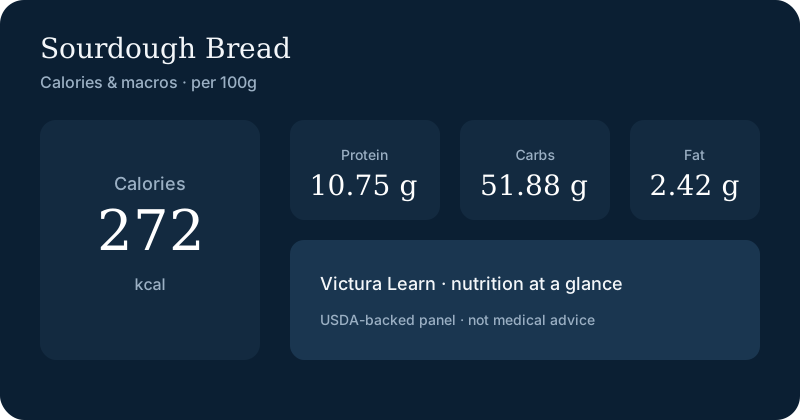
A 100g serving of sourdough bread provides about 272 kcal. Per 100g you get about 51.88g carbs and 10.75g protein. Glycemic index is around 54.
Sourdough Bread is a whole food with approximately 272 calories per 100g, tracked in Victura for macro-aware meal logging.
- Calories (100g serving)
- 272 kcal
- Carbs (100g)
- 51.88g
- Protein (100g)
- 10.75g
- Serving reference
- 100g · 100g serving
- Glycemic index
- 54

Where the calories come from
Per 100g · protein & carbs 4 kcal/g, fat 9 kcal/g
- Protein10.8 g · 15.8%
- Carbs51.9 g · 76.2%
- Fat2.4 g · 8%
Serving calculator
How much did you eat or drink — Sourdough Bread?
272
Calories
10.8g
Protein
51.9g
Carbs
2.4g
Fat
Nutrition facts
per 100g · Source: USDA FoodData Central (seeded Phase 0)
272 kcal
Calories
Minerals
- Selenium: 27mcg
Scientific explanation
Research-backedSourdough Bread provides 272 calories, 10.75g of protein, 51.88g of carbohydrates, and 2.42g of fat per 100g serving, according to USDA FoodData Central (FDC ID 174945). Unlike standard commercial breads made with baker's yeast, traditional sourdough relies on a symbiotic culture of wild yeast and lactic acid bacteria (LAB). This slow fermentation process alters the carbohydrate structure and protein matrix of the dough, yielding unique nutritional advantages.
With a glycemic index (GI) of 54, sourdough bread falls into the low-to-medium GI category. This is significantly lower than standard white bread, which often exceeds a GI of 70. The organic acids (primarily lactic and acetic acids) produced during fermentation slow down gastric emptying and delay starch gelatinization. Consequently, sourdough bread causes a more gradual rise in blood glucose levels, making it a more favorable option for individuals managing diabetes or insulin sensitivity.
Sourdough bread is an exceptional source of Selenium, providing 27.0 mcg per 100g, which constitutes approximately 49% of the Daily Value (DV). Selenium is a critical trace mineral that supports thyroid function, DNA synthesis, and antioxidant defense systems. Furthermore, the lactic acid bacteria in sourdough produce phytases—enzymes that break down phytic acid. Phytic acid is an anti-nutrient found in grains that binds to minerals like iron, zinc, and magnesium, inhibiting their absorption. By degrading phytates, sourdough fermentation significantly increases the bioavailability of these essential minerals.
The prolonged fermentation process allows bacterial proteases to partially hydrolyze gluten proteins. While sourdough bread is not gluten-free and remains unsafe for individuals with celiac disease, this pre-digestion of gluten proteins and the reduction of fermentable oligosaccharides, disaccharides, monosaccharides, and polyols (FODMAPs) make sourdough bread substantially easier to digest for people with non-celiac gluten sensitivity or irritable bowel syndrome (IBS).

Community insights
Community insightIn the Victura community, sourdough bread is a highly logged staple, valued for its satiety and artisanal flavor. However, because it contains 272 calories per 100g, portion control is vital for those pursuing weight loss. A typical medium slice of sourdough bread weighs approximately 30 to 40 grams, translating to roughly 80 to 110 calories. To optimize satiety, community members often pair sourdough with high-protein or healthy-fat toppings, such as poached eggs, avocado, or smoked salmon, which further blunts any potential glycemic response.
For individuals following a ketogenic diet, sourdough bread is generally not compatible, as a 100g serving contains 51.88g of total carbohydrates (approximately 49.7g of net carbs). Conversely, those on balanced, whole-food diets or athletic meal plans frequently utilize sourdough as an easily digestible, clean carbohydrate source. When shopping, community members recommend looking for traditional sourdough made with just flour, water, salt, and starter culture, avoiding commercial 'sourdough-flavored' breads that use yeast and vinegar to mimic the sour taste without the benefits of long fermentation.
Pros
Cons
Best time to eat
Good windows
Consider avoiding
Diet compatibility
Weight loss
Friendly
Consult your healthcare provider for personalized guidance.
Keto
Friendly
Consult your healthcare provider for personalized guidance.
Diabetes
Friendly
Consult your healthcare provider for personalized guidance.
Frequently asked questions
People also ask
Is a sourdough bread healthy?
Yes — a sourdough bread is a whole food with measurable nutrients. Healthiness depends on overall diet, portions, and your goals. Estimated GI is 54.
Can I eat a sourdough bread every day?
Most people can include a sourdough bread daily as part of a balanced diet, as long as total calories and carbs fit their plan.
Are Sourdough Breads good for weight loss?
Sourdough breads can fit a calorie-controlled diet when portions are measured.
How many calories are in a sourdough bread?
A typical medium serving of sourdough bread has about 272 calories, while 100g contains about 272 calories (USDA reference).
Are Sourdough Breads good before a workout?
Sourdough breads can work before activity when you want easy carbs; pair a sourdough bread with protein if your session is long.
Are Sourdough Breads high in sugar?
Sourdough breads contain about 0.0g sugar per 100g — mostly natural sugars when whole.
Is sourdough bread healthy?
Yes, sourdough bread is widely considered a healthier alternative to conventional white bread. The natural fermentation process driven by wild yeast and lactic acid bacteria reduces phytic acid, which increases mineral absorption (such as iron, zinc, and magnesium). It also contains a significant amount of Selenium (49% DV per 100g) and has a lower glycemic index (54) than standard bread, meaning it is gentler on blood sugar levels.
Can you eat sourdough bread every day?
Yes, you can eat sourdough bread every day as part of a balanced, nutrient-dense diet. Because it is a whole-food source of complex carbohydrates, it provides sustained energy. However, since it contains 272 calories per 100g, it is important to practice portion control, especially if your goal is weight management. Pairing it with lean proteins and healthy fats will ensure a well-rounded macronutrient profile.
Is sourdough bread good for weight loss?
Sourdough bread can be incorporated into a weight loss plan, but it must be managed carefully. At 272 calories per 100g, it is relatively energy-dense. However, its lower glycemic index and prebiotic-like properties can promote satiety and prevent the rapid blood sugar crashes that trigger cravings. To support weight loss, limit your portion to one or two slices per day and pair it with high-protein toppings.
How many calories does sourdough bread have per slice?
A typical medium slice of sourdough bread (weighing about 35 grams) contains approximately 95 calories. A larger, thick-cut artisanal slice (weighing around 50 grams) contains about 136 calories. For precise tracking, it is always best to weigh your slice, as sourdough density can vary significantly between bakeries.
Is sourdough bread good before a workout?
Yes, sourdough bread is an excellent pre-workout food. It provides 51.88g of carbohydrates per 100g, which serve as the primary fuel source for your muscles during high-intensity exercise. Because sourdough is easier to digest due to the fermentation process breaking down complex gluten proteins and FODMAPs, it is less likely to cause gastrointestinal discomfort or bloating during your training session.
Is sourdough bread high in sugar?
No, traditional sourdough bread is extremely low in sugar. According to USDA data, it contains 0.0g of sugar per 100g. During the long fermentation process, the wild yeasts and lactic acid bacteria consume the simple sugars present in the flour, converting them into carbon dioxide (which makes the bread rise) and organic acids. This makes it an excellent option for those looking to minimize their dietary sugar intake.
How we review this guide
- Written by
- Victura Nutrition Team
- Reviewed by
- Victura Editorial Review
- Reference sources
- 4
- Last updated
- Aug 19, 2026
References
Ready to track your meals with AI?
Victura scans your plate, logs macros automatically, and coaches you toward your goals — halal, keto, diabetic-friendly, and more.