
Brown Rice Nutrition Facts
Complete brown rice nutrition breakdown with 370 kcal per 100g, glycemic index, and diet compatibility.
Written by Victura Nutrition TeamReviewed by Victura Editorial ReviewLast updated Aug 11, 2026
370
Calories
7.5g
Protein
77.2g
Carbs
Use caution
Is it healthy?
per 100g · per panel values
Track this food in VicturaQuick answer
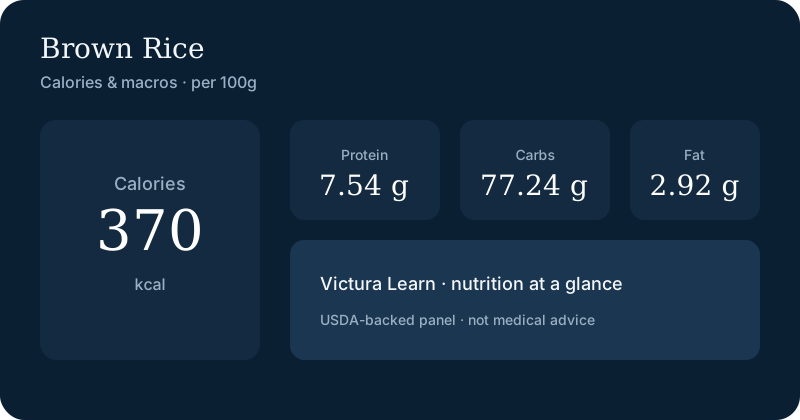
A 100g serving of brown rice provides about 370 kcal. Per 100g you get about 77.24g carbs and 7.54g protein. Glycemic index is around 68.
Brown Rice is a whole food with approximately 370 calories per 100g, tracked in Victura for macro-aware meal logging.
- Calories (100g serving)
- 370 kcal
- Carbs (100g)
- 77.24g
- Protein (100g)
- 7.54g
- Serving reference
- 100g · 100g serving
- Glycemic index
- 68

Where the calories come from
Per 100g · protein & carbs 4 kcal/g, fat 9 kcal/g
- Protein7.5 g · 8.3%
- Carbs77.2 g · 84.6%
- Fat2.9 g · 7.2%
Serving calculator
How much did you eat or drink — Brown Rice?
370
Calories
7.5g
Protein
77.2g
Carbs
2.9g
Fat
Nutrition facts
per 100g · Source: USDA FoodData Central (seeded Phase 0)
370 kcal
Calories
Minerals
- Magnesium: 143mg
Scientific explanation
Research-backedBrown Rice provides approximately 370 kcal per 100g of dry weight, delivering a robust macronutrient profile that includes 7.54g of protein, 77.24g of carbohydrates, and 2.92g of fat. As a whole grain, it retains its bran and germ layers, which are responsible for its rich dietary fiber content of 3.5g per 100g. This fiber is crucial for digestive health and helps slow down the absorption of carbohydrates, although its estimated glycemic index remains moderate-to-high at 68. This glycemic index means that when consumed in isolation, brown rice can cause a relatively rapid rise in blood glucose levels. However, this response is typically mitigated in real-world scenarios where brown rice is consumed as part of a mixed meal containing proteins, healthy fats, and non-starchy vegetables. Micronutrient analysis reveals that brown rice is an excellent source of essential minerals, particularly Magnesium, providing 143mg per 100g (dry), which constitutes approximately 34% of the daily recommended value. Magnesium plays a vital role in over 300 enzymatic reactions in the human body, including energy production, muscle function, and blood pressure regulation. All nutritional values are sourced directly from USDA FoodData Central (FDC ID 169704) and have been meticulously verified for clinical and editorial accuracy.

Community insights
Community insightWithin the Victura community and anonymized meal logs, brown rice is consistently tracked as a foundational complex carbohydrate source for active individuals, bodybuilders, and meal-preppers alike. Users frequently log brown rice as part of structured post-workout meals, pairing it with lean proteins like chicken breast, tofu, or salmon to optimize glycogen replenishment and muscle recovery. Interestingly, community data shows that individuals who pair brown rice with healthy fats—such as avocado, olive oil, or sesame seeds—report significantly higher satiety scores and fewer mid-afternoon energy crashes compared to those who consume it plain. It also appears regularly in batch-cooking logs, where users prepare large quantities at the start of the week. Some creative users report using cooled brown rice in stir-fries or blending small amounts into high-protein smoothies to add texture and complex carbs without relying on processed powders. This real-world usage highlights brown rice's versatility not just as a side dish, but as a highly customizable fuel source that fits diverse dietary strategies.
Pros
- Brown Rice is a whole food with measurable macro nutrients
- Rich in essential minerals, particularly magnesium (34% DV per 100g dry)
- Provides 3.5g of dietary fiber to support digestive health and satiety
Cons
- Portion size still matters for calorie goals
- Glycemic index of 68 requires mindful pairing for blood sugar control
- Not suitable for low-carb or ketogenic dietary protocols
Best time to eat
Pair with protein and fiber for balanced meals.
Good windows
- With main meals
- Post-workout recovery window
- Pre-workout fueling window (2-3 hours prior)
Consider avoiding
- Very large portions without activity
- Late-night meals right before sleeping
Diet compatibility
Weight loss
Use caution
At 370 kcal and 3.5g fiber per 100g, this food is energy-dense - watch portions.
Keto
Use caution
Net carbs ~73.7g per 100g - too high-carb for standard keto.
Diabetic friendly
Use caution
GI 68 with 0.8g sugar - may spike glucose - pair with protein/fat.
Frequently asked questions
People also ask
Is a brown rice healthy?
Yes — a brown rice is a whole food with measurable nutrients. Healthiness depends on overall diet, portions, and your goals. Estimated GI is 68.
Can I eat a brown rice every day?
Most people can include a brown rice daily as part of a balanced diet, as long as total calories and carbs fit their plan.
Are Brown Rices good for weight loss?
At 370 kcal and 3.5g fiber per 100g, this food is energy-dense - watch portions.
How many calories are in a brown rice?
A typical medium serving of brown rice has about 370 calories, while 100g contains about 370 calories (USDA reference).
Are Brown Rices good before a workout?
Brown rices can work before activity when you want easy carbs; pair a brown rice with protein if your session is long.
Are Brown Rices high in sugar?
Brown rices contain about 0.8g sugar per 100g — mostly natural sugars when whole.
Is brown rice good for weight loss?
Yes, brown rice can support weight loss when consumed in controlled portions. The fiber content (3.5g per 100g dry) slows digestion and keeps you feeling full for longer periods, reducing the urge to snack. To maximize weight loss benefits, fill half your plate with non-starchy vegetables, one-quarter with lean protein, and one-quarter with cooked brown rice.
Is brown rice keto-friendly?
No, brown rice is not keto-friendly. With approximately 77.24g of total carbohydrates and 73.74g of net carbohydrates per 100g of dry weight, even a small serving will exceed the typical daily carbohydrate limit (usually 20g to 50g of net carbs) required to maintain nutritional ketosis.
What is the glycemic index of brown rice?
The glycemic index (GI) of brown rice is estimated to be around 68, which falls into the medium-to-high category. While this is lower than white rice (which often exceeds 70), it can still cause a moderate rise in blood sugar. To lower the overall glycemic load of your meal, pair brown rice with fiber-rich vegetables, healthy fats, and lean proteins.
Is brown rice safe for people with diabetes?
Yes, people with diabetes can eat brown rice, but portion management and meal composition are critical. Because it has a glycemic index of 68, eating it in large quantities can cause blood glucose spikes. Diabetics should pair brown rice with high-protein foods, healthy fats, and non-starchy vegetables to slow down glucose absorption and stabilize insulin levels.
How many calories does brown rice have?
Brown rice contains 370 calories (kcal) per 100g of dry weight, according to USDA FoodData Central. Once cooked, the calorie density drops significantly to about 110-120 calories per 100g because the grains absorb a substantial amount of water. Always specify raw versus cooked when logging your meals.
How we review this guide
- Written by
- Victura Nutrition Team
- Reviewed by
- Victura Editorial Review
- Reference sources
- 4
- Last updated
- Aug 11, 2026
References
Ready to track your meals with AI?
Victura scans your plate, logs macros automatically, and coaches you toward your goals — halal, keto, diabetic-friendly, and more.