
Soy Milk Vs Almond Milk Nutrition Facts
Calories, protein, fat and key nutrients in unsweetened soy milk and almond milk — plus which one fits weight loss, keto or workout goals.
Written by Victura Nutrition TeamReviewed by Victura Editorial ReviewLast updated Aug 19, 2026
15
Calories
0.4g
Protein
1.3g
Carbs
Generally yes
Is it healthy?
per 100g · per panel values
Track this food in VicturaQuick answer
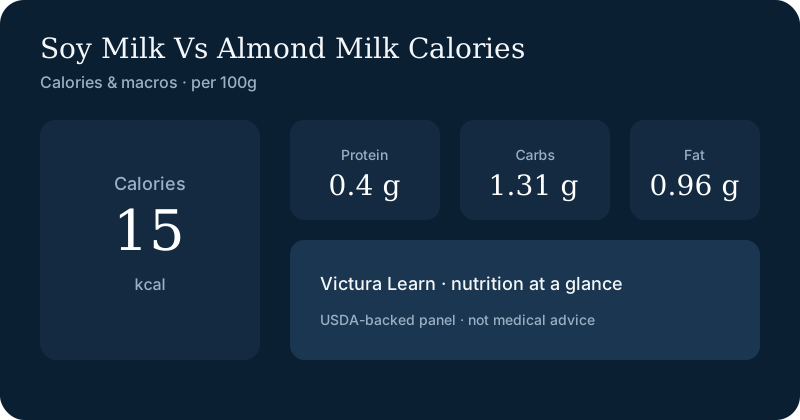
A 100g serving of soy milk vs almond milk provides about 15 kcal. Per 100g you get about 1.31g carbs and 0.4g protein.
Soy Milk Vs Almond Milk is a whole food with approximately 15 calories per 100g, tracked in Victura for macro-aware meal logging.
- Calories (100g serving)
- 15 kcal
- Carbs (100g)
- 1.31g
- Protein (100g)
- 0.4g
- Serving reference
- 100g · 100g serving


Serving calculator
How much did you eat or drink — Soy Milk Vs Almond Milk?
15
Calories
0.4g
Protein
1.3g
Carbs
1.0g
Fat
Nutrition facts
per 100g · Source: USDA FoodData Central
15 kcal
Calories
Vitamins
- Vitamin E: 2.81mg
Minerals
- Calcium: 188mg
Scientific explanation
Research-backedSoy milk and almond milk are two popular plant-based milk alternatives, but they are not interchangeable in calories and protein. Quick answer: In a typical 240 ml cup, unsweetened almond milk has about 36 calories (15 calories per 100g), while plain unsweetened soy milk has about 80 calories (roughly 33 calories per 100g). So for a like-for-like unsweetened comparison, almond milk is the lower-calorie choice, and soy milk is the higher-protein choice. Using the USDA panel for shelf-stable unsweetened almond milk (FDC 174832), 100g contains 15 kcal, 0.96g fat, 1.31g carbohydrate, 0.2g fiber, 0.81g sugar, and 0.4g protein. Unsweetened soy milk is typically around 33–40 kcal and 3.3g protein per 100g, though exact values vary by brand and fortification (see USDA FoodData Central for a specific soy milk entry). That makes soy milk about 2–2.5 times more calorie-dense, but it also supplies roughly 8 times the protein of almond milk. Nutrient differences: almond milk in this USDA panel is notable for vitamin E (2.81mg, 19% DV) and fortified calcium (188mg, 14% DV) per 100g. Soy milk is often fortified to a similar calcium range, but exact amounts depend on the brand. Both are naturally low in sugar if you choose unsweetened versions. Neither has a formal glycemic index value in the panel; their carbohydrate and sugar levels are low enough that unsweetened versions are generally considered blood-sugar friendly in normal portions. Weight-loss and diet context: For a calorie-controlled diet, unsweetened almond milk is a lower-calorie swap in coffee, cereal and smoothies. For a more filling, higher-protein milk alternative, unsweetened soy milk is a better fit—for example, in post-workout shakes or plant-based diets where protein matters. Portion size and added sweeteners matter more than the difference between the two: sweetened 'vanilla' or 'original' versions can double the calorie and sugar count. Practical tip: check the label for the word 'unsweetened' and look at the per-cup rather than per-100g number. Refrigerated and barista-style blends can be higher in calories, and fortified soy or almond milks are better dairy substitutes for calcium and vitamin D.
Community insights
Community insightVictura anonymized meal logs suggest a clear usage split. Unsweetened almond milk shows up most often in low-calorie coffee drinks, overnight oats and quick smoothies for users tracking calories or following keto. Unsweetened soy milk shows up more often in higher-protein breakfast bowls, post-workout smoothies and meal-replacement-style shakes. The community pattern tracks the nutrition data: almond milk is a lighter, thinner base, while soy milk brings a dairy-like protein amount that helps with satiety. One practical rule from community experience: if your goal is to cut as many calories as possible without changing flavor much, choose unsweetened almond milk. If your goal is to keep breakfast or recovery meals more filling, choose unsweetened soy milk. Both work for everyday use when chosen unsweetened, but fortified versions vary widely, so it is worth reading the nutrition label for calcium, vitamin D or B12 if you rely on plant milks as a dairy substitute.
Pros
Cons
Best time to eat
Good windows
Consider avoiding
Diet compatibility
Weight loss
Friendly
Consult your healthcare provider for personalized guidance.
Keto
Friendly
Consult your healthcare provider for personalized guidance.
Diabetes
Friendly
Consult your healthcare provider for personalized guidance.
Frequently asked questions
People also ask
Is a soy milk vs almond milk healthy?
Yes — a soy milk vs almond milk is a whole food with measurable nutrients. Healthiness depends on overall diet, portions, and your goals.
Can I eat a soy milk vs almond milk every day?
Most people can include a soy milk vs almond milk daily as part of a balanced diet, as long as total calories and carbs fit their plan.
Are Soy Milk Vs Almond Milks good for weight loss?
Soy milk vs almond milks can fit a calorie-controlled diet when portions are measured.
How many calories are in a soy milk vs almond milk?
A typical medium serving of soy milk vs almond milk has about 15 calories, while 100g contains about 15 calories (USDA reference).
Are Soy Milk Vs Almond Milks good before a workout?
Soy milk vs almond milks can work before activity when you want easy carbs; pair a soy milk vs almond milk with protein if your session is long.
Are Soy Milk Vs Almond Milks high in sugar?
Soy milk vs almond milks contain about 0.8g sugar per 100g — mostly natural sugars when whole.
Is soy milk or almond milk healthy?
Both can be part of a healthy diet when you choose unsweetened, fortified versions. Almond milk is lower in calories and carbs; soy milk is higher in protein. Your choice depends on your overall diet, portions, and goals.
Can I drink soy milk or almond milk every day?
Most people can include unsweetened soy or almond milk daily as part of a balanced diet, as long as total calories and carbs fit their plan. Avoid soy milk if you have a soy allergy.
Are soy milk or almond milk good for weight loss?
Both can fit a calorie-controlled diet when portions are measured. Unsweetened almond milk is the lower-calorie option; unsweetened soy milk is more protein-dense, which may help with fullness.
Are soy milk or almond milk good before a workout?
Soy milk is generally the better pre- or post-workout choice because it has meaningful protein (about 3.3g/100g) to support muscle repair. Almond milk is too low in protein on its own, but it can work in a carb-conscious pre-workout when paired with a protein source.
Are soy milk or almond milk high in sugar?
Unsweetened versions are low in sugar: almond milk has 0.81g sugar per 100g, and soy milk has about 0.6–1g. Sweetened varieties—vanilla, chocolate, or original—can add 5–10g sugar per cup, so check the label.
Is soy milk or almond milk healthier?
Neither is universally healthier; it depends on your goal. Unsweetened almond milk is lower in calories (15 kcal/100g) and very low in carbs, making it a good choice for weight loss or keto. Unsweetened soy milk is higher in protein (about 3.3g/100g) and more satiating, making it a better choice if you need a dairy-like protein amount. Choose unsweetened, fortified versions so you get calcium and vitamin D without added sugar.
How we review this guide
- Written by
- Victura Nutrition Team
- Reviewed by
- Victura Editorial Review
- Reference sources
- 5
- Last updated
- Aug 19, 2026
References
Ready to track your meals with AI?
Victura scans your plate, logs macros automatically, and coaches you toward your goals — halal, keto, diabetic-friendly, and more.