
Salmon Vs Chicken Breast Nutrition Facts
A comprehensive comparison of calories, protein, fats, and micronutrients to help you choose the best protein source for your fitness goals.
Written by Victura Nutrition TeamReviewed by Victura Editorial ReviewLast updated Aug 8, 2026
165
Calories
31.0g
Protein
0.0g
Carbs
Generally yes
Is it healthy?
per 100g · per panel values
Track this food in VicturaQuick answer
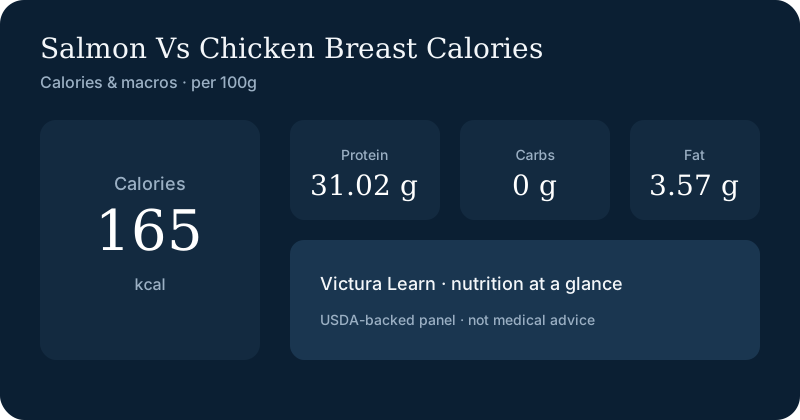
A 100g serving of salmon vs chicken breast provides about 165 kcal. Per 100g you get about 0g carbs and 31.02g protein.
Salmon Vs Chicken Breast is a whole food with approximately 165 calories per 100g, tracked in Victura for macro-aware meal logging.
- Calories (100g serving)
- 165 kcal
- Carbs (100g)
- 0.0g
- Protein (100g)
- 31.02g
- Serving reference
- 100g · 100g serving


Serving calculator
How much did you eat or drink — Salmon Vs Chicken Breast?
165
Calories
31.0g
Protein
0.0g
Carbs
3.6g
Fat
Nutrition facts
per 100g · Source: USDA FoodData Central
165 kcal
Calories
Vitamins
- Niacin: 9.6mg
- Vitamin B6: 0.81mg
Minerals
- Phosphorus: 196mg
- Selenium: 22mcg
Scientific explanation
Research-backedSalmon Vs Chicken Breast provides two of the most popular high-quality protein sources in the human diet, each offering distinct nutritional profiles. According to USDA FoodData Central, a 100g serving of cooked, roasted chicken breast (FDC ID 171477) contains 165 calories, 31.02g of protein, 3.57g of fat, and 0.0g of carbohydrates. In comparison, a typical 100g serving of cooked wild Atlantic salmon contains approximately 182 calories, 25g of protein, and 8g of fat, primarily driven by heart-healthy omega-3 fatty acids. While chicken breast is the ultimate lean protein champion with a higher protein-to-calorie ratio, salmon excels in micronutrient density, providing essential vitamin D, B12, and healthy fats. Chicken breast is exceptionally rich in Niacin (9.6mg, 60% DV) and Vitamin B6 (0.81mg, 48% DV), alongside minerals like Phosphorus (196mg, 16% DV) and Selenium (22.0mcg, 40% DV). Choosing between them depends on whether your priority is minimizing caloric intake or maximizing essential fatty acids.
Community insights
Community insightIn the Victura community, users frequently debate the practical application of salmon vs chicken breast in daily meal prep. Fitness enthusiasts tracking strict macros often favor chicken breast for its pure protein efficiency, especially during cutting phases. However, culinary logs show that salmon is highly valued for its satiety index and flavor profile, reducing the need for added oils or heavy sauces. Many users adopt a hybrid approach, utilizing chicken breast for high-volume low-calorie days and integrating salmon twice a week to meet essential fatty acid requirements without relying on supplements.
Pros
Cons
Best time to eat
Good windows
Consider avoiding
Diet compatibility
Weight loss
Friendly
Consult your healthcare provider for personalized guidance.
Keto
Friendly
Consult your healthcare provider for personalized guidance.
Diabetes
Friendly
Consult your healthcare provider for personalized guidance.
Frequently asked questions
People also ask
Is a salmon vs chicken breast healthy?
Yes — a salmon vs chicken breast is a whole food with measurable nutrients. Healthiness depends on overall diet, portions, and your goals.
Can I eat a salmon vs chicken breast every day?
Most people can include a salmon vs chicken breast daily as part of a balanced diet, as long as total calories and carbs fit their plan.
Are Salmon Vs Chicken Breasts good for weight loss?
Salmon vs chicken breasts can fit a calorie-controlled diet when portions are measured.
How many calories are in a salmon vs chicken breast?
A typical medium serving of salmon vs chicken breast has about 165 calories, while 100g contains about 165 calories (USDA reference).
Are Salmon Vs Chicken Breasts good before a workout?
Salmon vs chicken breasts can work before activity when you want easy carbs; pair a salmon vs chicken breast with protein if your session is long.
Are Salmon Vs Chicken Breasts high in sugar?
Salmon vs chicken breasts contain about 0.0g sugar per 100g — mostly natural sugars when whole.
Which is better for weight loss, salmon or chicken breast?
Chicken breast is highly efficient for strict calorie-restricted diets because it is extremely lean, providing 165 calories and 31.02g of protein per 100g with minimal fat. However, salmon's healthy omega-3 fatty acids promote greater satiety, which can help prevent overeating later in the day.
Can I eat salmon and chicken breast every day?
Chicken breast can safely be eaten daily as a lean protein source. For salmon, it is generally recommended to limit consumption to 2–3 times per week to balance omega-3 intake and minimize potential exposure to heavy metals like mercury found in some seafood.
How do the calories compare between salmon and chicken breast?
Per 100g cooked portion, chicken breast contains 165 calories, while wild Atlantic salmon contains approximately 182 calories. The slight caloric difference in salmon is due to its healthy fat content.
Should I eat salmon or chicken breast before a workout?
Chicken breast is preferred 2–3 hours before a workout because it is very low in fat and easy to digest, providing rapid amino acids. Salmon's higher fat content slows digestion, making it an excellent choice for post-workout recovery instead.
Do salmon or chicken breast contain any sugar or carbohydrates?
No, neither cooked chicken breast nor salmon contains any carbohydrates, fiber, or sugar (0.0g per 100g), making both outstanding options for ketogenic, low-carb, and diabetic-friendly diets.
Which has more protein, salmon or chicken breast?
Cooked chicken breast contains more protein, providing 31.02g of protein per 100g compared to approximately 25g of protein per 100g in wild Atlantic salmon.
How we review this guide
- Written by
- Victura Nutrition Team
- Reviewed by
- Victura Editorial Review
- Reference sources
- 4
- Last updated
- Aug 8, 2026
References
Ready to track your meals with AI?
Victura scans your plate, logs macros automatically, and coaches you toward your goals — halal, keto, diabetic-friendly, and more.