
Salmon Nutrition Facts
Complete salmon nutrition breakdown with 208 kcal per 100g, glycemic index, and diet compatibility.
Written by Victura Nutrition TeamReviewed by Victura Editorial ReviewLast updated Aug 9, 2026
208
Calories
20.4g
Protein
0.0g
Carbs
Generally yes
Is it healthy?
per 100g · per panel values
Track this food in VicturaQuick answer
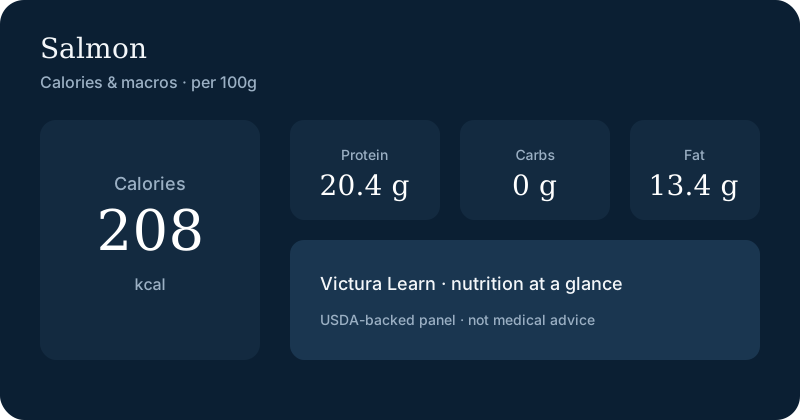
A 3-ounce serving of salmon contains around 177 calories, while 100g contains about 208 calories. Per 100g you get about 0g carbs and 20.4g protein.
Salmon is a whole food with approximately 208 calories per 100g, tracked in Victura for macro-aware meal logging.
- Calories (3-ounce serving)
- 177 kcal
- Calories (100g)
- 208 kcal
- Carbs (100g)
- 0.0g
- Protein (100g)
- 20.4g
- Serving reference
- 85g · 3-ounce serving

Where the calories come from
Per 100g · protein & carbs 4 kcal/g, fat 9 kcal/g
- Protein20.4 g · 40.4%
- Carbs0 g · 0%
- Fat13.4 g · 59.6%
Serving calculator
How much did you eat or drink — Salmon?
208
Calories
20.4g
Protein
0.0g
Carbs
13.4g
Fat
Nutrition facts
per 100g · Source: USDA FoodData Central (seeded Phase 0)
208 kcal
Calories
Vitamins
- Vitamin D: 11mcg
Minerals
- Selenium: 36.5mcg
Scientific explanation
Research-backedSalmon provides an exceptional source of high-quality protein, heart-healthy omega-3 fatty acids, and essential micronutrients. Per 100g serving, raw farmed Atlantic salmon delivers 208 calories, 20.4g of highly bioavailable protein, 13.4g of total fat, and absolutely zero carbohydrates, fiber, or sugars. This macronutrient split makes it an ideal food for a wide variety of dietary patterns, including ketogenic, low-carbohydrate, and high-protein diets. The lipid profile of salmon is particularly notable for its high concentration of eicosapentaenoic acid (EPA) and docosahexaenoic acid (DHA), which are long-chain omega-3 fatty acids clinically proven to support cardiovascular health, reduce systemic inflammation, and promote cognitive function. Additionally, salmon is one of the few natural dietary sources rich in Vitamin D3 and selenium, which play critical roles in bone health, immune function, and thyroid regulation.

Community insights
Community insightAmong Victura meal logs, salmon appears frequently as a cornerstone protein for dinner prep, post-workout recovery meals, and healthy lunches. Users pairing salmon with complex carbohydrates like quinoa, wild rice, or roasted sweet potatoes report sustained, long-lasting energy levels without the post-meal lethargy often associated with heavy, carb-laden dishes. In our community forums, many users tracking low-carbohydrate or ketogenic protocols highlight salmon as an invaluable tool for hitting daily fat and protein targets simultaneously. Cooking methods heavily influence community tracking habits: baking, grilling, and air-frying are the most popular preparations logged, with users noting that air-frying salmon skin-side down provides a satisfyingly crispy texture without requiring excess added oils. For those focused on weight management, portioning salmon into 120g to 150g fillets ahead of time is a frequently shared tip to keep daily caloric intake aligned with weight loss goals.
Pros
- Rich in anti-inflammatory Omega-3 fatty acids (EPA & DHA)
- High-quality complete protein supporting muscle synthesis
- Excellent natural source of Vitamin D and Selenium
- Zero carbohydrates, making it ideal for keto and diabetic diets
Cons
- More energy-dense than white fish, requiring portion awareness for weight loss
- Farmed varieties may have different fatty acid profiles compared to wild-caught
Best time to eat
Excellent for post-workout recovery, lunch, or dinner to promote satiety and muscle repair.
Good windows
- Post-workout recovery
- Dinner for overnight muscle synthesis
- Lunch for sustained afternoon energy
Consider avoiding
- Immediately before high-intensity cardiovascular workouts (due to slower digestion of fats)
Diet compatibility
Weight loss
Friendly
Highly satiating due to protein and healthy fats, though portions must be monitored due to its caloric density (208 kcal/100g).
Keto
Friendly
Net carbs are 0.0g per 100g, with a high proportion of healthy fats and proteins, making it perfect for ketosis.
Diabetic friendly
Friendly
Glycemic index is 0. Salmon contains no sugars or carbohydrates, preventing blood glucose spikes.
Frequently asked questions
People also ask
Is a salmon healthy?
Yes — a salmon is a whole food with measurable nutrients. Healthiness depends on overall diet, portions, and your goals.
Can I eat a salmon every day?
Most people can include a salmon daily as part of a balanced diet, as long as total calories and carbs fit their plan.
Are salmon good for weight loss?
Highly satiating due to protein and healthy fats, though portions must be monitored due to its caloric density (208 kcal/100g).
How many calories are in a salmon?
A typical medium serving of salmon has about 208 calories, while 100g contains about 208 calories (USDA reference).
Are salmon good before a workout?
Salmon can work before activity when you want easy carbs; pair a salmon with protein if your session is long.
Are salmon high in sugar?
Salmon contain about 0.0g sugar per 100g — mostly natural sugars when whole.
Is salmon healthy?
Yes, salmon is exceptionally healthy. It is a whole food rich in complete proteins, anti-inflammatory omega-3 fatty acids (EPA and DHA), Vitamin D, and selenium. Regular consumption supports cardiovascular health, cognitive function, and muscle maintenance. Its health benefits are well-documented across clinical nutrition literature, making it a highly recommended protein source globally.
Can I eat salmon every day?
Most people can safely eat salmon daily as part of a balanced diet. Because salmon is relatively low in mercury compared to larger predatory fish like swordfish or tuna, daily consumption poses minimal risk for most adults. However, to ensure dietary variety and manage overall caloric intake, rotating salmon with other lean proteins, wild-caught seafood, and plant-based proteins is generally recommended.
Is salmon good for weight loss?
Yes, salmon is highly beneficial for weight loss. Although it contains 208 calories per 100g, its high protein content (20.4g) and healthy fats promote satiety by stimulating the release of fullness hormones like peptide YY and GLP-1. This helps curb appetite and reduce overall daily calorie consumption. Portion control is key to fitting its energy-dense profile into a calorie deficit.
How many calories are in a salmon serving?
A typical 3-ounce (85g) cooked portion of salmon contains approximately 177 calories. A larger, standard restaurant-sized fillet of 150g contains about 312 calories. For raw farmed Atlantic salmon, the energy density is exactly 208 calories per 100g serving, driven entirely by its protein and fat content.
Is salmon good before a workout?
Salmon can be eaten before a workout, but timing is important. Because salmon contains 13.4g of fat per 100g, it takes longer to digest than pure carbohydrates. For best results, consume salmon 2 to 3 hours before exercise paired with an easily digestible carbohydrate, or save it as an optimal post-workout recovery meal to rebuild muscle tissue.
Is salmon high in sugar?
No, salmon contains 0.0g of sugar and 0.0g of carbohydrates per 100g. It is a pure protein and fat source, meaning it has a glycemic index of zero and will not cause spikes in blood glucose levels. This makes it an ideal food choice for individuals managing diabetes or following low-sugar diets.
How we review this guide
- Written by
- Victura Nutrition Team
- Reviewed by
- Victura Editorial Review
- Reference sources
- 4
- Last updated
- Aug 9, 2026
References
Ready to track your meals with AI?
Victura scans your plate, logs macros automatically, and coaches you toward your goals — halal, keto, diabetic-friendly, and more.