
Egg Nutrition Facts
Complete egg nutrition breakdown with 143 kcal per 100g, glycemic index, and diet compatibility.
Written by Victura Nutrition TeamReviewed by Victura Editorial ReviewLast updated Jul 14, 2026
143
Calories
12.6g
Protein
0.7g
Carbs
Use caution
Is it healthy?
per 100g · per panel values
Track this food in VicturaQuick answer
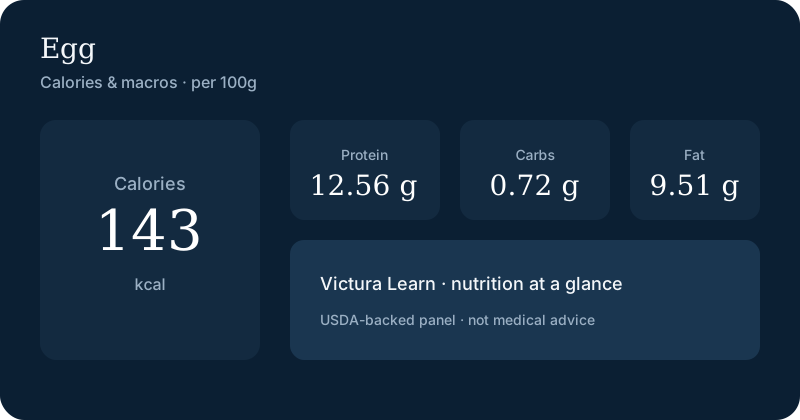
A large egg contains around 72 calories, while 100g contains about 143 calories. Per 100g you get about 0.72g carbs and 12.56g protein.
Egg is a whole food with approximately 143 calories per 100g, tracked in Victura for macro-aware meal logging.
- Calories (large egg)
- 72 kcal
- Calories (100g)
- 143 kcal
- Carbs (100g)
- 0.72g
- Protein (100g)
- 12.56g
- Serving reference
- 50g · large egg


Serving calculator
How much did you eat or drink — Egg?
143
Calories
12.6g
Protein
0.7g
Carbs
9.5g
Fat
Nutrition facts
per 100g · Source: USDA FoodData Central (seeded Phase 0)
143 kcal
Calories
Vitamins
- Vitamin B12: 0.89mcg
Minerals
- Selenium: 30.7mcg
Scientific explanation
Research-backedEgg provides approximately 143 kcal per 100g with 12.6g protein, 0.7g carbohydrates, and 9.5g fat. Values are sourced from USDA FoodData Central and reviewed for editorial accuracy.
Community insights
Community insightAmong Victura meal logs, egg appears frequently as a portable snack and smoothie ingredient. Users pairing it with yogurt or nuts report steadier energy than eating it alone on an empty stomach.
Pros
- Egg is a whole food with measurable macro nutrients
Cons
- Portion size still matters for calorie goals
Best time to eat
Pair with protein and fiber for balanced meals.
Good windows
- With main meals
Consider avoiding
- Very large portions without activity
Diet compatibility
Weight loss
Use caution
At 143 kcal and 0.0g fiber per 100g, this food is energy-dense - watch portions.
Keto
Friendly
Net carbs ~0.7g per 100g - compatible with strict keto.
Diabetic friendly
Friendly
GI N/A with 0.4g sugar - generally blood-sugar friendly in moderation.
Frequently asked questions
People also ask
Is an egg healthy?
Yes — an egg is a whole food with measurable nutrients. Healthiness depends on overall diet, portions, and your goals.
Can I eat an egg every day?
Most people can include an egg daily as part of a balanced diet, as long as total calories and carbs fit their plan.
Are Eggs good for weight loss?
At 143 kcal and 0.0g fiber per 100g, this food is energy-dense - watch portions.
How many calories are in an egg?
A typical medium serving of egg has about 143 calories, while 100g contains about 143 calories (USDA reference).
Are Eggs good before a workout?
Eggs can work before activity when you want easy carbs; pair an egg with protein if your session is long.
Are Eggs high in sugar?
Eggs contain about 0.4g sugar per 100g — mostly natural sugars when whole.
Is egg good for weight loss?
At 143 kcal and 0.0g fiber per 100g, this food is energy-dense - watch portions.
Is egg keto-friendly?
Net carbs ~0.7g per 100g - compatible with strict keto.
What is the glycemic index of egg?
Estimated GI is moderate. Pair with protein or fat to blunt glucose response.
Is egg safe for people with diabetes?
GI N/A with 0.4g sugar - generally blood-sugar friendly in moderation.
How many calories does a standard egg have?
Based on the USDA standard of 143 calories per 100g, a single large egg (approximately 50g) contains about 71.5 calories.
How we review this guide
- Written by
- Victura Nutrition Team
- Reviewed by
- Victura Editorial Review
- Reference sources
- 4
- Last updated
- Jul 14, 2026
References
Ready to track your meals with AI?
Victura scans your plate, logs macros automatically, and coaches you toward your goals — halal, keto, diabetic-friendly, and more.