
Chicken Breast Vs Salmon: Nutrition, Calories & Best Choice
A complete comparison of calories, protein, and healthy fats to optimize your diet.
Written by Victura Nutrition TeamReviewed by Victura Editorial ReviewLast updated Jul 19, 2026


Quick answer
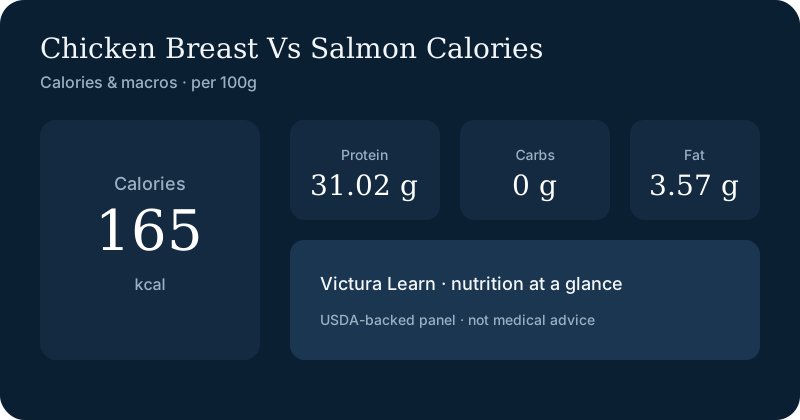
A 100g serving of chicken breast vs salmon provides about 165 kcal. Per 100g you get about 0g carbs and 31.02g protein.
Chicken Breast Vs Salmon is a whole food with approximately 165 calories per 100g, tracked in Victura for macro-aware meal logging.
- Calories (100g serving)
- 165 kcal
- Carbs (100g)
- 0.0g
- Protein (100g)
- 31.02g
- Serving reference
- 100g · 100g serving
The Macronutrient and Micronutrient Breakdown
Research-backedWhen evaluating the nutritional profiles of chicken breast and salmon, we are comparing two of the most prominent whole-food protein sources available. According to USDA FoodData Central (FDC ID 171477), a 100g serving of cooked, roasted chicken breast (meat only) provides exactly 165 calories, 31.02g of high-quality protein, 3.57g of total lipid fat, and 0.0g of carbohydrates, fiber, and sugar. This exceptional protein-to-calorie ratio makes chicken breast an industry standard for lean muscle preservation and fat loss. The protein in chicken breast is highly bioavailable, containing all nine essential amino acids necessary for muscle protein synthesis, with a particularly high concentration of leucine, which acts as the primary trigger for muscle repair. In contrast, a 100g serving of cooked salmon (such as wild Atlantic salmon) typically delivers approximately 182 to 206 calories, 22g to 25g of protein, and 8g to 12g of fat, depending on whether it is wild-caught or farm-raised. While salmon is lower in absolute protein density per gram compared to chicken breast, its fat profile is its primary therapeutic asset. Salmon is rich in long-chain omega-3 polyunsaturated fatty acids, specifically eicosapentaenoic acid (EPA) and docosahexaenoic acid (DHA). These essential fatty acids are well-documented in peer-reviewed literature (Tier 2) for their ability to reduce systemic inflammation, lower blood pressure, decrease triglyceride levels, and support cognitive function. The micronutrient comparison further highlights their distinct physiological benefits. Chicken breast is an outstanding source of B-vitamins, particularly Niacin (9.6 mg per 100g, or 60% of the Daily Value), which is crucial for cellular energy production and DNA repair, and Vitamin B6 (0.81 mg per 100g, or 48% DV), which plays a vital role in neurotransmitter synthesis and red blood cell formation. It also provides 22.0 mcg of Selenium (40% DV), a powerful antioxidant that supports thyroid health, and 196 mg of Phosphorus (16% DV) for bone mineralization. Salmon, on the other hand, excels in fat-soluble vitamins that are virtually absent in chicken breast. It is one of the few natural dietary sources of Vitamin D3 (providing over 100% of the daily requirement in a standard portion), which is essential for calcium absorption, immune function, and bone health. Additionally, salmon provides massive amounts of Vitamin B12 (cobalamin), which is critical for neurological function and DNA synthesis, alongside significant levels of potassium, which helps regulate fluid balance and blood pressure. Ultimately, choosing between these two proteins is not a matter of which is objectively healthier, but rather which nutrient profile aligns with your immediate metabolic and athletic goals.
Real-World Application: Cutting vs. Longevity
Community insightWithin the fitness, bodybuilding, and longevity communities, chicken breast and salmon are viewed through different strategic lenses. In competitive bodybuilding and athletic circles focused on rapid body recomposition or strict weight cutting, chicken breast is the undisputed staple. Its low fat content allows athletes to maximize their protein intake while maintaining a tight caloric deficit. Meal preppers favor chicken breast for its cost-effectiveness, ease of bulk preparation, and ability to absorb a wide variety of seasonings and marinades without altering its core macronutrient structure. Conversely, the longevity and functional medicine communities place a premium on salmon. The high omega-3 content is highly valued for combating the joint wear-and-tear associated with heavy resistance training, while also promoting skin health and cardiovascular resilience. Many health-conscious individuals adopt a hybrid approach: utilizing chicken breast as their daily baseline protein to keep calories controlled, while integrating wild-caught salmon two to three times per week to secure essential fatty acids and fat-soluble vitamins. Sustainability and sourcing also spark significant discussion. The community heavily debates wild-caught versus farmed salmon due to differences in contaminant levels and environmental impact, generally recommending wild-caught for those prioritizing purity. For chicken, organic and pasture-raised options are preferred to avoid antibiotic exposure. Ultimately, combining both proteins yields a highly versatile, nutrient-dense diet that supports both performance and long-term health.
References
Frequently asked questions
People also ask
Can I eat chicken breast or salmon every day?
Yes, both can be safely consumed daily, but they require different considerations. Chicken breast is highly versatile and safe for daily consumption due to its low fat and contaminant profile. However, if you choose to eat salmon daily, it is highly recommended to opt for wild-caught varieties rather than farmed, as farmed salmon can contain higher levels of persistent organic pollutants. Additionally, varying your protein sources ensures a broader spectrum of micronutrients.
Which is better for weight loss, chicken breast or salmon?
For strict calorie restriction, chicken breast is slightly superior because it provides more protein (31.02g per 100g) with minimal fat, resulting in fewer overall calories (165 kcal per 100g). This allows you to eat a larger volume of food for fewer calories. However, salmon's healthy fats promote long-term satiety by triggering the release of fullness hormones like peptide YY, which can prevent overeating later in the day.
How many calories are in one serving of chicken breast vs salmon?
A standard 150g cooked serving of skinless chicken breast contains approximately 248 calories and 46.5g of protein. In contrast, a 150g cooked serving of wild salmon contains about 273 to 300 calories and 33g to 37g of protein, depending on the fat content. Farmed salmon will be slightly higher in calories due to its higher fat density.
Should I eat chicken breast or salmon before a workout?
Chicken breast is the preferred pre-workout option. Because it is extremely low in fat (3.57g per 100g), it digests much faster than salmon. Consuming a fast-digesting protein paired with a clean carbohydrate source 2 to 3 hours before exercise ensures your muscles have a steady supply of amino acids without drawing excessive blood flow to your stomach for heavy digestion, which can cause cramping.
Are chicken breast or salmon high in sugar?
No, neither chicken breast nor salmon contains any sugar or carbohydrates (0.0g per 100g). Both are pure protein and fat sources, making them exceptionally well-suited for ketogenic, low-carb, and diabetic-friendly diets. They have a glycemic index of zero and will not cause any direct spike in blood glucose or insulin levels.
Which has more protein, chicken breast or salmon?
Chicken breast has more protein per unit of weight. Cooked chicken breast contains 31.02g of protein per 100g, whereas cooked salmon typically contains between 22g and 25g of protein per 100g. If your primary goal is to maximize protein intake while keeping your total fat and calorie intake as low as possible, chicken breast is the more efficient choice.
How we review this guide
- Written by
- Victura Nutrition Team
- Reviewed by
- Victura Editorial Review
- Reference sources
- 4
- Last updated
- Jul 19, 2026
Ready to track your meals with AI?
Victura scans your plate, logs macros automatically, and coaches you toward your goals — halal, keto, diabetic-friendly, and more.