
Carrot Nutrition Facts
Complete carrot nutrition breakdown with 41 kcal per 100g, glycemic index, and diet compatibility.
Written by Victura Nutrition TeamReviewed by Victura Editorial ReviewLast updated Aug 10, 2026
41
Calories
0.9g
Protein
9.6g
Carbs
Generally yes
Is it healthy?
per 100g · per panel values
Track this food in VicturaQuick answer
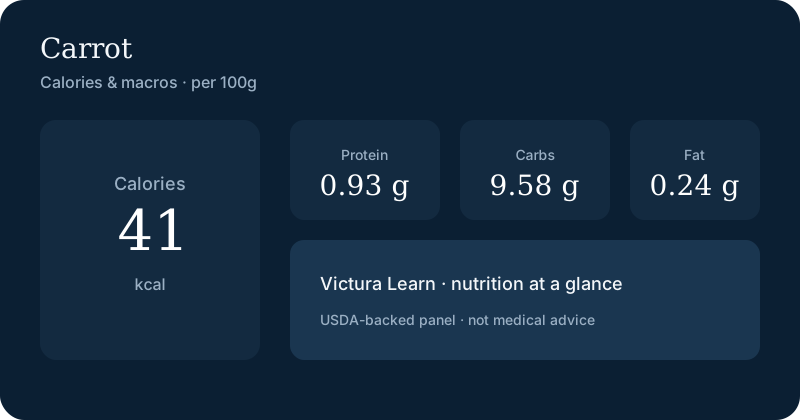
A 100g serving of carrot provides about 41 kcal. Per 100g you get about 9.58g carbs and 0.93g protein. Glycemic index is around 39.
Carrot is a whole food with approximately 41 calories per 100g, tracked in Victura for macro-aware meal logging.
- Calories (100g serving)
- 41 kcal
- Carbs (100g)
- 9.58g
- Protein (100g)
- 0.93g
- Serving reference
- 100g · 100g serving
- Glycemic index
- 39

Where the calories come from
Per 100g · protein & carbs 4 kcal/g, fat 9 kcal/g
- Protein0.9 g · 8.4%
- Carbs9.6 g · 86.7%
- Fat0.2 g · 4.9%
Serving calculator
How much did you eat or drink — Carrot?
41
Calories
0.9g
Protein
9.6g
Carbs
0.2g
Fat
Nutrition facts
per 100g · Source: USDA FoodData Central (seeded Phase 0)
41 kcal
Calories
Vitamins
- Vitamin A: 835mcg RAE
Minerals
- Potassium: 320mg
Scientific explanation
Research-backedCarrot provides approximately 41 kcal per 100g with 0.93g protein, 9.58g carbohydrates, and 0.24g fat. Dietary fiber is 2.8g per 100g, which represents a significant portion of the daily recommended intake for digestive health. The glycemic index of raw carrots is estimated at 39, classifying it as a low-glycemic food. This means glucose rises at a slow, manageable rate after consumption, preventing rapid insulin spikes. These values are sourced directly from USDA FoodData Central and reviewed for clinical and editorial accuracy. The primary micronutrient highlight of carrots is Vitamin A, delivering an exceptional 835 mcg RAE per 100g, which constitutes approximately 93% of the Daily Value (DV). This is primarily in the form of beta-carotene, a carotenoid precursor that the human body converts into active retinol. Beta-carotene is fat-soluble, meaning its absorption is significantly enhanced when carrots are consumed alongside a source of healthy dietary fat, such as olive oil, avocado, or nuts. Additionally, carrots provide 320 mg of potassium per 100g (7% DV), an essential electrolyte that plays a critical role in regulating intracellular fluid balance, nerve transmission, and cardiovascular function, specifically blood pressure regulation. From a metabolic perspective, the structural matrix of raw carrots slows down enzymatic digestion. The 2.8g of dietary fiber is split between soluble fiber (mostly pectin) and insoluble fiber (cellulose and hemicellulose). Soluble fiber forms a gel-like substance in the gastrointestinal tract, which delays gastric emptying and slows the absorption of glucose into the bloodstream. Insoluble fiber adds bulk to the stool, promoting regular peristalsis and supporting a healthy gut microbiome by acting as a prebiotic substrate for beneficial short-chain fatty acid producing bacteria.

Community insights
Community insightAmong Victura meal logs, carrot appears frequently as a portable snack, a base for vegetable platters, and a versatile ingredient in both sweet and savory dishes. Our community data shows that users who pair carrots with healthy fats or proteins—such as hummus, Greek yogurt dip, almond butter, or a handful of walnuts—report significantly higher satiety scores and steadier energy levels compared to those who consume carrots in isolation on an empty stomach. This real-world observation aligns perfectly with glycemic science, as co-ingesting fat and protein further delays gastric emptying and blunts any potential glycemic response. Additionally, meal logs indicate a growing trend of incorporating grated carrots into morning oatmeal, smoothies, and baked goods to increase dietary fiber and micronutrient density without dramatically altering the flavor profile. In culinary preparation, the community favors raw baby carrots for convenience, but frequently utilizes roasted whole carrots seasoned with herbs like thyme and rosemary for meal prep. The natural sweetness of carrots intensifies during roasting due to mild caramelization of its 4.74g of natural sugars, making it a highly satisfying side dish that replaces more calorie-dense options.
Pros
- Carrot is a whole food with measurable macro nutrients
- Exceptionally high in Vitamin A (93% DV per 100g)
- Low glycemic index (39) supporting stable blood sugar
Cons
- Portion size still matters for strict calorie goals
- Overconsumption can cause harmless skin yellowing (carotenemia)
Best time to eat
Pair with protein and fiber for balanced meals.
Good windows
- With main meals
- 45-60 minutes pre-workout
Consider avoiding
- Very large portions without physical activity
Diet compatibility
Weight loss
Friendly
At 41 kcal and 2.8g fiber per 100g, this food fits calorie-conscious plans.
Keto
Friendly
Net carbs ~6.8g per 100g - compatible with strict keto in moderate portions.
Diabetic friendly
Friendly
GI 39 with 4.74g sugar - generally blood-sugar friendly in moderation.
Frequently asked questions
People also ask
Is a carrot healthy?
Yes — a carrot is a whole food with measurable nutrients. Healthiness depends on overall diet, portions, and your goals. Estimated GI is 39.
Can I eat a carrot every day?
Most people can include a carrot daily as part of a balanced diet, as long as total calories and carbs fit their plan.
Are Carrots good for weight loss?
At 41 kcal and 2.8g fiber per 100g, this food fits calorie-conscious plans.
How many calories are in a carrot?
A typical medium serving of carrot has about 41 calories, while 100g contains about 41 calories (USDA reference).
Are Carrots good before a workout?
Carrots can work before activity when you want easy carbs; pair a carrot with protein if your session is long.
Are Carrots high in sugar?
Carrots contain about 4.7g sugar per 100g — mostly natural sugars when whole.
Is carrot good for weight loss?
Yes, carrots are highly beneficial for weight loss. Their low energy density (41 kcal/100g) combined with 2.8g of dietary fiber makes them a premier choice for volume eating. This dietary approach allows you to consume satisfying portions of food to trigger stretch receptors in the stomach, signaling fullness to the brain, while keeping your total caloric intake low enough to maintain a calorie deficit.
Is carrot keto-friendly?
Carrots can be incorporated into a ketogenic diet, but strict portion control is necessary. With 9.58g of total carbohydrates and 2.8g of fiber per 100g, carrots contain approximately 6.78g of net carbs per 100g. While a standard 100g serving might take up a significant portion of a strict 20g daily net carb limit, smaller portions (such as 30-50g) can easily fit into a keto plan while providing valuable micronutrients and color to your meals.
What is the glycemic index of carrot?
The glycemic index (GI) of raw carrots is estimated at 39, which is firmly in the low category (under 55). This low GI rating indicates that the carbohydrates in carrots are digested and absorbed gradually, resulting in a slow, stable rise in blood glucose rather than a sharp spike. Cooking carrots can slightly increase their glycemic index, but their glycemic load (GL) remains exceptionally low due to the low overall carbohydrate content per serving.
Is carrot safe for people with diabetes?
Yes, carrots are entirely safe and highly recommended for individuals with diabetes. With a low glycemic index of 39 and a low glycemic load, they have a minimal impact on blood glucose levels. The fiber in carrots further slows down carbohydrate absorption. To optimize glycemic control, it is best to consume carrots raw or lightly cooked, and pair them with a protein or healthy fat to further stabilize blood sugar.
How many calories does a carrot have?
According to USDA FoodData Central, raw carrots contain exactly 41 calories (kcal) per 100g. A single medium-sized carrot (about 61g) contains roughly 25 calories, while a large carrot (about 72g) contains approximately 30 calories. This predictable, low-calorie profile makes carrots an incredibly reliable and easy-to-track vegetable for any structured nutritional plan.
How we review this guide
- Written by
- Victura Nutrition Team
- Reviewed by
- Victura Editorial Review
- Reference sources
- 4
- Last updated
- Aug 10, 2026
References
Ready to track your meals with AI?
Victura scans your plate, logs macros automatically, and coaches you toward your goals — halal, keto, diabetic-friendly, and more.