
Onion Nutrition Facts
Calories, carbs, sugar, fiber, and glycemic index for raw onion — per 100 g and per whole onion, with keto, diabetic, and weight-loss context from the USDA panel.
Written by Victura Nutrition TeamReviewed by Victura Editorial ReviewLast updated Oct 21, 2026
40
Calories
1.1g
Protein
9.3g
Carbs
Generally yes
Is it healthy?
per 100g · per panel values
Track this food in VicturaQuick answer
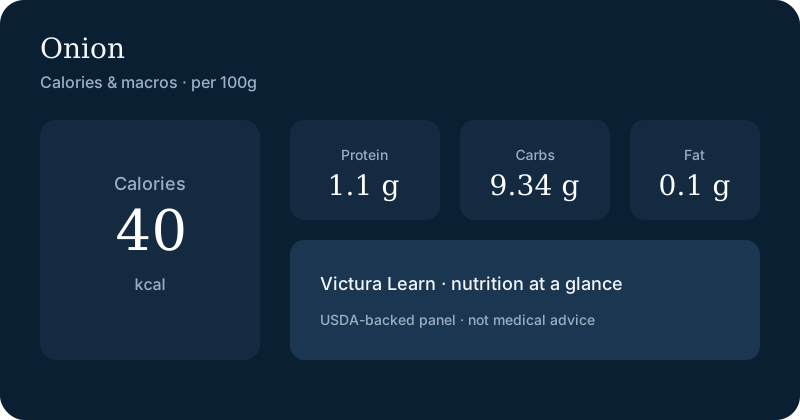
A medium onion contains around 44 calories, while 100g contains about 40 calories. Per 100g you get about 9.34g carbs and 1.1g protein. Glycemic index is around 10.
Onion is a whole food with approximately 40 calories per 100g, tracked in Victura for macro-aware meal logging.
- Calories (medium onion)
- 44 kcal
- Calories (100g)
- 40 kcal
- Carbs (100g)
- 9.34g
- Protein (100g)
- 1.1g
- Serving reference
- 110g · medium onion
- Glycemic index
- 10
Key takeaways
- Onion has 40 calories per 100 g and about 44 calories in a medium onion.
- A medium onion supplies 10.3 g carbs, 1.9 g fiber, and 4.7 g natural sugar.
- Onion's glycemic index is about 10, so normal portions barely move blood sugar.
- Vitamin C (8% DV) and potassium (3% DV) per 100 g are the headline micronutrients.
- Cooking oil, not the onion, is usually what raises calories in onion dishes.

Where the calories come from
Per 100g · protein & carbs 4 kcal/g, fat 9 kcal/g
- Protein1.1 g · 10.3%
- Carbs9.3 g · 87.6%
- Fat0.1 g · 2.1%
Serving calculator
How much did you eat or drink — Onion?
44
Calories
1.2g
Protein
10.3g
Carbs
0.1g
Fat
Calories and macros by serving
Values are calculated from the page's USDA per-100g reference. Prepared or branded products may vary.
| Serving | Calories | Protein | Carbs | Fat |
|---|---|---|---|---|
| 1 medium onion (110g) | 44 | 1.2g | 10.3g | 0.1g |
| 1 cup chopped (160g) | 64 | 1.8g | 14.9g | 0.2g |
| 100g | 40 | 1.1g | 9.3g | 0.1g |
Nutrition facts
per 100g · Source: USDA FoodData Central (seeded Phase 0)
40 kcal
Calories
Vitamins
- Vitamin C: 7.4mg
Minerals
- Potassium: 146mg
Scientific explanation
Research-backed📊 Onion Nutrition at a Glance
Onion provides 40 calories per 100 g (3.5 oz) raw, with 9.34 g carbs, 1.7 g fiber, and 4.24 g natural sugar. A typical medium onion (110 g / about 3.9 oz) comes to roughly 44 calories, which makes it one of the cheapest ways to add flavor without adding much energy. Most of that carbohydrate is stored as sugars and fructans rather than starch, which is why onion turns sweet as it cooks.
🔥 How Many Calories Does an Onion Have?
One medium onion (110 g / 3.9 oz) has about 44 calories. Per 100 g, the USDA panel behind this page lists 40 calories, so a small onion (about 70 g / 2.5 oz) lands near 28 calories and a large one (about 150 g / 5.3 oz) near 60 calories.
| Nutrient | Per 100 g (3.5 oz) | Per medium onion (110 g / 3.9 oz) |
|---|---|---|
| Calories | 40 kcal | 44 kcal |
| Protein | 1.1 g | 1.2 g |
| Carbs | 9.34 g | 10.3 g |
| Fat | 0.1 g | 0.1 g |
| Fiber | 1.7 g | 1.9 g |
| Sugar | 4.24 g | 4.7 g |
| Vitamin C | 7.4 mg (8% DV) | 8.1 mg |
| Potassium | 146 mg (3% DV) | 161 mg |
Bottom line: Onion itself is very low in calories — the calorie count of an onion dish almost always comes from the oil, butter, or cheese it is cooked with.
🍞 Carbs, Sugar, and Fiber
Onion carries 9.34 g of carbs per 100 g, of which 4.24 g is sugar and 1.7 g is fiber, leaving about 7.6 g of net carbs. A whole medium onion supplies roughly 10.3 g carbs, 4.7 g sugar, and 1.9 g fiber — about 8.4 g net carbs. That sugar is intrinsic to the vegetable, not added sugar, and it arrives packaged with fiber, water, and potassium rather than as a sweet drink. Swap onion for garlic or tomato and the carb load barely moves.
💊 Vitamins, Minerals, and Plant Compounds
Per 100 g, onion delivers 7.4 mg of vitamin C (8% DV) and 146 mg of potassium (3% DV), plus small amounts of folate and calcium. It is best known for flavonoids such as quercetin and for organosulfur compounds that give it its bite; these are active areas of research, not proven treatments for any condition. Vitamin C and the sulfur compounds are water-soluble and heat-sensitive, so long boiling and heavy sautéing steadily reduce them.

🍞 Glycemic Index and Blood Sugar
Onion has a glycemic index of about 10, which sits in the low range, and only about 9 g of carbs per 100 g — a glycemic load near 1. Direct GI testing on onion is limited and values shift with variety and cooking method, so treat 10 as a working estimate rather than a fixed number. In normal amounts, onion is unlikely to spike blood sugar on its own. Large servings of caramelized onion or sweet onion sauces are a different story, because sugar and fat get added in the pan.
⚖️ Raw vs Cooked: What Changes
Raw onion keeps its vitamin C, sulfur compounds, and crunch, and it adds flavor for 40 calories per 100 g. Cooking drives off water and concentrates sweetness as sugars brown, so 100 g of caramelized onion is denser in carbs than 100 g raw. Sautéing also adds fat: one tablespoon (14 g) of olive oil puts roughly 120 calories in the pan. Water-sautéing or roasting with a light spray keeps an onion side dish under 100 calories.
⚖️ Onion on Keto, Low-GI, and Weight-Loss Plans
In modest portions, onion fits low-carb and low-GI eating patterns: about 7.6 g net carbs per 100 g, and a GI of about 10. Weight-loss guidance is portion-aware rather than a free pass: the vegetable is low-calorie, but it is usually eaten cooked in fat or piled onto bread and pizza. Half a medium onion (55 g / 2 oz, about 22 calories) flavors a whole pan of food. People managing diabetes should individualize carbohydrate portions with their care team. Run your own numbers in the calorie calculator to see how cooking fats change the total, and browse more produce breakdowns in the Victura Learn hub.
Community insights
Community insight🧅 Day-to-Day Onion Habits
In anonymized Victura meal logs, onion is rarely the main event — it shows up as a base layer in soups, stir-fries, salads, salsas, and sandwiches. Because of that, most logged portions are small: a quarter to half a medium onion at a time, which keeps calories and carbs close to negligible. These patterns describe how people eat, not medical advice.
🧅 Prep Habits That Cut Fuss and Waste
- Buy yellow or red onions in a size you will finish within two to three weeks.
- Store whole onions in a cool, dry, dark spot with airflow; the fridge makes them soft and soggy.
- Wrap cut halves tightly and use them within three to four days.
- Rinse diced raw onion in cold water for about 30 seconds to mellow the burn in salads.
- Keep a bag of frozen diced onion for recipes where texture does not matter.
🧅 Common Mistakes Worth Avoiding
- Starting onion in a cold pan over high heat, which steams it instead of browning it.
- Assuming cooked onion is lower in calories than raw — added oil flips that math quickly.
- Reading "caramelized" as healthy when it often means sugar plus a long stay in fat.
- Using a whole large onion when a quarter would carry the same flavor.
Tip: Weigh onion raw before cooking and log the oil separately; that single habit keeps onion dishes honest in your daily totals.
🧅 What Readers Ask Most Often
Digestive sensitivity comes up constantly — bloating, reflux, and IBS-type triggers push some readers toward smaller amounts, well-cooked onion, or garlic-infused oil instead. Anyone managing a gut condition should get personal guidance from a clinician rather than a general page. For most people, onion works best as a flavor base paired with protein and fiber, and related produce breakdowns live in the Victura Learn hub.
Pros
Cons
Best time to eat
Good windows
Consider avoiding
Diet compatibility
Weight loss
Friendly
Consult your healthcare provider for personalized guidance.
Keto
Friendly
Consult your healthcare provider for personalized guidance.
Diabetes
Friendly
Consult your healthcare provider for personalized guidance.
Frequently asked questions
People also ask
Is an onion healthy?
Yes — an onion is a whole food with measurable nutrients. Healthiness depends on overall diet, portions, and your goals. Estimated GI is 10.
Can I eat an onion every day?
Most people can include an onion daily as part of a balanced diet, as long as total calories and carbs fit their plan.
Are Onions good for weight loss?
Onions can fit a calorie-controlled diet when portions are measured.
How many calories are in an onion?
A typical medium serving of onion has about 40 calories, while 100g contains about 40 calories (USDA reference).
Are Onions good before a workout?
Onions can work before activity when you want easy carbs; pair an onion with protein if your session is long.
Are Onions high in sugar?
Onions contain about 4.2g sugar per 100g — mostly natural sugars when whole.
Is onion healthy?
Yes — onion is a whole food with measurable nutrients. It is low in calories (40 per 100 g) and provides vitamin C, potassium, fiber, and quercetin-type flavonoids. Healthiness still depends on overall diet, portions, and your goals; onion is not a treatment for any condition.
Can you eat onions every day?
Most people can include onion daily as part of a balanced diet, often a half to one whole onion spread across meals. If you have reflux, IBS, or bloating triggers, smaller cooked portions may suit you better.
Is onion good for weight loss?
Onion itself is helpful: 40 calories per 100 g with 1.7 g fiber and high water content. The catch is preparation — sautéing in oil or butter, or caramelizing with added sugar, can multiply the calories several times over.
Is onion high in sugar?
No. Onion has 4.24 g of sugar per 100 g, or about 4.7 g in a medium onion, and it is natural sugar that comes with fiber. Caramelized or glazed onions are higher because sugar is added.
Is onion keto friendly?
Yes, in normal portions. Onion has about 7.6 g net carbs per 100 g, so half a medium onion (55 g) adds roughly 4.2 g net carbs to a meal and fits most keto budgets when other carbs are accounted for.
Do onions raise blood sugar?
Onion has a low glycemic index of about 10 and a glycemic load near 1 per 100 g, so typical servings have minimal effect on blood sugar. Very large servings of sweetened or caramelized onion behave differently, and individual responses vary.
How we review this guide
- Written by
- Victura Nutrition Team
- Reviewed by
- Victura Editorial Review
- Reference sources
- 7
- Last updated
- Oct 21, 2026
References
- USDA FoodData Central — Onions, raw (FDC ID 170000)(usda)
- NIH Office of Dietary Supplements — Vitamin C Fact Sheet(nih_ods)
- FDA — Daily Value on the Nutrition and Supplement Facts Labels(fda)
- PubMed — Onion flavonoids, quercetin, and organosulfur compounds: research literature(pubmed)
- Harvard T.H. Chan School of Public Health — The Nutrition Source(harvard)
Ready to track your meals with AI?
Victura scans your plate, logs macros automatically, and coaches you toward your goals — halal, keto, diabetic-friendly, and more.