
Peas Nutrition Facts
Calories, protein, carbs, and fiber in peas per 100 g and per cup — plus glycemic index, weight-loss fit, and how green peas compare with chickpeas.
Written by Victura Nutrition TeamReviewed by Victura Editorial ReviewLast updated Oct 21, 2026
81
Calories
5.4g
Protein
14.4g
Carbs
Generally yes
Is it healthy?
per 100g · per panel values
Track this food in VicturaQuick answer
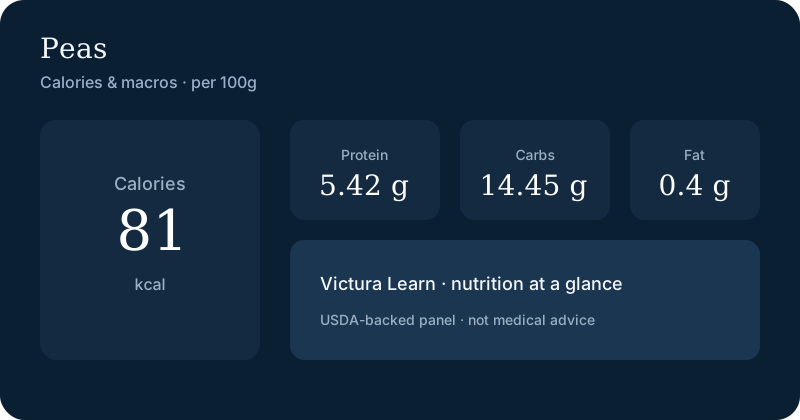
A 100g serving of peas provides about 81 kcal. Per 100g you get about 14.45g carbs and 5.42g protein. Glycemic index is around 51.
Peas is a whole food with approximately 81 calories per 100g, tracked in Victura for macro-aware meal logging.
- Calories (100g serving)
- 81 kcal
- Carbs (100g)
- 14.45g
- Protein (100g)
- 5.42g
- Serving reference
- 100g · 100g serving
- Glycemic index
- 51
Key takeaways
- Raw green peas have 81 calories, 5.42 g protein, and 5.7 g fiber per 100 g (3.5 oz).
- A half-cup (80 g / 2.8 oz) serving is about 65 calories with 4.3 g protein and 4.6 g fiber.
- Peas have a medium glycemic index of 51 and can fit weight-loss and carbohydrate-controlled eating patterns in appropriate portions.
- Net carbs of about 8.8 g per 100 g make peas too high-carb for standard keto.
- Frozen peas keep vitamin C well; steam or microwave instead of long boiling.

Where the calories come from
Per 100g · protein & carbs 4 kcal/g, fat 9 kcal/g
- Protein5.4 g · 26.1%
- Carbs14.5 g · 69.6%
- Fat0.4 g · 4.3%
Serving calculator
How much did you eat or drink — Peas?
81
Calories
5.4g
Protein
14.4g
Carbs
0.4g
Fat
Nutrition facts
per 100g · Source: USDA FoodData Central (seeded Phase 0)
81 kcal
Calories
Vitamins
- Vitamin C: 40mg
Minerals
- Vitamin K: 24.8mcg
Scientific explanation
Research-backed🥗 What Peas Are and the Numbers Behind Them
Peas (Pisum sativum) are legumes harvested as immature green seeds and sold fresh, frozen, or canned; split peas are the mature seed, dried and split. The USDA panel behind this page (FoodData Central ID 170419) describes raw green peas, so every figure below is for the raw food unless noted.
Per 100 g (3.5 oz), green peas supply 81 calories, 5.42 g protein, 14.45 g carbohydrate, 5.7 g fiber, 5.67 g sugar, and 0.4 g fat. They also carry 40 mg vitamin C (44% DV) and 24.8 mcg vitamin K (21% DV), with a medium glycemic index of 51.
Boiling, steaming, and freezing change water content rather than the food itself, so cooked peas land close to the raw numbers without matching them exactly. Use the panel below as your baseline and adjust for how you cook.
🔥 Calories: How Many Calories Does Peas Have?
This is the question we see most often, so here it is plainly: how many calories does peas have? Raw green peas have 81 calories per 100 g (3.5 oz), about 65 calories in a half-cup (80 g / 2.8 oz) portion, and roughly 130 calories in a full cup (160 g / 5.6 oz).
| Nutrient | Per 100 g (3.5 oz) raw | Per 1/2 cup (80 g / 2.8 oz) | Per 1 cup (160 g / 5.6 oz) |
|---|---|---|---|
| Calories | 81 kcal | 65 kcal | 130 kcal |
| Protein | 5.42 g | 4.3 g | 8.7 g |
| Carbohydrate | 14.45 g | 11.6 g | 23.1 g |
| Fat | 0.4 g | 0.3 g | 0.6 g |
| Fiber | 5.7 g | 4.6 g | 9.1 g |
| Sugar | 5.67 g | 4.5 g | 9.1 g |
The 100 g column comes straight from USDA FoodData Central; the cup columns are scaled from that same panel. Because a full cup is a generous side dish, most people eat closer to the half-cup row.
Tip: A half-cup of green peas (80 g) delivers 4.6 g of fiber and 4.3 g of protein for about 65 calories — one of the better calorie-to-fullness trades in the freezer aisle.
💪 Protein, Carbs, and Fiber
Peas sit in the middle of the protein-versus-carbohydrate question. At 5.42 g protein and 14.45 g carbohydrate per 100 g, they are a legume that leans carbohydrate, but the protein is not trivial for a vegetable.
- Protein: 5.42 g per 100 g and 8.7 g per cup — plant protein that pairs well with grains, rice, and pasta
- Fiber: 5.7 g per 100 g and 9.1 g per cup — roughly a third of the carbohydrate is fiber
- Net carbs: about 8.8 g per 100 g after subtracting fiber, which is why standard keto plans usually skip peas
- Sugar: 5.67 g per 100 g, naturally occurring and packaged with fiber rather than added
🍞 Glycemic Index and Blood Sugar
Green peas have a glycemic index of 51, placing them in the medium band. The 5.7 g of fiber per 100 g slows digestion and softens the glucose response.
Portion size still matters. A half-cup alongside protein and fat behaves very differently from a large bowl of peas eaten alone. Peas are a medium-GI food that can fit carbohydrate-controlled eating patterns in appropriate portions; anyone tracking blood sugar should judge by their own meter readings rather than the GI number alone.
💊 Vitamins and Minerals
A half-cup of peas is not a multivitamin, but it is far from empty.
- Vitamin C: 40 mg per 100 g (44% DV) — much of it survives freezing but leaches into boiling water, so steaming or microwaving preserves more
- Vitamin K: 24.8 mcg per 100 g (21% DV) — important for normal clotting; people on warfarin-type anticoagulants are usually advised to keep vitamin K intake steady and should check with their clinician

⚖️ Peas for Weight Loss
Peas suit calorie-conscious eating because they combine low energy density with real fiber and protein.
- At 81 calories per 100 g, a large volume of food costs very few calories.
- The 9.1 g of fiber in a cup supports fullness between meals.
- Frozen peas need no oil, sauce, or prep to be edible.
- Swapping half the rice in a bowl for peas trims calories while adding fiber.
Our weight-loss food hub lists peas among volume-friendly options, and the Victura calorie calculator can fit a serving into your day.
⚖️ Green Peas vs Split Peas vs Chickpeas
Green peas and split peas are the same species at different stages; split peas are dried and therefore denser in carbohydrate and calories per 100 g. Chickpeas are a different legume entirely, with a firmer bite and a heavier calorie and carb load. So how many calories does chickpeas have? The answer is meaningfully more than green peas per 100 g, which is why we keep the exact USDA figures on our chickpeas nutrition page. For the lentil comparison, see lentils nutrition.
🥗 Buying, Storing, and Cooking
Frozen peas are picked and blanched at peak ripeness, so their vitamin retention often matches fresh peas that spent days in transit. Canned peas are convenient but usually carry added sodium — rinse them if you are watching salt.
Steam or microwave for 8–10 minutes rather than boiling hard; overcooking turns sugar to starch and the peas go mealy. Add peas at the very end of stir-fries, soups, and pasta so they stay bright and firm.
🥄 What Counts as One Serving?
The USDA reference portion for this panel is 100 g (3.5 oz), a little over half a cup. In everyday US and Canadian kitchens, a half-cup (80 g / 2.8 oz) side dish is the realistic unit, and a full cup (160 g / 5.6 oz) is a hearty plant-based portion.
Community insights
Community insight🥗 How People Actually Use Peas
Victura meal logs show peas appearing most often as a freezer-to-pan side, a pasta and rice add-in, and a soup base. Very few users weigh them — most scoop by the half-cup, which happens to land near the 80 g reference portion.
- Tossed frozen into pasta during the last two minutes of cooking
- Stirred into rice, quinoa, or couscous for color and fiber
- Blended into soup for body without cream
- Eaten cold in grain salads and lunch bowls
⚖️ Frozen vs Fresh vs Canned in Real Kitchens
Frozen wins on consistency: same texture, same price, no waste. Fresh shelling peas are a seasonal treat with a short shelf life, and canned peas divide people — softer texture, more sodium, but unbeatable for pantry meals. Rinsing canned peas for 30 seconds noticeably reduces the salty taste.
🍽️ Pairings That Work
Peas pair well with mint, butter, lemon, dill, Parmesan, bacon, and curry spices. Logged meals that rated highest for satisfaction usually added a protein and a fat to the peas rather than serving them plain.
🥗 The Gas Question
Peas contain raffinose and other fermentable carbohydrates, so bloating is a real experience for some eaters. Starting with a half-cup, chewing well, and building up over a few weeks is the usual workaround. If symptoms persist or become painful, that is a conversation for a clinician rather than a search bar.
🥗 What Users Ask Us Most
The questions that repeat in support tickets are about calories in a cup, whether peas count as a protein, and whether frozen is as good as fresh. Short answers: about 65 calories per half-cup, mostly carbohydrate with useful protein, and yes, frozen is nutritionally solid.
Pros
Cons
Best time to eat
Good windows
Consider avoiding
Diet compatibility
Weight loss
Friendly
Consult your healthcare provider for personalized guidance.
Keto
Friendly
Consult your healthcare provider for personalized guidance.
Diabetes
Friendly
Consult your healthcare provider for personalized guidance.
Frequently asked questions
People also ask
Is a peas healthy?
Yes — a peas is a whole food with measurable nutrients. Healthiness depends on overall diet, portions, and your goals. Estimated GI is 51.
Can I eat a peas every day?
Most people can include a peas daily as part of a balanced diet, as long as total calories and carbs fit their plan.
Are Peases good for weight loss?
Peases can fit a calorie-controlled diet when portions are measured.
How many calories are in a peas?
A typical medium serving of peas has about 81 calories, while 100g contains about 81 calories (USDA reference).
Are Peases good before a workout?
Peases can work before activity when you want easy carbs; pair a peas with protein if your session is long.
Are Peases high in sugar?
Peases contain about 5.7g sugar per 100g — mostly natural sugars when whole.
Are peas healthy?
Yes — peas are a whole food with measurable nutrients. Per 100 g, raw green peas provide 81 calories, 5.42 g protein, 5.7 g fiber, 40 mg vitamin C (44% DV), and 24.8 mcg vitamin K (21% DV). Healthiness still depends on overall diet, portions, and goals; their estimated GI is 51.
How many calories does peas have per cup?
A full cup of raw green peas (160 g / 5.6 oz) has about 130 calories. A more typical half-cup side dish (80 g / 2.8 oz) lands near 65 calories, and the USDA baseline is 81 calories per 100 g. Cooking adds water, so boiled peas measure slightly lower per cup but similar per gram.
Are peas good for weight loss?
Peas can fit a calorie-controlled diet. At 81 calories per 100 g they are low in energy density, and a cup delivers about 9.1 g fiber plus 8.7 g plant protein, both of which support fullness. Frozen peas also need no oil or sauce, so the calorie count stays close to the label.
Are peas a protein or a carbohydrate?
Peas are a legume that leans carbohydrate: 14.45 g carbohydrate versus 5.42 g protein per 100 g. Their protein is still meaningful for a vegetable — 8.7 g per cup — and pairs well with grains, which supply the amino acids peas lack in quantity.
Are peas keto-friendly?
Standard keto usually excludes peas. After subtracting 5.7 g fiber from 14.45 g carbohydrate, a 100 g portion has roughly 8.8 g net carbs — too much for most people keeping daily net carbs under 20–30 g. Green beans, zucchini, and leafy greens are common low-carb substitutions.
Are peas gluten-free?
Yes. Plain fresh, frozen, and canned peas are naturally gluten-free. Cross-contamination risk comes from packaging and preparation, not the vegetable itself, so check labels on seasoned or sauced pea side dishes.
How we review this guide
- Written by
- Victura Nutrition Team
- Reviewed by
- Victura Editorial Review
- Reference sources
- 8
- Last updated
- Oct 21, 2026
References
- USDA FoodData Central — Peas, green, raw (FDC 170419)(usda)
- USDA FoodData Central(usda)
- NIH Office of Dietary Supplements — Vitamin K fact sheet(nih_ods)
- PubMed — research search: legumes, satiety, and glycemic control(pubmed)
- Harvard T.H. Chan School of Public Health — Legumes(harvard)
- Mayo Clinic — Gas and gas pains(mayo_clinic)
Ready to track your meals with AI?
Victura scans your plate, logs macros automatically, and coaches you toward your goals — halal, keto, diabetic-friendly, and more.