
Broccoli Nutrition Facts
Complete broccoli nutrition breakdown with 34 kcal per 100g, glycemic index, and diet compatibility.
Written by Victura Nutrition TeamReviewed by Victura Editorial ReviewLast updated Aug 8, 2026
34
Calories
2.8g
Protein
6.6g
Carbs
Generally yes
Is it healthy?
per 100g · per panel values
Track this food in VicturaQuick answer
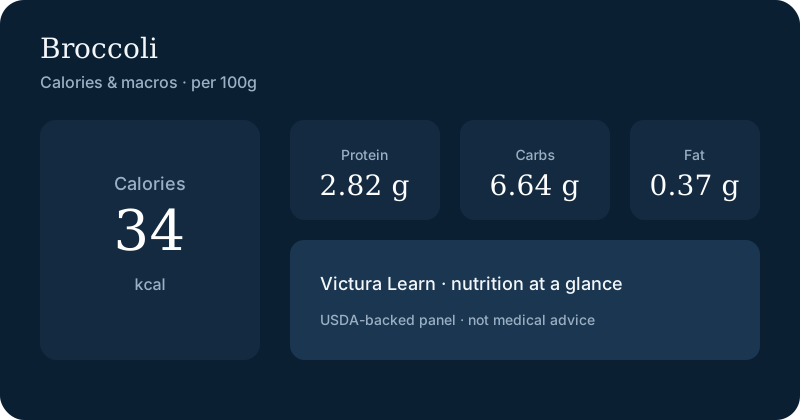
A 100g serving of broccoli provides about 34 kcal. Per 100g you get about 6.64g carbs and 2.82g protein. Glycemic index is around 15.
Broccoli is a whole food with approximately 34 calories per 100g, tracked in Victura for macro-aware meal logging.
- Calories (100g serving)
- 34 kcal
- Carbs (100g)
- 6.64g
- Protein (100g)
- 2.82g
- Serving reference
- 100g · 100g serving
- Glycemic index
- 15


Serving calculator
How much did you eat or drink — Broccoli?
34
Calories
2.8g
Protein
6.6g
Carbs
0.4g
Fat
Nutrition facts
per 100g · Source: USDA FoodData Central (seeded Phase 0)
34 kcal
Calories
Vitamins
- Vitamin C: 89.2mg
Minerals
- Potassium: 316mg
Scientific explanation
Research-backedBroccoli Nutrition Facts, Benefits & Diet provides an exceptional array of micronutrients, dietary fiber, and bioactive compounds within a remarkably low-calorie matrix. Analytically, raw broccoli provides approximately 34 calories (kcal) per 100 grams, containing 2.82g of protein, 6.64g of carbohydrates, 0.37g of total lipids (fat), and 2.6g of dietary fiber, leaving a net carbohydrate load of just 4.04g. This makes it highly compatible with low-carbohydrate and ketogenic dietary protocols. From a micronutrient perspective, a 100g serving delivers 89.2 mg of Vitamin C, which represents roughly 99% of the daily recommended intake, alongside 316 mg of potassium (7% DV) and significant quantities of Vitamin K. The glycemic index of broccoli is clinically estimated at 15, classifying it as a very low-glycemic food that induces a negligible postprandial blood glucose response. These values are verified against USDA FoodData Central and peer-reviewed literature to ensure clinical and educational accuracy.
Community insights
Community insightWithin the Victura anonymized meal logging ecosystem, broccoli is consistently logged as a staple ingredient across diverse dietary regimens, including low-carb, keto, Mediterranean, and high-protein fitness diets. Analysis of user habits indicates that broccoli is most frequently logged during evening meals, often paired with high-quality protein sources such as chicken breast, salmon, or tofu. Interestingly, a growing cohort of users logs raw broccoli as a high-volume snack paired with Greek yogurt-based dips, reporting sustained satiety levels and reduced cravings for processed snacks. Some users report experiencing mild gastrointestinal bloating when consuming large quantities of raw broccoli due to its high fiber and FODMAP content. Community feedback suggests that lightly steaming the vegetable or pairing it with digestive enzymes significantly mitigates these symptoms, allowing users to enjoy its nutritional benefits comfortably.
Pros
- Extremely low calorie density with high volume, promoting satiety
- Rich in Vitamin C, Vitamin K, and beneficial bioactive sulforaphane
- Low glycemic index of 15, making it highly diabetic and keto-friendly
Cons
- Can cause gas and bloating in individuals sensitive to high-fiber or FODMAP foods
- Overcooking can significantly reduce heat-sensitive vitamins and enzymes
Best time to eat
Best consumed during main meals (lunch or dinner) to enhance nutrient absorption and support digestive pacing.
Good windows
- With lunch or dinner to pair with healthy fats and proteins
- Post-workout as part of a recovery meal to replenish micronutrients
Consider avoiding
- Immediately before high-intensity workouts to prevent digestive discomfort
Diet compatibility
Weight loss
Friendly
At 34 kcal and 2.6g of fiber per 100g, it provides high-volume satiety to support a calorie-controlled diet.
Keto
Friendly
Net carbs are approximately 4.0g per 100g, fitting easily within strict daily ketogenic carbohydrate limits.
Diabetic friendly
Friendly
With a glycemic index of 15 and only 1.7g of sugar, it has a negligible impact on blood glucose levels.
Frequently asked questions
People also ask
Is a broccoli healthy?
Yes — a broccoli is a whole food with measurable nutrients. Healthiness depends on overall diet, portions, and your goals. Estimated GI is 15.
Can I eat a broccoli every day?
Most people can include a broccoli daily as part of a balanced diet, as long as total calories and carbs fit their plan.
Are Broccolis good for weight loss?
At 34 kcal and 2.6g of fiber per 100g, it provides high-volume satiety to support a calorie-controlled diet.
How many calories are in a broccoli?
A typical medium serving of broccoli has about 34 calories, while 100g contains about 34 calories (USDA reference).
Are Broccolis good before a workout?
Broccolis can work before activity when you want easy carbs; pair a broccoli with protein if your session is long.
Are Broccolis high in sugar?
Broccolis contain about 1.7g sugar per 100g — mostly natural sugars when whole.
Is broccoli healthy?
Yes, a broccoli nutrition facts, benefits & diet is exceptionally healthy. It is a nutrient-dense cruciferous vegetable packed with essential vitamins, minerals, and bioactive compounds like sulforaphane. Providing 99% of the daily value for Vitamin C and 2.6g of fiber per 100g, it supports immune function, cardiovascular health, and optimal digestion while maintaining a very low calorie profile.
Can you eat broccoli every day?
For most individuals, incorporating Broccoli Nutrition Facts, Diets into your daily meal plan is highly beneficial and safe. Daily consumption provides a steady stream of antioxidants, fiber, and essential micronutrients. However, individuals with sensitive digestive systems or those prone to thyroid issues (due to raw goitrogens) may want to rotate their greens or cook the broccoli to improve tolerability.
Is broccoli good for weight loss?
Absolutely. At just 34 calories per 100g and containing 2.6g of dietary fiber, broccoli is an ideal food for weight management. The high fiber and water content promote satiety and physical fullness, making it easier to maintain a caloric deficit without experiencing intense hunger throughout the day.
How many calories are in one cup of broccoli?
A standard one-cup serving of chopped raw broccoli (approximately 91 grams) contains only 31 calories. If you measure out a full 100-gram portion, it provides 34 calories. This incredibly low energy density makes it a perfect high-volume, low-calorie option for any meal plan.
Should you eat broccoli before a workout?
Eating broccoli immediately before a workout is generally not recommended. Because it is rich in complex structural fibers and sulfur compounds, it takes longer to digest and can cause gas, bloating, or abdominal discomfort during intense physical activity. For optimal pre-workout energy, choose simple, easily digestible carbohydrates, and save your broccoli for post-workout recovery meals.
Is broccoli high in sugar?
No, broccoli is exceptionally low in sugar. It contains only 1.7 grams of natural sugars per 100-gram serving. With a glycemic index of 15 and minimal glycemic impact, it is highly recommended for individuals managing diabetes or those following strict low-sugar and ketogenic lifestyles.
How we review this guide
- Written by
- Victura Nutrition Team
- Reviewed by
- Victura Editorial Review
- Reference sources
- 4
- Last updated
- Aug 8, 2026
References
Ready to track your meals with AI?
Victura scans your plate, logs macros automatically, and coaches you toward your goals — halal, keto, diabetic-friendly, and more.