
Whole Wheat Pasta Nutrition Facts
Evidence-based whole wheat pasta nutrition: 348 kcal per 100g, macros, benefits, risks, glycemic context, and diet fit.
Written by Victura Nutrition TeamReviewed by Victura Editorial ReviewLast updated Nov 14, 2026
348
Calories
14.6g
Protein
73.4g
Carbs
Use caution
Is it healthy?
per 100g · per panel values
Track this food in VicturaQuick answer
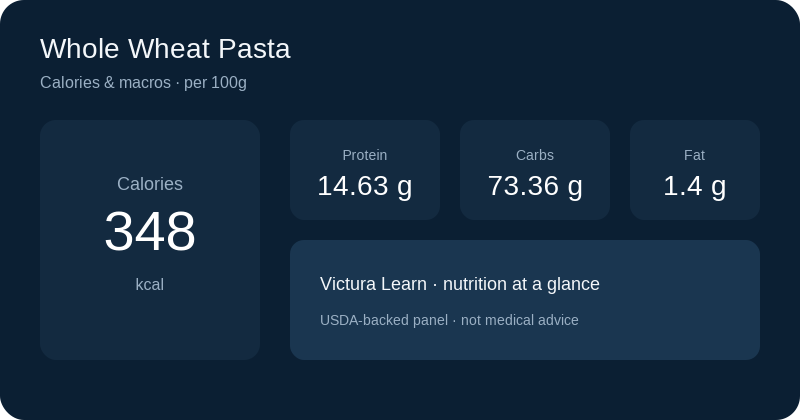
A 100g serving of whole wheat pasta provides about 348 kcal. Per 100g you get about 73.36g carbs and 14.63g protein. Glycemic index is around 42.
Whole Wheat Pasta is a whole food with approximately 348 calories per 100g, tracked in Victura for macro-aware meal logging.
- Calories (100g serving)
- 348 kcal
- Carbs (100g)
- 73.36g
- Protein (100g)
- 14.63g
- Serving reference
- 100g · 100g serving
- Glycemic index
- 42

Where the calories come from
Per 100g · protein & carbs 4 kcal/g, fat 9 kcal/g
- Protein14.6 g · 16.1%
- Carbs73.4 g · 80.5%
- Fat1.4 g · 3.5%
Serving calculator
How much did you eat or drink — Whole Wheat Pasta?
348
Calories
14.6g
Protein
73.4g
Carbs
1.4g
Fat
Nutrition facts
per 100g · Source: USDA FoodData Central (seeded Phase 0)
348 kcal
Calories
Minerals
- Magnesium: 143mg
Scientific explanation
Research-backedWhole Wheat Pasta provides a dense mix of carbohydrate, plant protein, and fiber in a dry pantry staple. It is the whole-grain form of pasta, so the bran and germ remain. That difference helps explain its fiber level and its lower estimated glycemic index compared with refined pasta.
🍝 Quick answer
A typical 2 oz (56 g) dry portion of whole wheat pasta has about 195 calories. Per 100 g (3.5 oz) dry, it provides 348 calories, 14.63 g protein, 73.36 g carbs, 1.4 g fat, 9.2 g fiber, and 2.1 g sugar. The estimated glycemic index is 42, which is low. These values apply to dry pasta unless a label says otherwise.
🔥 Calories and macros
| Portion | Calories | Protein | Carbs | Fat | Fiber | Sugar |
|---|---|---|---|---|---|---|
| 2 oz (56 g) dry, approx. | 195 kcal | 8.2 g | 41.1 g | 0.8 g | 5.2 g | 1.2 g |
| 100 g (3.5 oz) dry | 348 kcal | 14.63 g | 73.36 g | 1.4 g | 9.2 g | 2.1 g |
Dry pasta is calorie-dense because water has not been added yet. Two ounces dry is a useful starting portion for many adults, and it often cooks to about 1 cup. Larger portions add up quickly: 3 oz (85 g) dry provides about 296 calories.
Use the dry weight on the label for accuracy. Cooked weight varies with water absorption, so a cup of cooked pasta is less consistent than grams on a scale.

💪 Protein and fiber
Whole Wheat Pasta supplies 14.63 g protein per 100 g (3.5 oz) dry, which is meaningful for a grain food. A 2 oz (56 g) dry portion provides about 8.2 g protein. Pair it with beans, lentils, chicken, fish, eggs, or tofu to make a fuller protein plate.
Fiber is 9.2 g per 100 g (3.5 oz) dry, or about 5.2 g in a 2 oz (56 g) dry portion. That fiber comes with whole-grain carbohydrate and can support fullness. Add vegetables for more volume and fiber without many calories.
🍞 Glycemic index and blood sugar
The estimated GI of whole wheat pasta is 42, which falls in the low range. GI describes how quickly a carbohydrate food raises blood glucose when eaten in a set amount. Cooking time, portion, and accompaniments can change the blood-sugar response.
Al dente pasta tends to have a lower GI than very soft pasta. Pairing pasta with protein, fat, and fiber-rich vegetables can also slow digestion. People with diabetes should still track total carbohydrate and follow their care plan.
Bottom line: Whole wheat pasta is a high-fiber, plant-protein grain, but dry portions are calorie-dense, so weigh them when portions matter.
💊 Micronutrients, portions, and pairings
The USDA panel for this record lists magnesium at 143 mg per 100 g (3.5 oz) dry, or 34% DV. A 2 oz (56 g) dry portion provides about 80 mg magnesium. The provided panel does not list vitamin values, so do not assume specific vitamin amounts without checking the label or USDA record.
Whole wheat pasta pairs well with:
- Tomato sauce, olive oil, garlic, and vegetables
- Chicken, fish, lean meat, or tofu
- Beans, lentils, or chickpeas for fiber and protein
- Spinach, broccoli, peppers, or zucchini for volume
Start with 2 oz (56 g) dry per person for a standard plate. Use 3 oz (85 g) dry for a larger appetite or an active day, and add extra vegetables rather than doubling the pasta. One cup cooked is a common visual guide, but weighing dry pasta is more precise.
Check the ingredient list for 100% whole wheat or whole durum flour. Some products blend whole and refined flours, which changes fiber and protein. Store dry pasta in a cool, dry place and cook to al dente for the best texture.
Community insights
Community insightAmong Victura meal logs, Whole Wheat Pasta appears most often as a dinner base, a meal-prep grain, and a pre-workout carb source. Users like that one pot can cover carbohydrate, fiber, and some protein. The most common complaint is that dry portions are easy to overshoot.
🍝 How people use it
Common user plates include:
- 2 oz (56 g) dry with tomato sauce and turkey meatballs
- 1 cup cooked with roasted vegetables and chickpeas
- Chilled pasta salad with olive oil, tuna, and peppers
- A small pre-run bowl with egg or yogurt on the side
Many users pair it with a protein and a vegetable rather than eating a plain bowl. That combo is reported to feel more filling than pasta alone. Sauce is the biggest calorie swing: cream sauces add more fat and calories than tomato or vegetable-based sauces.
🍽️ Common pairings
Users often add olive oil, garlic, tomatoes, spinach, broccoli, mushrooms, or zucchini. For protein, chicken, shrimp, tuna, tofu, lentils, and white beans are frequent choices. A little parmesan or feta adds flavor, but users who track calories measure it because small amounts add up.
🥄 Portion and timing notes
Lunch and dinner are the most common slots. Before workouts, users often choose 1 to 2 oz (28 to 56 g) dry and allow 1 to 3 hours. After workouts, they add protein and vegetables. Portion control is easier when the dry pasta is weighed before cooking.
🍝 What users watch
Users check labels for 100% whole wheat flour and compare fiber per 100 g (3.5 oz). Some brands vary in protein and fiber, so the package can differ from the USDA reference. For meal prep, slightly undercook pasta so it holds up when reheated.
Pros
- High fiber for a grain food: 9.2 g per 100 g dry
- Plant protein: 14.63 g per 100 g dry
- Estimated low GI of 42
Cons
- Dry pasta is calorie-dense; portion size matters
- Contains gluten, so it is not suitable for celiac disease
- Sauce and toppings can add substantial calories and sodium
Best time to eat
Pair with protein and fiber for balanced meals.
Good windows
- Main meals, especially lunch or dinner
- Before long workouts in smaller portions
Consider avoiding
- Very large portions without activity
Diet compatibility
Weight loss
Use caution
At 348 kcal and 9.2g fiber per 100g, this food is energy-dense - watch portions.
Keto
Use caution
Net carbs ~64.2g per 100g - too high-carb for standard keto.
Diabetic friendly
Friendly
GI 42 with 2.1g sugar - generally blood-sugar friendly in moderation.
Frequently asked questions
People also ask
Is a whole wheat pasta healthy?
Yes — a whole wheat pasta is a whole food with measurable nutrients. Healthiness depends on overall diet, portions, and your goals. Estimated GI is 42.
Can I eat a whole wheat pasta every day?
Most people can include a whole wheat pasta daily as part of a balanced diet, as long as total calories and carbs fit their plan.
Are Whole Wheat Pastas good for weight loss?
At 348 kcal and 9.2g fiber per 100g, this food is energy-dense - watch portions.
How many calories are in a whole wheat pasta?
A typical medium serving of whole wheat pasta has about 348 calories, while 100g contains about 348 calories (USDA reference).
Are Whole Wheat Pastas good before a workout?
Whole wheat pastas can work before activity when you want easy carbs; pair a whole wheat pasta with protein if your session is long.
Are Whole Wheat Pastas high in sugar?
Whole wheat pastas contain about 2.1g sugar per 100g — mostly natural sugars when whole.
How many carbs are in whole wheat pasta?
Whole wheat pasta has 73.36g carbs per 100g dry, including 9.2g fiber and 2.1g sugar. A 2 oz (56g) dry portion provides about 41.1g carbs.
Is whole wheat pasta low FODMAP?
Whole wheat pasta is generally not low FODMAP because wheat contains fructans. People following a low FODMAP diet should check portions and consider gluten-free alternatives.
Does whole wheat pasta have more fiber than regular pasta?
Yes. Whole wheat pasta has about 9.2g fiber per 100g dry versus roughly 3g in refined pasta, because the bran and germ are retained.
How we review this guide
- Written by
- Victura Nutrition Team
- Reviewed by
- Victura Editorial Review
- Reference sources
- 4
- Last updated
- Nov 14, 2026
References
Ready to track your meals with AI?
Victura scans your plate, logs macros automatically, and coaches you toward your goals — halal, keto, diabetic-friendly, and more.