
Sardines Nutrition Facts: Calories, Protein, and Omega-3s
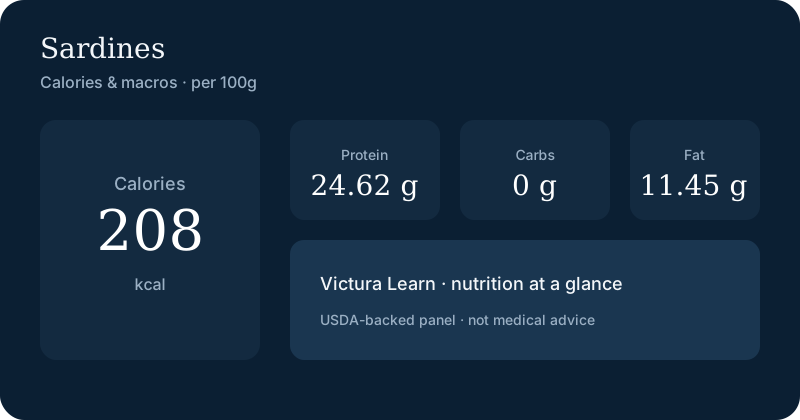
How many calories does sardines have? About 208 per 100 g and 191 per drained can, with 24.6 g protein, edible-bone calcium, vitamin D, vitamin B12, and low-mercury credentials.
Written by Victura Nutrition TeamReviewed by Victura Editorial ReviewLast updated Oct 21, 2026
208
Calories
24.6g
Protein
0.0g
Carbs
Generally yes
Is it healthy?
per 100g · per panel values
Track this food in VicturaQuick answer
A 100g serving of sardines provides about 208 kcal. Per 100g you get about 0g carbs and 24.62g protein.
Sardines is a whole food with approximately 208 calories per 100g, tracked in Victura for macro-aware meal logging.
- Calories (100g serving)
- 208 kcal
- Carbs (100g)
- 0.0g
- Protein (100g)
- 24.62g
- Serving reference
- 100g · 100g serving
Key takeaways
- A drained can of sardines has about 191 calories, 22.7 g protein, and zero carbs, fiber, or sugar.
- One can supplies 373% of the Daily Value for vitamin B12 plus meaningful calcium and vitamin D.
- Sardines are a low-mercury fish the FDA lists among its Best Choices for weekly eating.
- At 208 calories per 100 g, sardines are nutrient-dense but energy-dense, so portion size still matters.
- Water-packed or well-drained oil-packed cans trim added fat without losing protein or omega-3s.

Where the calories come from
Per 100g · protein & carbs 4 kcal/g, fat 9 kcal/g
- Protein24.6 g · 48.9%
- Carbs0 g · 0%
- Fat11.5 g · 51.1%
Serving calculator
How much did you eat or drink — Sardines?
208
Calories
24.6g
Protein
0.0g
Carbs
11.4g
Fat
Nutrition facts
per 100g · Source: USDA FoodData Central (seeded Phase 0)
208 kcal
Calories
Vitamins
- Vitamin D: 4.8mcg
- Vitamin B12: 8.94mcg
Minerals
- Calcium: 382mg
Scientific explanation
Research-backed🔥 How Many Calories Do Sardines Have?
Sardines provide 208 calories per 100 g (3.5 oz) of drained, oil-packed canned fish, the USDA reference portion used throughout this page. A typical drained can weighs about 92 g (3.25 oz), which puts one whole can at roughly 191 calories.
Nearly all of those calories come from protein and fat rather than carbohydrate. That same 100 g delivers 24.6 g of protein and 11.5 g of fat alongside 0 g of carbs, 0 g of fiber, and 0 g of sugar.
To scale these numbers to your own plate, the Victura calorie and macro calculator works from grams of drained fish. Logging the can directly in Victura is faster, since drained weight and macros fill in automatically.
🥄 Sardines Nutrition Table Per Serving and Per 100 g
The values below are USDA FoodData Central figures (FDC ID 175139) for Atlantic sardines canned in oil, drained solids with bone.
| Nutrient | Per 100 g (3.5 oz) | Per drained can (92 g / 3.25 oz) |
|---|---|---|
| Calories | 208 kcal | 191 kcal |
| Protein | 24.6 g | 22.7 g |
| Carbohydrates | 0.0 g | 0.0 g |
| Fat | 11.5 g | 10.5 g |
| Fiber | 0.0 g | 0.0 g |
| Sugar | 0.0 g | 0.0 g |
The micronutrients that make sardines stand out in the canned fish aisle:
- Calcium: 382 mg per 100 g (29% DV), or about 351 mg per drained can.
- Vitamin D: 4.8 mcg per 100 g (24% DV), or about 4.4 mcg per drained can.
- Vitamin B12: 8.94 mcg per 100 g (373% DV), or about 8.2 mcg per drained can.
Key takeaway: One drained can of sardines covers 373% of the Daily Value for vitamin B12 plus meaningful calcium and vitamin D in under 200 calories.
Per-can figures are scaled arithmetically from the USDA per-100 g panel.
💪 Protein, Omega-3 Fats, and What the Label Leaves Out
At 24.6 g of protein per 100 g, sardines are a complete protein, supplying all nine essential amino acids in a form that is easy to digest. That protein sits alongside 11.5 g of fat, a share of which is saturated, so total fat intake in the rest of the day still matters.
Fatty fish like sardines are a leading dietary source of EPA and DHA omega-3s, which standard USDA panels do not itemize. The NIH Office of Dietary Supplements lists fatty fish among the primary food sources of these long-chain omega-3s, and canned sardines retain them because the fish is cooked in the can.
Cans differ in ways the panel does not fully capture:
- Oil-packed: the higher-fat option at 11.5 g per 100 g; draining well removes some surface oil.
- Water-packed: lower added fat, though the fish itself still contains its natural oils.
- Flavored cans: mustard, tomato, and hot-sauce packs usually add sodium and sometimes sugar.
For a side-by-side view, see sardines vs tuna and the broader omega-3 food hub.

💊 Calcium, Vitamin D, and the Edible Bones
Canned sardines are packed with bones that soften during processing, so they are safe and intended to be eaten. That is why the calcium figure reaches 382 mg per 100 g, far above most canned fish that is sold boneless.
Vitamin D works alongside that calcium: 4.8 mcg per 100 g covers about a quarter of the Daily Value. Together with the very high vitamin B12 level, this makes sardines one of the few single foods that contributes meaningfully to all three nutrients at once. If the texture of bones puts you off, mash the fish into a paste with lemon and olive oil; the bones disappear into the mix.
🥗 Mercury, Cholesterol, and Safety
The FDA lists sardines among its "Best Choices" for fish because they are small, short-lived species that accumulate little mercury. Federal guidance recommends two to three servings of lower-mercury fish per week, which is roughly where a can of sardines fits comfortably.
Sardines do contain cholesterol and saturated fat, both naturally present in fish. For most people, current dietary guidance prioritizes overall saturated fat intake over dietary cholesterol, and a drained can supplies 10.5 g of total fat. Anyone on a medically restricted diet should confirm portions with a clinician.
⚖️ Weight Loss, Keto, and How Much to Eat
At 208 calories per 100 g, sardines are nutrient-dense but also energy-dense, and they carry no fiber to slow eating. That does not rule them out for weight loss; it means portion awareness matters more than for lean white fish. A practical plate is one drained can (92 g) with a large volume of vegetables or a salad.
- Keto: friendly, with effectively 0 g net carbs per 100 g.
- Diabetic-friendly: 0 g sugar and no established glycemic index because carbohydrate content is negligible.
- Weight loss: workable, but count the oil and pair with fiber-rich foods.
Protein needs vary by body weight and activity, so the Victura protein calculator is a better guide than a fixed number of cans.
Community insights
Community insight🥗 The Most Common Ways Sardines Get Logged
In anonymized Victura meal logs, canned sardines appear far more often as a fast protein add-on than as a standalone meal. Three patterns dominate:
- Mashed on toast or crackers with lemon, pepper, and hot sauce, usually at breakfast.
- Forked through warm pasta or rice with olive oil, garlic, and parsley.
- Flaked into a salad with tomato, red onion, and vinegar.
Most entries record a single drained can (about 92 g / 3.25 oz), which keeps the meal near 191 calories and 22.7 g of protein. People who log two cans at once tend to be eating sardines as the main protein rather than a topping.
🥗 Oil-Packed, Water-Packed, and Flavored Cans
Label-based loggers split into recognizable camps:
- Oil-packed dominates logged entries because it holds together on toast and tastes milder; draining is the most common tweak.
- Water-packed shows up among people tracking calories closely, since no added oil is included in the can.
- Flavored cans (mustard, tomato, chili) are logged often but carry extra sodium, and some include added sugar.
A recurring pattern in the logs is buying one type for convenience and another for taste, rather than committing to a single can style. If you are comparing canned fish more broadly, the mackerel page and salmon page cover the same trade-offs.
🥄 Timing, Pairings, and Portion Habits
Sardines are logged at lunch more than any other meal, followed by a quick dinner when cooking time is short. Because a can is shelf-stable, it is one of the most common "no-plan" proteins in the logs, opened when the fridge is empty.
Pairing habits cluster too:
- Acid (lemon, vinegar, mustard) to cut the richness of the oil.
- Crunch (crackers, celery, pickles) for texture.
- Starch (rice, pasta, potatoes) when the meal needs to be filling.
People actively managing weight often log sardines alongside a large salad rather than bread, since the fish carries no fiber on its own. The weight loss hub covers how those pairings fit into a full day.
Pros
Cons
Best time to eat
Good windows
Consider avoiding
Diet compatibility
Weight loss
Friendly
Consult your healthcare provider for personalized guidance.
Keto
Friendly
Consult your healthcare provider for personalized guidance.
Diabetes
Friendly
Consult your healthcare provider for personalized guidance.
Frequently asked questions
People also ask
Is a sardines healthy?
Yes — a sardines is a whole food with measurable nutrients. Healthiness depends on overall diet, portions, and your goals.
Can I eat a sardines every day?
Most people can include a sardines daily as part of a balanced diet, as long as total calories and carbs fit their plan.
Are Sardineses good for weight loss?
Sardineses can fit a calorie-controlled diet when portions are measured.
How many calories are in a sardines?
A typical medium serving of sardines has about 208 calories, while 100g contains about 208 calories (USDA reference).
Are Sardineses good before a workout?
Sardineses can work before activity when you want easy carbs; pair a sardines with protein if your session is long.
Are Sardineses high in sugar?
Sardineses contain about 0.0g sugar per 100g — mostly natural sugars when whole.
How many calories do sardines have?
Drained, oil-packed sardines have 208 calories per 100 g (3.5 oz). A whole drained can, about 92 g (3.25 oz), comes to roughly 191 calories with 22.7 g of protein. Draining the oil removes some of the added fat that clings to the fish.
Are sardines healthy?
Yes. Sardines deliver 24.6 g of protein per 100 g along with 382 mg calcium (29% DV), 4.8 mcg vitamin D (24% DV), and 8.94 mcg vitamin B12 (373% DV). They are also a leading source of EPA and DHA omega-3s and are listed by the FDA as a low-mercury fish.
Can you eat sardines every day?
For most healthy adults, a can a day is not a safety concern because sardines are a low-mercury species. Variety still matters, so rotate with other fish and protein sources. If you take blood thinners or follow a sodium- or fat-restricted diet, check portions with a clinician.
Are sardines good for weight loss?
They can be, with portion awareness. At 208 calories per 100 g and 0 g fiber, sardines are energy-dense, so a drained can (about 191 calories) plus a large serving of vegetables is a more filling plate than the same calories of bread or crackers.
How many calories are in one sardine?
A single canned sardine typically weighs about 10–12 g, which works out to roughly 21–25 calories and 2.5–3 g of protein. Treat that as an estimate, since fish size varies by brand; count drained weight on the can for accuracy.
Should you eat sardines before a workout?
A drained can provides about 22.7 g of protein, which supports a pre-training meal, but the 10.5 g of fat slows digestion. Many people eat them 60–90 minutes before training rather than immediately beforehand, and check the sodium on flavored cans.
How we review this guide
- Written by
- Victura Nutrition Team
- Reviewed by
- Victura Editorial Review
- Reference sources
- 9
- Last updated
- Oct 21, 2026
References
- USDA FoodData Central — Fish, sardine, Atlantic, canned in oil, drained solids with bone (FDC ID 175139)(usda)
- NIH Office of Dietary Supplements — Omega-3 Fatty Acids Fact Sheet for Health Professionals(nih_ods)
- FDA — Advice About Eating Fish(fda)
- Dietary Guidelines for Americans, 2020–2025(fda)
- PubMed — peer-reviewed literature on sardine consumption and cardiometabolic outcomes(pubmed)
- Harvard T.H. Chan School of Public Health — The Nutrition Source: Fish(harvard)
- Victura anonymized meal logs (sardine entries, 2024–2025)(victura)
Ready to track your meals with AI?
Victura scans your plate, logs macros automatically, and coaches you toward your goals — halal, keto, diabetic-friendly, and more.