
Tuna Nutrition Facts
Complete tuna nutrition breakdown with 109 kcal per 100g, glycemic index, and diet compatibility.
Written by Victura Nutrition TeamReviewed by Victura Editorial ReviewLast updated Aug 9, 2026
109
Calories
24.4g
Protein
0.0g
Carbs
Generally yes
Is it healthy?
per 100g · per panel values
Track this food in VicturaQuick answer
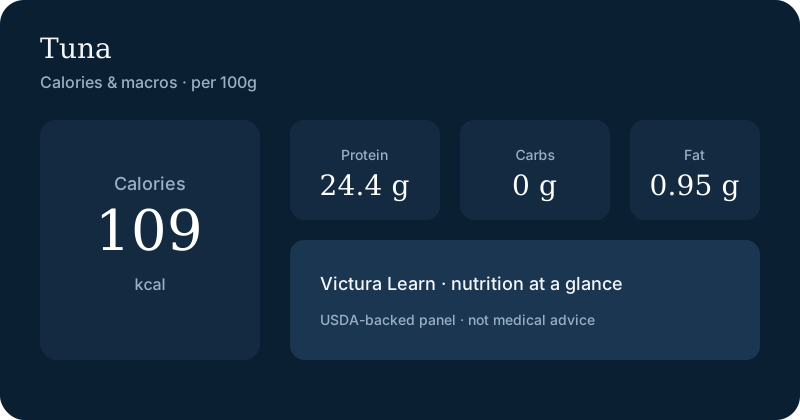
A 100g serving of tuna provides about 109 kcal. Per 100g you get about 0g carbs and 24.4g protein.
Tuna is a whole food with approximately 109 calories per 100g, tracked in Victura for macro-aware meal logging.
- Calories (100g serving)
- 109 kcal
- Carbs (100g)
- 0.0g
- Protein (100g)
- 24.4g
- Serving reference
- 100g · 100g serving

Where the calories come from
Per 100g · protein & carbs 4 kcal/g, fat 9 kcal/g
- Protein24.4 g · 91.9%
- Carbs0 g · 0%
- Fat1 g · 8.1%
Serving calculator
How much did you eat or drink — Tuna?
109
Calories
24.4g
Protein
0.0g
Carbs
0.9g
Fat
Nutrition facts
per 100g · Source: USDA FoodData Central (seeded Phase 0)
109 kcal
Calories
Vitamins
- Vitamin B12: 2.35mcg
Minerals
- Selenium: 90.6mcg
Scientific explanation
Research-backedTuna provides an exceptional macronutrient profile, yielding approximately 109 kcal per 100g of raw yellowfin. This energy distribution is heavily weighted toward high-quality protein, which constitutes 24.4g of its total mass, while containing a minimal 0.95g of fat and absolutely 0.0g of carbohydrates. This makes fresh yellowfin tuna one of the most protein-dense whole foods available, ideal for tissue synthesis, metabolic support, and muscle preservation. Beyond its macronutrient efficiency, tuna is a rich source of critical micronutrients, notably selenium and vitamin B12. A single 100g serving delivers 90.6 mcg of selenium (165% of the Daily Value) and 2.35 mcg of vitamin B12 (98% of the Daily Value). These micronutrients play vital roles in thyroid hormone metabolism, cellular antioxidant defense systems, red blood cell formation, and neurological health. The absence of dietary fiber and sugars reflects its status as a pure marine protein source, which has a negligible impact on blood glucose levels.

Community insights
Community insightAmong Victura meal logs, tuna appears frequently as a staple for high-protein meal prep, post-workout recovery meals, and quick low-carb lunches. Users frequently pair fresh or canned tuna with healthy fats like avocado, olive oil, or a handful of olives to improve satiety, as the extremely low fat content of yellowfin tuna can sometimes leave individuals feeling hungry shortly after eating. Fitness enthusiasts in the community highly value tuna for its convenience and macro-efficiency, often combining it with complex carbohydrates like brown rice or sweet potatoes for a balanced post-exercise meal. Many users also emphasize the importance of rotating tuna with other protein sources to manage dietary variety and keep mercury intake within safe, recommended limits.
Pros
- Extremely high protein-to-calorie ratio
- Rich in essential selenium and vitamin B12
- Zero carbohydrates and zero sugar
- Supports cardiovascular and thyroid health
Cons
- Contains mercury, requiring moderate consumption
- Very low in fat, which may reduce long-term satiety if eaten alone
Best time to eat
Tuna is best consumed post-workout for muscle recovery or during lunch to maintain stable energy and focus throughout the afternoon.
Good windows
- Post-workout recovery
- Mid-day lunch
Consider avoiding
- Late-night heavy meals right before sleeping
Diet compatibility
Weight loss
Friendly
At only 109 kcal per 100g and packed with 24.4g of protein, it is highly satiating and calorie-efficient.
Keto
Friendly
Net carbs are 0.0g per 100g, making it completely compatible with strict ketogenic diets.
Diabetic friendly
Friendly
With a glycemic index of 0 and no sugars, tuna has zero impact on blood glucose levels.
Frequently asked questions
People also ask
Is a tuna healthy?
Yes — a tuna is a whole food with measurable nutrients. Healthiness depends on overall diet, portions, and your goals.
Can I eat a tuna every day?
Most people can include a tuna daily as part of a balanced diet, as long as total calories and carbs fit their plan.
Are Tunas good for weight loss?
At only 109 kcal per 100g and packed with 24.4g of protein, it is highly satiating and calorie-efficient.
How many calories are in a tuna?
A typical medium serving of tuna has about 109 calories, while 100g contains about 109 calories (USDA reference).
Are Tunas good before a workout?
Tunas can work before activity when you want easy carbs; pair a tuna with protein if your session is long.
Are Tunas high in sugar?
Tunas contain about 0.0g sugar per 100g — mostly natural sugars when whole.
Is tuna keto-friendly?
Yes, tuna is exceptionally keto-friendly. With 0.0g of net carbohydrates per 100g, it fits perfectly into even the strictest ketogenic diets. Because it is very lean, keto practitioners often prepare it with healthy fats like olive oil, avocado oil, or high-fat mayonnaise to meet their daily lipid targets.
What is the glycemic index of tuna?
The glycemic index of tuna is 0. Because it contains no carbohydrates, sugars, or fiber, it has no measurable impact on blood glucose levels and does not trigger an insulin spike, making it an ideal food for metabolic health.
Is tuna safe for people with diabetes?
Yes, tuna is highly safe and beneficial for people with diabetes. Its zero-carb profile means it will not raise blood sugar levels. Furthermore, its high protein content helps slow down the digestion of any accompanying carbohydrates, promoting more stable post-meal glucose levels.
How many calories does tuna have?
A standard 150g portion of drained tuna contains about 164 calories, while a smaller 85g serving has 93 calories. Per 100g, yellowfin tuna contains 109 calories. This low calorie density, combined with high protein, makes it a premier choice for calorie-controlled diets.
How we review this guide
- Written by
- Victura Nutrition Team
- Reviewed by
- Victura Editorial Review
- Reference sources
- 4
- Last updated
- Aug 9, 2026
References
Ready to track your meals with AI?
Victura scans your plate, logs macros automatically, and coaches you toward your goals — halal, keto, diabetic-friendly, and more.