
Pasta Nutrition Facts
Complete pasta nutrition breakdown with 371 kcal per 100g, glycemic index, and diet compatibility.
Written by Victura Nutrition TeamReviewed by Victura Editorial ReviewLast updated Aug 11, 2026
371
Calories
13.0g
Protein
74.7g
Carbs
Use caution
Is it healthy?
per 100g · per panel values
Track this food in VicturaQuick answer
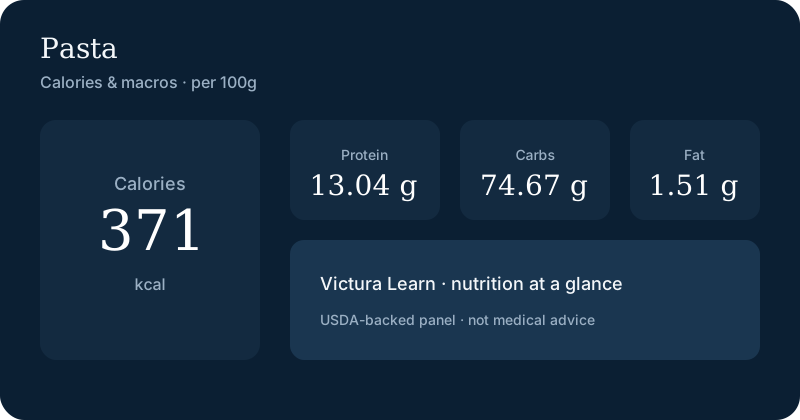
A 100g serving of pasta provides about 371 kcal. Per 100g you get about 74.67g carbs and 13.04g protein. Glycemic index is around 50.
Pasta is a whole food with approximately 371 calories per 100g, tracked in Victura for macro-aware meal logging.
- Calories (100g serving)
- 371 kcal
- Carbs (100g)
- 74.67g
- Protein (100g)
- 13.04g
- Serving reference
- 100g · 100g serving
- Glycemic index
- 50

Where the calories come from
Per 100g · protein & carbs 4 kcal/g, fat 9 kcal/g
- Protein13 g · 14.3%
- Carbs74.7 g · 82%
- Fat1.5 g · 3.7%
Serving calculator
How much did you eat or drink — Pasta?
371
Calories
13.0g
Protein
74.7g
Carbs
1.5g
Fat
Nutrition facts
per 100g · Source: USDA FoodData Central (seeded Phase 0)
371 kcal
Calories
Minerals
- Selenium: 63.2mcg
Scientific explanation
Research-backedPasta provides approximately 371 kcal per 100g (dry weight) with 13.04g of protein, 74.67g of carbohydrates, and 1.51g of fat. It is an exceptionally rich source of selenium, delivering 63.2 mcg per 100g, which represents 115% of the daily recommended value. Dietary fiber stands at 3.2g per 100g, while sugar content is minimal at 2.67g. The glycemic index of standard pasta is estimated at 50, placing it in the low-to-medium category. This relatively moderate glycemic response is primarily due to the compact starch structure created during the extrusion manufacturing process, which slows down enzymatic digestion compared to other refined wheat products like white bread.

Community insights
Community insightWithin the Victura community meal logs, pasta is frequently recorded as a core training meal, particularly among endurance athletes, runners, and strength trainers who utilize its accessible carbohydrate profile for glycogen replenishment. Analysis of user habits shows that individuals who pair pasta with high-fiber vegetables (such as broccoli, spinach, or zucchini) and lean proteins (like grilled chicken breast, lean beef, or tofu) report significantly higher satiety scores and more stable post-meal energy levels. Conversely, logging pasta as a standalone dish with simple tomato sauce often correlates with shorter satiety windows and quicker returns of hunger. Additionally, a growing segment of the community logs 'cold pasta salad' preparations, leveraging the natural formation of resistant starch through cooking and cooling cycles to optimize digestive health and minimize glycemic impact.
Pros
- Excellent source of sustained energy from complex carbohydrates
- Exceptionally high in selenium (115% DV per 100g)
- Lower glycemic index than most refined grains when cooked al dente
Cons
- Highly energy-dense, making overeating easy if portions are unmeasured
- Standard white pasta is relatively low in fiber compared to whole-grain alternatives
Best time to eat
Pair with protein and fiber for balanced meals, ideally around periods of physical activity.
Good windows
- Pre-workout (2-4 hours prior)
- Post-workout recovery
- Lunch or dinner with high-protein pairings
Consider avoiding
- Late-night sedentary meals in very large portions
Diet compatibility
Weight loss
Use caution
At 371 kcal per 100g dry, it is energy-dense and requires strict portion control.
Keto
Use caution
Net carbs are ~71.5g per 100g, which is too high-carb for a standard ketogenic diet.
Diabetic friendly
Friendly
With a GI of 50 and low sugar, it is safe in moderation when paired with protein and fiber.
Frequently asked questions
People also ask
Is a pasta healthy?
Yes — a pasta is a whole food with measurable nutrients. Healthiness depends on overall diet, portions, and your goals. Estimated GI is 50.
Can I eat a pasta every day?
Most people can include a pasta daily as part of a balanced diet, as long as total calories and carbs fit their plan.
Are Pastas good for weight loss?
At 371 kcal per 100g dry, it is energy-dense and requires strict portion control.
How many calories are in a pasta?
A typical medium serving of pasta has about 371 calories, while 100g contains about 371 calories (USDA reference).
Are Pastas good before a workout?
Pastas can work before activity when you want easy carbs; pair a pasta with protein if your session is long.
Are Pastas high in sugar?
Pastas contain about 2.7g sugar per 100g — mostly natural sugars when whole.
Is pasta healthy?
Yes, pasta is a wholesome, energy-dense food that can easily fit into a health-conscious lifestyle. It is an excellent source of complex carbohydrates, essential B-vitamins, and selenium. Its healthiness ultimately depends on portion control, cooking methods (such as keeping it al dente to maintain a lower glycemic index), and the nutrient density of the sauces and proteins paired with it.
Can I eat pasta every day?
Yes, you can eat pasta daily as part of a balanced diet, provided that your overall caloric intake and macronutrient distribution align with your physical activity levels and metabolic goals. To optimize daily consumption, focus on moderate portion sizes, choose whole-grain or legume-based alternatives for extra fiber, and pair the meal with plenty of vegetables and lean proteins.
Is pasta good for weight loss?
Pasta can be included in a weight loss plan, but careful portion management is essential. At 371 kcal per 100g dry weight, it is energy-dense. To support weight loss, control your serving sizes (aiming for a cooked portion of 1 to 1.5 cups), cook it al dente to maximize satiety, and load your plate with low-calorie, high-fiber vegetables to add volume without excess calories.
How many calories are in a serving of pasta?
A typical single-cup serving of cooked pasta (approx. 140g) contains about 180 to 200 calories. In its dry form, a standard 2-ounce (56g) serving contains approximately 208 calories, while 100g of dry pasta contains exactly 371 calories according to USDA reference data.
Is pasta keto-friendly?
No, standard pasta is not keto-friendly. With approximately 74.67g of total carbohydrates and 71.47g of net carbohydrates per 100g dry serving, a single portion would significantly exceed the daily carbohydrate limit required to maintain ketosis on a standard ketogenic diet.
What is the glycemic index of pasta?
The glycemic index of standard white pasta cooked al dente is approximately 50, which is classified as low-to-medium. This is lower than many other refined carbohydrates because the dense protein matrix of extruded pasta slows down starch digestion and glucose absorption.
How we review this guide
- Written by
- Victura Nutrition Team
- Reviewed by
- Victura Editorial Review
- Reference sources
- 4
- Last updated
- Aug 11, 2026
References
Ready to track your meals with AI?
Victura scans your plate, logs macros automatically, and coaches you toward your goals — halal, keto, diabetic-friendly, and more.