
Mushrooms Nutrition Facts
Complete mushrooms nutrition breakdown with 22 kcal per 100g, glycemic index, and diet compatibility.
Written by Victura Nutrition TeamReviewed by Victura Editorial ReviewLast updated Aug 9, 2026
22
Calories
3.1g
Protein
3.3g
Carbs
Generally yes
Is it healthy?
per 100g · per panel values
Track this food in VicturaQuick answer
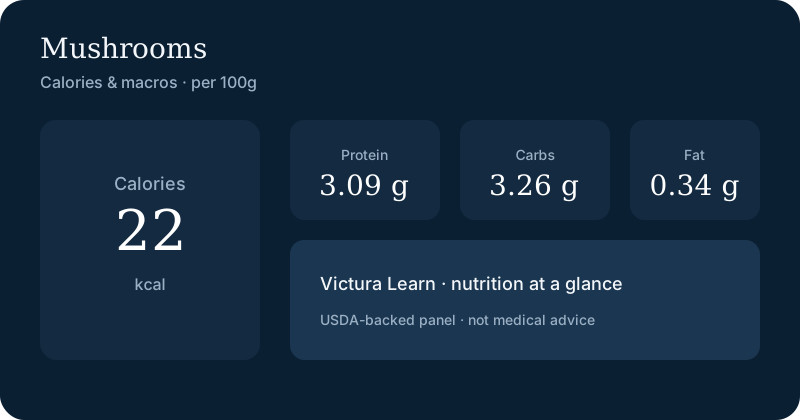
A 100g serving of mushrooms provides about 22 kcal. Per 100g you get about 3.26g carbs and 3.09g protein. Glycemic index is around 15.
Mushrooms is a whole food with approximately 22 calories per 100g, tracked in Victura for macro-aware meal logging.
- Calories (100g serving)
- 22 kcal
- Carbs (100g)
- 3.26g
- Protein (100g)
- 3.09g
- Serving reference
- 100g · 100g serving
- Glycemic index
- 15

Where the calories come from
Per 100g · protein & carbs 4 kcal/g, fat 9 kcal/g
- Protein3.1 g · 43.4%
- Carbs3.3 g · 45.8%
- Fat0.3 g · 10.8%
Serving calculator
How much did you eat or drink — Mushrooms?
22
Calories
3.1g
Protein
3.3g
Carbs
0.3g
Fat
Nutrition facts
per 100g · Source: USDA FoodData Central (seeded Phase 0)
22 kcal
Calories
Vitamins
- Riboflavin: 0.4mg
Minerals
- Selenium: 9.3mcg
Scientific explanation
Research-backedMushrooms provides approximately 22 kcal per 100g with 3.09g of protein, 3.26g of carbohydrates, and 0.34g of fat. Dietary fiber is 1.0g per 100g, resulting in a net carbohydrate count of approximately 2.26g. The glycemic index of mushrooms is estimated at 15, which classifies it as an exceptionally low-glycemic food. This means that consuming mushrooms has a negligible impact on blood glucose levels, making them highly suitable for individuals managing diabetes or following low-carbohydrate and ketogenic diets. From a micronutrient perspective, white raw mushrooms are an excellent source of B vitamins, particularly Riboflavin (Vitamin B2). A 100g serving delivers 0.4 mg of Riboflavin, which constitutes approximately 31% of the Daily Value (DV). Riboflavin plays a critical role in energy production, cellular function, and the metabolism of fats and drugs. Additionally, mushrooms provide essential minerals such as Selenium, offering 9.3 mcg per 100g (17% DV). Selenium is a powerful antioxidant that supports thyroid function, DNA synthesis, and protects the body from oxidative damage and infection. Mushrooms also contain unique bioactive compounds, including beta-glucans (a type of soluble dietary fiber) and ergothioneine, a unique sulfur-containing amino acid that functions as an intracellular antioxidant. These compounds have been studied for their immunomodulatory properties and their potential to support cardiovascular health by helping to maintain healthy cholesterol levels. The high water content (approximately 92%) combined with the dietary fiber and protein content contributes to a high satiety index relative to their low caloric density, making mushrooms a valuable tool for weight management and volume eating strategies.

Community insights
Community insightAmong Victura meal logs, mushrooms appears frequently as a versatile, low-calorie ingredient used to add volume, texture, and savory 'umami' flavor to a wide variety of dishes. Users frequently log mushrooms in morning omelets, stir-fries, and as a key component in meal-prep bowls. A popular trend observed among Victura community members is 'the blendarian approach'—mixing finely chopped mushrooms with ground meats (such as beef or turkey) to reduce the overall calorie and fat density of burgers, meatballs, and taco fillings while boosting moisture and micronutrient content. Additionally, community logs indicate that pairing mushrooms with healthy fats (such as olive oil or avocado oil) or high-quality proteins (like eggs or chicken) helps maximize the absorption of fat-soluble nutrients and provides sustained, steady energy levels. Users who consume mushrooms as part of a balanced, whole-food diet report higher levels of meal satisfaction and better portion control throughout the day, without experiencing the rapid blood sugar spikes or subsequent crashes associated with high-glycemic carbohydrate sources.
Pros
- Mushrooms is a whole food with measurable macro nutrients
- Extremely low calorie density, ideal for volume eating
- Rich source of Riboflavin (31% DV) and Selenium (17% DV)
Cons
- Portion size still matters for calorie goals
- Low in protein compared to animal sources
- Must be properly cleaned to remove substrate residue
Best time to eat
Pair with protein and fiber for balanced meals.
Good windows
- With main meals
- Post-workout recovery meals
Consider avoiding
- Very large portions without activity
Diet compatibility
Weight loss
Friendly
At 22 kcal and 1.0g fiber per 100g, this food is exceptionally low in energy density and highly supportive of weight loss.
Keto
Friendly
Net carbs ~2.3g per 100g - compatible with strict keto.
Diabetic friendly
Friendly
GI 15 with 2.0g sugar - generally blood-sugar friendly in moderation.
Frequently asked questions
People also ask
Is a mushrooms healthy?
Yes — a mushrooms is a whole food with measurable nutrients. Healthiness depends on overall diet, portions, and your goals. Estimated GI is 15.
Can I eat a mushrooms every day?
Most people can include a mushrooms daily as part of a balanced diet, as long as total calories and carbs fit their plan.
Are Mushroomses good for weight loss?
At 22 kcal and 1.0g fiber per 100g, this food is exceptionally low in energy density and highly supportive of weight loss.
How many calories are in a mushrooms?
A typical medium serving of mushrooms has about 22 calories, while 100g contains about 22 calories (USDA reference).
Are Mushroomses good before a workout?
Mushroomses can work before activity when you want easy carbs; pair a mushrooms with protein if your session is long.
Are Mushroomses high in sugar?
Mushroomses contain about 2.0g sugar per 100g — mostly natural sugars when whole.
Is mushrooms good for weight loss?
Absolutely. Mushrooms are highly beneficial for weight loss due to their high water content (around 92%) and low caloric density (22 kcal per 100g). Incorporating them into meals allows you to add substantial volume and savory flavor without adding excess calories. The dietary fiber and protein in mushrooms also slow digestion, which helps keep you feeling full and satisfied for longer periods, reducing the urge to snack between meals.
Is mushrooms keto-friendly?
Yes, mushrooms are highly keto-friendly. With only 3.26g of total carbohydrates and 1.0g of dietary fiber per 100g, a standard serving contains just 2.26g of net carbs. This minimal carbohydrate impact allows you to easily fit mushrooms into a strict daily limit of 20 to 50 grams of net carbs, while providing valuable texture, volume, and essential micronutrients to a ketogenic meal plan.
What is the glycemic index of mushrooms?
The glycemic index (GI) of mushrooms is estimated to be 15, which is considered extremely low. Foods with a GI of 55 or less are classified as low-glycemic. Because mushrooms have a negligible carbohydrate content and a low GI, they cause a very slow, minimal rise in blood glucose levels. Pairing them with healthy fats or proteins further stabilizes the glycemic response of your overall meal.
Is mushrooms safe for people with diabetes?
Yes, mushrooms are highly safe and recommended for individuals with diabetes. Their exceptionally low glycemic index of 15 and low carbohydrate content (3.26g per 100g) mean they will not cause sharp spikes in blood sugar. Furthermore, the dietary fiber in mushrooms helps regulate glucose absorption, while their rich antioxidant profile supports cardiovascular health, which is a key consideration in diabetes management.
How many calories do mushrooms have?
Mushrooms contain 22 calories (kcal) per 100-gram reference serving according to USDA FoodData Central. A typical single cup of whole raw mushrooms (approx. 70g) contains only about 15 calories, while a cup of sliced raw mushrooms (approx. 70g to 96g) contains between 15 and 21 calories. This makes mushrooms an exceptionally low-calorie food that can be eaten in generous portions.
How we review this guide
- Written by
- Victura Nutrition Team
- Reviewed by
- Victura Editorial Review
- Reference sources
- 4
- Last updated
- Aug 9, 2026
References
Ready to track your meals with AI?
Victura scans your plate, logs macros automatically, and coaches you toward your goals — halal, keto, diabetic-friendly, and more.