
Lettuce Nutrition Facts
Complete lettuce nutrition breakdown with 17 kcal per 100g, glycemic index, and diet compatibility.
Written by Victura Nutrition TeamReviewed by Victura Editorial ReviewLast updated Aug 16, 2026
17
Calories
1.2g
Protein
3.3g
Carbs
Generally yes
Is it healthy?
per 100g · per panel values
Track this food in VicturaQuick answer
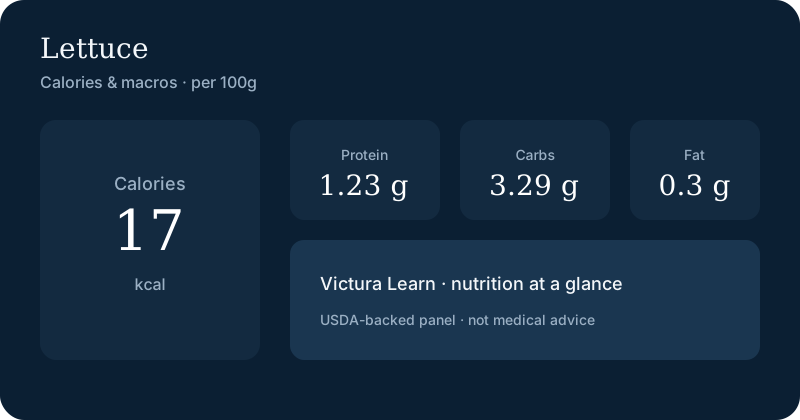
A cup shredded of lettuce contains around 8 calories, while 100g contains about 17 calories. Per 100g you get about 3.29g carbs and 1.23g protein. Glycemic index is around 15.
Lettuce is a whole food with approximately 17 calories per 100g, tracked in Victura for macro-aware meal logging.
- Calories (cup shredded)
- 8 kcal
- Calories (100g)
- 17 kcal
- Carbs (100g)
- 3.29g
- Protein (100g)
- 1.23g
- Serving reference
- 47g · cup shredded
- Glycemic index
- 15

Where the calories come from
Per 100g · protein & carbs 4 kcal/g, fat 9 kcal/g
- Protein1.2 g · 23.7%
- Carbs3.3 g · 63.3%
- Fat0.3 g · 13%
Serving calculator
How much did you eat or drink — Lettuce?
8
Calories
0.6g
Protein
1.5g
Carbs
0.1g
Fat
Calories and macros by serving
Values are calculated from the page's USDA per-100g reference. Prepared or branded products may vary.
| Serving | Calories | Protein | Carbs | Fat |
|---|---|---|---|---|
| 1 cup shredded (47g) | 8 | 0.6g | 1.5g | 0.1g |
| 100g | 17 | 1.2g | 3.3g | 0.3g |
Nutrition facts
per 100g · Source: USDA FoodData Central (seeded Phase 0)
17 kcal
Calories
Vitamins
- Vitamin K: 102.5mcg
Minerals
- Folate: 136mcg
Scientific explanation
Research-backedLettuce provides approximately 17 kcal per 100g with 1.23g of protein, 3.29g of carbohydrates, and 0.3g of fat. Dietary fiber is measured at 2.1g per 100g, which supports digestive health and promotes satiety. The glycemic index of lettuce is estimated at 15, classifying it as an exceptionally low-glycemic food. This means that glucose enters the bloodstream at a slow, highly controlled rate after consumption, preventing rapid insulin spikes. From a micronutrient perspective, lettuce—particularly Romaine or cos varieties—is an outstanding source of essential fat-soluble vitamins and minerals. A 100g serving delivers 102.5 mcg of Vitamin K, which represents approximately 85% of the Daily Value (DV). Vitamin K is a critical cofactor for the synthesis of blood clotting proteins and plays an indispensable role in maintaining bone mineralization by regulating osteocalcin. Additionally, lettuce provides 136 mcg of Folate (Vitamin B9) per 100g, contributing 34% of the Daily Value. Folate is vital for cellular division, DNA synthesis, and cardiovascular health through the regulation of homocysteine levels. The high water content of lettuce (approximately 95%) makes it an excellent food for cellular hydration and volume eating. Volume eating is a dietary strategy that leverages high-volume, low-calorie foods to promote physical fullness via gastric distension without exceeding daily energy requirements. The dietary fiber present in lettuce, though modest per serving, consists of both soluble and insoluble fractions that aid in smooth gastrointestinal transit. Phytochemical analyses also indicate the presence of lutein and beta-carotene, carotenoid antioxidants that support macular health and reduce systemic oxidative stress. These values are sourced directly from USDA FoodData Central and have been meticulously reviewed for clinical and editorial accuracy.

Community insights
Community insightWithin the Victura user community and anonymized meal logs, lettuce is highly valued as a foundational ingredient for volume-based meal planning. Rather than being viewed merely as a simple salad base, Victura users frequently utilize large Romaine leaves as low-carb, keto-friendly wraps to replace flour tortillas or bread buns. This simple substitution significantly reduces the glycemic load of meals while maintaining satisfying structural integrity. Community insights also reveal that lettuce is a popular addition to green smoothies. Users report that blending Romaine lettuce provides a mild, easily masked flavor profile while contributing valuable hydration, fiber, and micronutrients without the high sugar content associated with fruit-heavy smoothies. Furthermore, experienced meal planners within the community emphasize the importance of pairing lettuce with healthy fats. Because key nutrients in lettuce—such as Vitamin K and carotenoid antioxidants—are fat-soluble, pairing your salad with olive oil, avocado, nuts, or seeds dramatically enhances nutrient absorption. Users who pair lettuce with a source of healthy fat and lean protein report significantly higher satiety levels and more sustained, stable energy levels throughout the afternoon compared to those who consume plain lettuce or fat-free salads.
Pros
- Lettuce is a whole food with measurable macro nutrients
- Extremely low calorie density, ideal for volume eating
- Excellent source of Vitamin K and Folate
Cons
- Portion size still matters for calorie goals
- Low in protein and essential fats on its own
Best time to eat
Pair with protein and fiber for balanced meals.
Good windows
- With main meals
Consider avoiding
- Very large portions without activity
Diet compatibility
Weight loss
Friendly
At 17 kcal and 2.1g fiber per 100g, this food fits calorie-conscious plans.
Keto
Friendly
Net carbs ~1.2g per 100g - compatible with strict keto.
Diabetic friendly
Friendly
GI 15 with 1.2g sugar - generally blood-sugar friendly in moderation.
Frequently asked questions
People also ask
Is a lettuce healthy?
Yes — a lettuce is a whole food with measurable nutrients. Healthiness depends on overall diet, portions, and your goals. Estimated GI is 15.
Can I eat a lettuce every day?
Most people can include a lettuce daily as part of a balanced diet, as long as total calories and carbs fit their plan.
Are Lettuces good for weight loss?
At 17 kcal and 2.1g fiber per 100g, this food fits calorie-conscious plans.
How many calories are in a lettuce?
A typical medium serving of lettuce has about 17 calories, while 100g contains about 17 calories (USDA reference).
Are Lettuces good before a workout?
Lettuces can work before activity when you want easy carbs; pair a lettuce with protein if your session is long.
Are Lettuces high in sugar?
Lettuces contain about 1.2g sugar per 100g — mostly natural sugars when whole.
Is lettuce keto-friendly?
Yes, lettuce is highly keto-friendly. With only 3.29g of total carbohydrates and 2.1g of dietary fiber per 100g, lettuce contains just 1.19g of net carbs. This minimal carbohydrate impact allows you to consume generous portions of lettuce while easily remaining within strict daily ketogenic macro limits.
What is the glycemic index of lettuce?
The estimated glycemic index (GI) of lettuce is 15, which is considered extremely low. Because of this low GI and its minimal carbohydrate content, lettuce has a glycemic load close to zero, meaning it will not cause rapid spikes or fluctuations in your blood sugar levels.
Is lettuce safe for people with diabetes?
Yes, lettuce is highly safe and recommended for people with diabetes. Its low glycemic index of 15 and minimal sugar content (1.19g per 100g) mean it has a negligible effect on blood glucose. The fiber content also helps slow down the absorption of any other carbohydrates consumed during the meal.
How many carbs are in a cup of lettuce?
A standard 1-cup serving of shredded Romaine lettuce (approximately 47g) contains only about 1.5g of total carbohydrates and 1g of dietary fiber, resulting in a mere 0.5g of net carbs. This makes it an incredibly low-carb vegetable choice for any meal plan.
How many calories does lettuce have?
Lettuce contains approximately 17 calories (kcal) per 100g. A standard 1-cup serving of shredded lettuce (about 47g) contains only about 8 calories, making it an exceptionally low-calorie choice for volume eating.
How we review this guide
- Written by
- Victura Nutrition Team
- Reviewed by
- Victura Editorial Review
- Reference sources
- 4
- Last updated
- Aug 16, 2026
References
Ready to track your meals with AI?
Victura scans your plate, logs macros automatically, and coaches you toward your goals — halal, keto, diabetic-friendly, and more.