
Blueberries Nutrition Facts
Complete blueberries nutrition breakdown with 57 kcal per 100g, glycemic index, and diet compatibility.
Written by Victura Nutrition TeamReviewed by Victura Editorial ReviewLast updated Aug 8, 2026
57
Calories
0.7g
Protein
14.5g
Carbs
Generally yes
Is it healthy?
per 100g · per panel values
Track this food in VicturaQuick answer
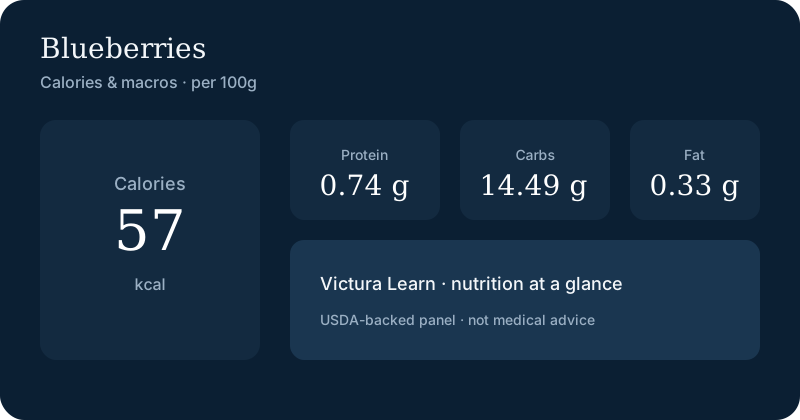
A 100g serving of blueberries provides about 57 kcal. Per 100g you get about 14.49g carbs and 0.74g protein. Glycemic index is around 53.
Blueberries is a whole food with approximately 57 calories per 100g, tracked in Victura for macro-aware meal logging.
- Calories (100g serving)
- 57 kcal
- Carbs (100g)
- 14.49g
- Protein (100g)
- 0.74g
- Serving reference
- 100g · 100g serving
- Glycemic index
- 53

Where the calories come from
Per 100g · protein & carbs 4 kcal/g, fat 9 kcal/g
- Protein0.7 g · 4.6%
- Carbs14.5 g · 90.7%
- Fat0.3 g · 4.6%
Serving calculator
How much did you eat or drink — Blueberries?
57
Calories
0.7g
Protein
14.5g
Carbs
0.3g
Fat
Nutrition facts
per 100g · Source: USDA FoodData Central (seeded Phase 0)
57 kcal
Calories
Vitamins
- Vitamin C: 9.7mg
Minerals
- Manganese: 0.34mg
Scientific explanation
Research-backedBlueberries provides approximately 57 calories (kcal) per 100g serving, making them a nutrient-dense, low-calorie option for various dietary patterns. A standard 100g portion contains 0.74g of protein, 14.49g of carbohydrates, and a negligible 0.33g of fat. Within the carbohydrate profile, dietary fiber accounts for 2.4g, which plays a critical role in supporting digestive health and promoting satiety. The remaining carbohydrates consist primarily of natural sugars, totaling 9.96g, which are balanced by the fruit's fiber matrix. The glycemic index (GI) of blueberries is estimated at 53, placing them in the low-to-medium category. This moderate glycemic impact means that the carbohydrates are digested and absorbed at a steady rate, preventing rapid spikes in blood glucose levels. This makes them an excellent fruit choice for individuals managing diabetes or insulin sensitivity, especially when consumed in controlled portions. Micronutrient analysis reveals that blueberries are an excellent source of essential vitamins and minerals. A 100g serving delivers 9.7mg of Vitamin C, contributing approximately 11% of the Daily Value (DV). Vitamin C acts as a powerful antioxidant, supporting immune function, collagen synthesis, and skin health. Additionally, blueberries provide 0.34mg of Manganese (15% DV), a trace mineral vital for bone formation, amino acid metabolism, and antioxidant defense systems. Beyond standard vitamins and minerals, blueberries are highly regarded for their rich concentration of bioactive phytochemicals, particularly anthocyanins. These polyphenolic compounds give blueberries their characteristic deep blue hue and have been the subject of extensive peer-reviewed research. Studies suggest that these antioxidants help neutralize free radicals, reduce oxidative stress, and support cardiovascular and cognitive health. When evaluating blueberries from a nutritional standpoint, their high water content (approximately 84%) combined with fiber and essential micronutrients establishes them as a premier whole-food option for optimizing daily nutrient density.

Community insights
Community insightAmong Victura meal logs, blueberries appears frequently as a highly versatile, portable snack and a staple ingredient in breakfast dishes, smoothies, and pre-workout meals. Analysis of anonymized community data indicates that users frequently pair blueberries with high-protein or high-fat foods, such as plain Greek yogurt, cottage cheese, walnuts, or chia seeds. This pairing strategy is highly recommended by nutritionists because the addition of protein and healthy fats further slows down digestion, resulting in more sustained energy levels and preventing the minor blood sugar fluctuations that some sensitive individuals experience when consuming fruit in isolation on an empty stomach. In culinary applications, Victura users report using both fresh and frozen blueberries. Frozen blueberries are highly praised for their convenience, long shelf life, and cost-effectiveness, while retaining virtually the same nutritional profile and antioxidant capacity as fresh berries due to flash-freezing technologies. Many active users log blueberries as a pre-workout carbohydrate source, noting that a small handful provides easily digestible glycogen without causing gastrointestinal discomfort during intense physical activity. For post-workout recovery, community members often blend them into protein shakes to aid in glycogen replenishment and combat exercise-induced oxidative stress. Overall, the community views blueberries as an indispensable, delicious, and functional whole food that seamlessly fits into weight loss, athletic performance, and general wellness protocols.
Pros
- Blueberries is a whole food with measurable macro nutrients
- Rich in powerful anthocyanin antioxidants
- Excellent source of Vitamin C and Manganese
Cons
- Portion size still matters for calorie goals
- Relatively high in natural sugars compared to other berries like raspberries
Best time to eat
Pair with protein and fiber for balanced meals.
Good windows
- With main meals
- Pre-workout for quick energy
- Post-workout for recovery
Consider avoiding
- Very large portions without activity
Diet compatibility
Weight loss
Friendly
At 57 kcal and 2.4g fiber per 100g, this food fits calorie-conscious plans.
Keto
Use caution
Net carbs ~12.1g per 100g - too high-carb for standard keto.
Diabetic friendly
Friendly
GI 53 with 10.0g sugar - generally blood-sugar friendly in moderation.
Frequently asked questions
People also ask
Is a blueberries healthy?
Yes — a blueberries is a whole food with measurable nutrients. Healthiness depends on overall diet, portions, and your goals. Estimated GI is 53.
Can I eat a blueberries every day?
Most people can include a blueberries daily as part of a balanced diet, as long as total calories and carbs fit their plan.
Are Blueberrieses good for weight loss?
At 57 kcal and 2.4g fiber per 100g, this food fits calorie-conscious plans.
How many calories are in a blueberries?
A typical medium serving of blueberries has about 57 calories, while 100g contains about 57 calories (USDA reference).
Are Blueberrieses good before a workout?
Blueberrieses can work before activity when you want easy carbs; pair a blueberries with protein if your session is long.
Are Blueberrieses high in sugar?
Blueberrieses contain about 10.0g sugar per 100g — mostly natural sugars when whole.
Is blueberries good for weight loss?
Yes, blueberries are highly effective for weight loss. Providing only 57 kcal per 100g alongside 2.4g of dietary fiber, they offer high volume and satiety for very few calories, making it easier to maintain a caloric deficit without feeling deprived.
Is blueberries keto-friendly?
With net carbs at approximately 12.09g per 100g (14.49g total carbs minus 2.4g fiber), blueberries are generally considered too high-carb for a strict, standard ketogenic diet. However, those on a targeted or liberal keto plan may fit a very small portion (e.g., 20-30g) into their daily carb limit.
What is the glycemic index of blueberries?
The estimated glycemic index (GI) of blueberries is 53, which is classified as low-to-moderate. To further blunt any potential glucose response and keep blood sugar exceptionally stable, consider pairing them with a healthy fat or protein source like almonds or Greek yogurt.
Is blueberries safe for people with diabetes?
Yes, blueberries are safe and highly recommended for people with diabetes when consumed in moderation. They have a glycemic index of 53 and contain 9.96g of natural sugar per 100g. Their high fiber and antioxidant content help support healthy blood sugar management and insulin sensitivity.
How we review this guide
- Written by
- Victura Nutrition Team
- Reviewed by
- Victura Editorial Review
- Reference sources
- 4
- Last updated
- Aug 8, 2026
References
Ready to track your meals with AI?
Victura scans your plate, logs macros automatically, and coaches you toward your goals — halal, keto, diabetic-friendly, and more.