
Raspberries Nutrition Facts
A complete scientific and practical guide to the calories, fiber, and micronutrients in fresh raspberries.
Written by Victura Nutrition TeamReviewed by Victura Editorial ReviewLast updated Sep 9, 2026
52
Calories
1.2g
Protein
11.9g
Carbs
Generally yes
Is it healthy?
per 100g · per panel values
Track this food in VicturaQuick answer
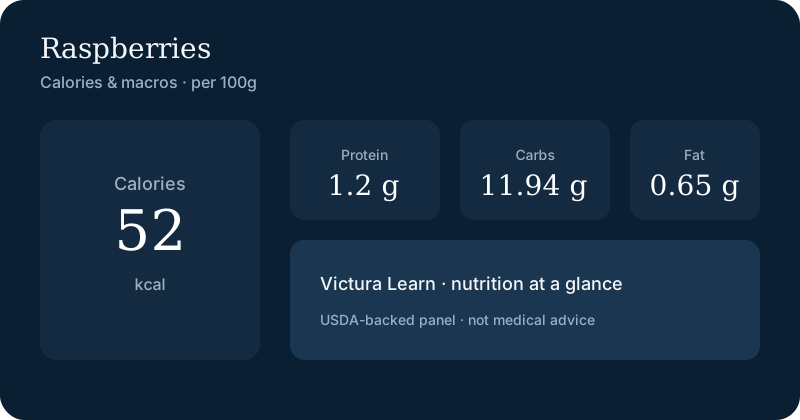
A 100g serving of raspberries provides about 52 kcal. Per 100g you get about 11.94g carbs and 1.2g protein. Glycemic index is around 32.
Raspberries is a whole food with approximately 52 calories per 100g, tracked in Victura for macro-aware meal logging.
- Calories (100g serving)
- 52 kcal
- Carbs (100g)
- 11.94g
- Protein (100g)
- 1.2g
- Serving reference
- 100g · 100g serving
- Glycemic index
- 32

Where the calories come from
Per 100g · protein & carbs 4 kcal/g, fat 9 kcal/g
- Protein1.2 g · 8.2%
- Carbs11.9 g · 81.8%
- Fat0.7 g · 10%
Serving calculator
How much did you eat or drink — Raspberries?
52
Calories
1.2g
Protein
11.9g
Carbs
0.7g
Fat
Nutrition facts
per 100g · Source: USDA FoodData Central (seeded Phase 0)
52 kcal
Calories
Vitamins
- Vitamin C: 26.2mg
Minerals
- Manganese: 0.67mg
Scientific explanation
Research-backedRaspberries provides an exceptional nutritional profile, combining low energy density with an abundance of essential micronutrients and dietary fiber. According to the USDA FoodData Central (FDC ID 167755), a standard 100g serving of raw raspberries delivers just 52.0 calories, making it an ideal choice for volume-eating and calorie-restricted diets. The macronutrient distribution per 100g consists of 1.2g of protein, 0.65g of total lipids (fat), and 11.94g of total carbohydrates. Notably, of these carbohydrates, a substantial 6.5g is dietary fiber, leaving a net carbohydrate impact of only 5.44g. This high-fiber, low-net-carb ratio is highly beneficial for gastrointestinal health, promoting regular bowel movements and supporting a diverse gut microbiome.
From a glycemic perspective, raspberries are classified as a low-glycemic food with a Glycemic Index (GI) of 32. The low glycemic index, combined with a modest sugar content of 4.42g per 100g, ensures that consumption results in a slow, gradual rise in blood glucose levels rather than sharp spikes. This makes raspberries highly compatible with diabetic-friendly nutrition plans. Furthermore, the low net carb profile makes them exceptionally friendly for ketogenic (keto) diets, where daily carbohydrate limits are strictly managed.
In terms of micronutrients, raspberries are an outstanding source of Vitamin C and Manganese. A 100g serving provides 26.2 mg of Vitamin C, which constitutes 29% of the Daily Value (DV). Vitamin C acts as a powerful water-soluble antioxidant, supporting immune function, collagen synthesis, and skin health. Additionally, raspberries provide 0.67 mg of Manganese (29% DV), a trace mineral that serves as a cofactor for several critical enzymes, including superoxide dismutase, which protects cells from oxidative stress, and enzymes involved in bone formation and amino acid metabolism.

Community insights
Community insightAnalysis of Victura anonymized meal logs reveals that raspberries are one of the most frequently logged fruits among users pursuing weight loss, ketogenic, and blood-sugar-conscious lifestyles. Because of their high fiber-to-calorie ratio, users frequently leverage raspberries to add volume, texture, and natural sweetness to meals without compromising their daily caloric or carbohydrate budgets. The most common culinary applications logged include pairing fresh raspberries with Greek yogurt, mixing them into overnight oats, or blending them into high-protein smoothies.
Community feedback highlights that fresh raspberries are highly perishable due to their delicate structure and high moisture content. To maximize shelf life, users recommend storing them unwashed in a single layer on a paper-towel-lined container in the refrigerator, washing them only immediately before consumption. For long-term preservation, freezing fresh raspberries on a baking sheet before transferring them to an airtight bag prevents clumping and preserves their structural integrity for future use in baking, oatmeal toppings, or warm berry compotes.
Pros
Cons
Best time to eat
Good windows
Consider avoiding
Diet compatibility
Weight loss
Friendly
Consult your healthcare provider for personalized guidance.
Keto
Friendly
Consult your healthcare provider for personalized guidance.
Diabetes
Friendly
Consult your healthcare provider for personalized guidance.
Frequently asked questions
People also ask
Is a raspberries healthy?
Yes — a raspberries is a whole food with measurable nutrients. Healthiness depends on overall diet, portions, and your goals. Estimated GI is 32.
Can I eat a raspberries every day?
Most people can include a raspberries daily as part of a balanced diet, as long as total calories and carbs fit their plan.
Are Raspberrieses good for weight loss?
Raspberrieses can fit a calorie-controlled diet when portions are measured.
How many calories are in a raspberries?
A typical medium serving of raspberries has about 52 calories, while 100g contains about 52 calories (USDA reference).
Are Raspberrieses good before a workout?
Raspberrieses can work before activity when you want easy carbs; pair a raspberries with protein if your session is long.
Are Raspberrieses high in sugar?
Raspberrieses contain about 4.4g sugar per 100g — mostly natural sugars when whole.
Are raspberries healthy?
Yes, raspberries are exceptionally healthy. They are low in calories (52 kcal per 100g) and packed with essential nutrients, including Vitamin C and Manganese, which both provide 29% of the Daily Value per 100g. Their high fiber content (6.5g per 100g) supports digestive health, promotes satiety, and helps regulate blood sugar levels, making them an excellent addition to almost any health-focused diet.
Can you eat raspberries every day?
Yes, you can safely eat raspberries every day. Consuming a cup of raspberries daily is an excellent way to meet your dietary fiber and antioxidant needs. However, as with all foods, it is best to consume them as part of a balanced, varied diet to ensure you obtain a wide spectrum of nutrients from different fruit and vegetable sources.
Are raspberries good for weight loss?
Raspberries are highly beneficial for weight loss. They have a very low energy density, providing only 52 calories per 100g. A typical whole portion of one cup (approx. 123g) contains only about 64 calories while delivering nearly 8 grams of dietary fiber. This high fiber content slows digestion and promotes long-lasting satiety, helping to reduce overall daily calorie intake.
How many calories are in one raspberry?
A single medium-sized raspberry weighs approximately 1.9 grams. This means one individual raspberry contains roughly 1 calorie (1.0 kcal). Because they are so low in calories, they are an excellent option for mindless snacking or as a guilt-free sweet topping.
Should you eat raspberries before a workout?
Yes, raspberries make a great pre-workout snack. They provide easily digestible carbohydrates that offer a quick source of energy without weighing you down. Additionally, their high water content helps with pre-exercise hydration, and their low glycemic index (32) ensures a sustained release of energy rather than a sudden energy crash during your training session.
Are raspberries high in sugar?
No, raspberries are actually very low in sugar compared to other fruits. They contain only 4.42g of natural sugar per 100g. Combined with their high fiber content of 6.5g, they have a minimal impact on blood glucose levels, making them an ideal fruit choice for individuals managing diabetes or following low-carb diets.
How we review this guide
- Written by
- Victura Nutrition Team
- Reviewed by
- Victura Editorial Review
- Reference sources
- 4
- Last updated
- Sep 9, 2026
References
Ready to track your meals with AI?
Victura scans your plate, logs macros automatically, and coaches you toward your goals — halal, keto, diabetic-friendly, and more.