
Pineapple Nutrition Facts
Calories, sugar, vitamin C, and glycemic index for fresh, canned, and juiced pineapple
Written by Victura Nutrition TeamReviewed by Victura Editorial ReviewLast updated Oct 14, 2026
50
Calories
0.5g
Protein
13.1g
Carbs
Generally yes
Is it healthy?
per 100g · per panel values
Track this food in VicturaQuick answer
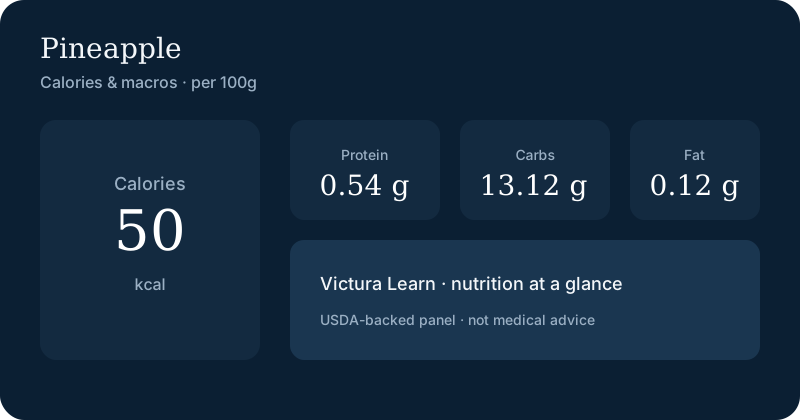
A 100g serving of pineapple provides about 50 kcal. Per 100g you get about 13.12g carbs and 0.54g protein. Glycemic index is around 59.
Pineapple is a whole food with approximately 50 calories per 100g, tracked in Victura for macro-aware meal logging.
- Calories (100g serving)
- 50 kcal
- Carbs (100g)
- 13.12g
- Protein (100g)
- 0.54g
- Serving reference
- 100g · 100g serving
- Glycemic index
- 59
Key takeaways
- A 1-cup serving of pineapple has about 83 calories, 79 mg vitamin C, and 2.3 g fiber.
- Pineapple carries 9.85 g of sugar per 100 g and has a glycemic index of 59.
- Pair pineapple with protein or fat and keep portions near half a cup for steadier blood sugar.
- Fresh or juice-packed canned pineapple beats syrup-packed and juiced versions.
- Most adults can enjoy pineapple daily in half-cup to 1-cup portions.

Where the calories come from
Per 100g · protein & carbs 4 kcal/g, fat 9 kcal/g
- Protein0.5 g · 3.9%
- Carbs13.1 g · 94.2%
- Fat0.1 g · 1.9%
Serving calculator
How much did you eat or drink — Pineapple?
50
Calories
0.5g
Protein
13.1g
Carbs
0.1g
Fat
Nutrition facts
per 100g · Source: USDA FoodData Central (seeded Phase 0)
50 kcal
Calories
Vitamins
- Vitamin C: 47.8mg
Minerals
- Manganese: 0.93mg
Scientific explanation
Research-backed📊 Pineapple Nutrition at a Glance
Pineapple provides about 50 calories per 100 g (3.5 oz) of raw, edible flesh, with almost no fat and a modest 13.12 g of carbohydrate. Most of that carbohydrate is natural sugar, partly balanced by fiber, and a single cup covers more than half a day of vitamin C.
Here is how the USDA values look per 100 g and per typical serving:
| Nutrient | Per 100 g (3.5 oz) — USDA | Per 1 cup of chunks (165 g / 5.8 oz) |
|---|---|---|
| Calories | 50 kcal | 83 kcal |
| Protein | 0.54 g | 0.9 g |
| Carbohydrates | 13.12 g | 21.6 g |
| Fat | 0.12 g | 0.2 g |
| Fiber | 1.4 g | 2.3 g |
| Sugar | 9.85 g | 16.3 g |
| Vitamin C | 47.8 mg (53% DV) | 79 mg (88% DV) |
| Manganese | 0.93 mg (40% DV) | 1.53 mg (67% DV) |
Cup values are calculated from the same USDA per-100 g panel (FDC ID 169124).
Key takeaway: A 1-cup (165 g) serving of pineapple delivers about 83 calories, 79 mg of vitamin C, and 2.3 g of fiber — a strong nutrient return for a fruit that is mostly water.
🔥 Calories and Serving Sizes
Pineapple calories scale directly with portion, so these are the numbers worth remembering:
- 100 g (3.5 oz): 50 calories
- 1 cup of chunks (165 g / 5.8 oz): 83 calories
- 1 slice, 3.5 in across and 3/4 in thick (56 g / 2 oz): 28 calories
- 1 whole medium fruit, about 905 g (32 oz) of edible flesh: roughly 450 calories
A whole pineapple sounds heavy in sugar, but most people eat it across several days rather than in one sitting. A half-cup portion (82 g / 2.9 oz) adds about 41 calories to a meal, which is a realistic amount for breakfast or a snack plate.
If you track calories, weigh drained canned fruit instead of the whole can. Syrup and juice are usually poured off, and they carry sugar that never reaches your plate.
🍞 Sugar, Carbs, and Glycemic Index
Pineapple contains 13.12 g of carbohydrate and 9.85 g of sugar per 100 g, with 1.4 g of fiber. That leaves roughly 11.7 g of net carbs per 100 g — workable in small portions, but high for a strict keto day.
Pineapple has a glycemic index of about 59 — mid-to-high by most reference bands, which place 56 to 69 in the moderate range and 70 and above as high; the panel data used here flags 59 as high. GI is not a fixed property of a food: it shifts with ripeness and variety, and it changes with how the fruit is eaten. Whole chunks with fiber digest more slowly than juice, which reaches the bloodstream faster from the same grams of sugar.
If you manage blood sugar, pair pineapple with protein or fat — Greek yogurt, cottage cheese, nuts, or chicken in a salsa — and keep the portion near half a cup. That combination slows the rate at which sugar arrives.

💊 Vitamin C, Manganese, and Bromelain
One hundred grams of pineapple supplies 47.8 mg of vitamin C, or 53% of the Daily Value. A full cup pushes that to about 79 mg, close to the 75 to 90 mg most adults need each day. Vitamin C supports collagen formation, iron absorption, and normal immune function.
The same 100 g also provides 0.93 mg of manganese, 40% of the Daily Value. Manganese plays a role in bone formation and antioxidant defense, and pineapple is one of the better fruit sources of it.
Pineapple also contains bromelain, a group of protein-digesting enzymes concentrated in the stem and core. Scientific reviews describe anti-inflammatory and digestive uses, but most clinical research uses concentrated supplements, not a slice of fruit. Eating pineapple is not the same as taking a bromelain capsule.
🧊 Fresh, Canned, and Juiced
The form of pineapple matters almost as much as the portion size.
- Fresh chunks: fiber intact, vitamin C at its highest, best texture.
- Canned in 100% juice: nutrition close to fresh, though some vitamin C is lost to heat. Drain before logging.
- Canned in heavy syrup: several extra grams of added sugar per serving.
- Pineapple juice: no meaningful fiber, so the sugar absorbs quickly. Treat 1 cup (250 ml) as a sugar-dense drink.
For everyday eating, fresh or juice-packed canned pineapple is the better default. Store cut chunks in a sealed container in the refrigerator for three to four days, and freeze what you will not finish.
🍎 How to Cut a Pineapple
- Slice off the crown and the base so the fruit stands flat on the cutting board.
- Stand it upright and cut the skin away in downward strips, following the curve.
- Quarter the fruit and trim the fibrous core from each piece — the core is edible, just tougher.
- Slice into spears or chunks, then refrigerate in a sealed container for up to four days.
Community insights
Community insight🍎 How Victura Members Log Pineapple
In Victura anonymized meal logs, pineapple shows up most often as a side rather than a main event. The two most common entries are a full cup of chunks at breakfast and a half-cup portion next to Greek yogurt or cottage cheese. Members who buy a whole fruit tend to spread it across three or four days instead of eating it in one sitting.
One logging habit that comes up repeatedly: measure drained weight. Canned pineapple is often logged by the can, which overstates calories and sugar because the juice or syrup is poured off before eating.
🍎 Favorite Ways Members Use It
- Blended into smoothies with spinach, banana, and protein powder.
- Grilled in thick slices as a side for chicken or pork.
- Diced into salsa with tomato, onion, jalapeno, and lime.
- Layered into overnight oats or chia pudding.
- Frozen in chunks and eaten straight as a lighter dessert.
Members often mention that grilling or freezing changes the texture enough that a small portion still feels like a treat, which makes portion control easier in practice.
🍞 What Members Say About Sugar and Portions
The most common member question is not whether pineapple is healthy — it is how much fits their day. People tracking blood sugar report that a half-cup portion with a protein source works better for them than a full cup eaten alone.
Members on keto or very low-carb plans usually treat pineapple as an occasional food and log it carefully, since net carbs add up quickly. Members in weight-loss phases tend to keep it as a fruit serving inside their daily calorie budget rather than a free food.
One pattern worth copying: members who pre-portion pineapple into half-cup containers at the start of the week report eating less of it overall than those who cut it fresh each time a craving hits.
Pros
Cons
Best time to eat
Good windows
Consider avoiding
Diet compatibility
Weight loss
Friendly
Consult your healthcare provider for personalized guidance.
Keto
Friendly
Consult your healthcare provider for personalized guidance.
Diabetes
Friendly
Consult your healthcare provider for personalized guidance.
Frequently asked questions
People also ask
Is a pineapple healthy?
Yes — a pineapple is a whole food with measurable nutrients. Healthiness depends on overall diet, portions, and your goals. Estimated GI is 59.
Can I eat a pineapple every day?
Most people can include a pineapple daily as part of a balanced diet, as long as total calories and carbs fit their plan.
Are Pineapples good for weight loss?
Pineapples can fit a calorie-controlled diet when portions are measured.
How many calories are in a pineapple?
A typical medium serving of pineapple has about 50 calories, while 100g contains about 50 calories (USDA reference).
Are Pineapples good before a workout?
Pineapples can work before activity when you want easy carbs; pair a pineapple with protein if your session is long.
Are Pineapples high in sugar?
Pineapples contain about 9.8g sugar per 100g — mostly natural sugars when whole.
Is pineapple healthy?
Yes, for most people. Pineapple provides vitamin C, manganese, fiber, and water for relatively few calories — about 83 calories per cup of chunks. Its main caveat is sugar: nearly 10 g per 100 g, delivered fairly quickly because the fruit is low in fiber relative to its sugar content. Eaten in normal portions alongside protein or fat, it fits a healthy diet. People with reflux, a bromelain sensitivity, or blood sugar concerns should keep portions modest and watch how they respond.
How many calories are in one whole pineapple?
A whole medium pineapple yields roughly 900 g (about 2 lb) of edible flesh, which comes to about 450 calories. The real number depends on fruit size — small pineapples can land closer to 300 calories and large ones well above 500. For most people the more useful figure is a cup of chunks at about 83 calories, or a half-cup portion at roughly 41 calories.
Is pineapple high in sugar?
Compared with most fruit, yes. Pineapple contains 9.85 g of sugar per 100 g, so a cup of chunks carries about 16 g — more than a cup of strawberries or a small apple. None of it is added sugar, but the fruit is also low in fiber relative to its sugar, so it digests fairly quickly. Pairing it with protein or fat and keeping portions near half a cup helps smooth the blood sugar response.
Can you eat pineapple every day?
Most healthy adults can eat pineapple daily in reasonable portions — half a cup to a cup. The bigger consideration is what it replaces and how it fits your total sugar and carb intake, not the fruit itself. People watching blood sugar, following keto, or managing reflux may do better with smaller, less frequent servings. Rotating fruit is a practical approach: pineapple some days, berries, citrus, or melon on others.
Is pineapple good for weight loss?
It can help, but it is not a weight-loss food on its own. At 50 calories per 100 g, pineapple is low in calories and high in water, which makes it a satisfying swap for dessert or processed snacks. Its sugar content means large portions add up quickly, especially as juice. Use it as a fruit serving inside your calorie budget, keep portions to about a cup or less, and pair it with protein to stay full.
Is pineapple good to eat before a workout?
Yes — it is a reasonable pre-workout carbohydrate. A cup of chunks provides about 21.6 g of carbs, mostly fast-digesting sugar, which can fuel a session 30 to 60 minutes later. The trade-off is that it is low in fiber and protein, so it works best paired with something else or eaten close to training. If you are sensitive to sugar spikes before exercise, try half a cup with a small amount of yogurt or nuts.
How we review this guide
- Written by
- Victura Nutrition Team
- Reviewed by
- Victura Editorial Review
- Reference sources
- 8
- Last updated
- Oct 14, 2026
References
- USDA FoodData Central — Pineapple, raw, all varieties (FDC ID 169124)(usda)
- NIH Office of Dietary Supplements — Vitamin C Fact Sheet for Consumers(nih_ods)
- NIH Office of Dietary Supplements — Manganese Fact Sheet for Consumers(nih_ods)
- Maurer HR — Bromelain: biochemistry, pharmacology and medical use (PubMed)(pubmed)
- Harvard T.H. Chan School of Public Health — Glycemic Index and Glycemic Load(harvard)
- U.S. Food and Drug Administration — Added Sugars on the Nutrition Facts Label(fda)
Ready to track your meals with AI?
Victura scans your plate, logs macros automatically, and coaches you toward your goals — halal, keto, diabetic-friendly, and more.