
Beetroot Nutrition Facts
Complete beetroot nutrition breakdown with 43 kcal per 100g, glycemic index, and diet compatibility.
Written by Victura Nutrition TeamReviewed by Victura Editorial ReviewLast updated Aug 9, 2026
43
Calories
1.6g
Protein
9.6g
Carbs
Generally yes
Is it healthy?
per 100g · per panel values
Track this food in VicturaQuick answer
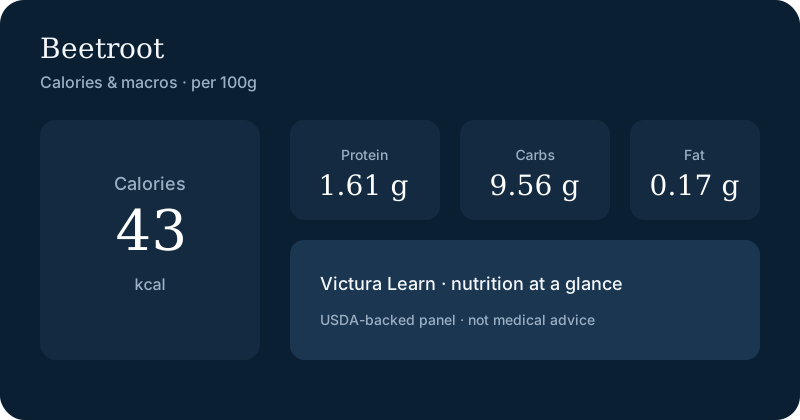
A 100g serving of beetroot provides about 43 kcal. Per 100g you get about 9.56g carbs and 1.61g protein. Glycemic index is around 64.
Beetroot is a whole food with approximately 43 calories per 100g, tracked in Victura for macro-aware meal logging.
- Calories (100g serving)
- 43 kcal
- Carbs (100g)
- 9.56g
- Protein (100g)
- 1.61g
- Serving reference
- 100g · 100g serving
- Glycemic index
- 64

Where the calories come from
Per 100g · protein & carbs 4 kcal/g, fat 9 kcal/g
- Protein1.6 g · 13.9%
- Carbs9.6 g · 82.8%
- Fat0.2 g · 3.3%
Serving calculator
How much did you eat or drink — Beetroot?
43
Calories
1.6g
Protein
9.6g
Carbs
0.2g
Fat
Nutrition facts
per 100g · Source: USDA FoodData Central (seeded Phase 0)
43 kcal
Calories
Vitamins
- Folate: 109mcg
Minerals
- Manganese: 0.33mg
Scientific explanation
Research-backedBeetroot provides a rich array of essential nutrients, dietary fiber, and bioactive compounds within a low-calorie profile. According to USDA FoodData Central, raw beetroot contains 43 calories (kcal) per 100 grams, making it a highly volume-dense food suitable for various dietary patterns. A standard medium-sized beetroot, weighing approximately 80 grams, delivers about 34 calories. This low energy density is primarily due to its high water content (about 88%), which helps promote satiety without contributing excessive calories to your daily total. The macronutrient distribution of raw beetroot per 100 grams consists of 1.61 grams of protein, 0.17 grams of fat, and 9.56 grams of total carbohydrates. Of these carbohydrates, 2.8 grams come from dietary fiber, which plays a critical role in supporting digestive health, maintaining bowel regularity, and slowing down the absorption of free sugars in the gut. The remaining carbohydrate content includes 6.76 grams of natural sugars, primarily fructose and glucose. Beyond basic macronutrients, beetroot is highly regarded for its micronutrient density. A 100-gram serving provides 109 micrograms of Folate (Vitamin B9), which represents approximately 27% of the Daily Value (DV). Folate is essential for cellular division, DNA synthesis, and proper cardiovascular function. Additionally, beetroot contains 0.33 milligrams of Manganese (14% of the DV), an essential trace mineral involved in bone formation, nutrient metabolism, and antioxidant defense systems. One of the most notable scientific aspects of beetroot is its high concentration of inorganic nitrates. Upon ingestion, these nitrates are converted into nitric oxide within the body. Nitric oxide acts as a potent vasodilator, relaxing and widening blood vessels, which can improve blood flow, lower systemic blood pressure, and enhance mitochondrial efficiency during physical exercise. This unique physiological mechanism has made beetroot a primary focus of sports nutrition research.

Community insights
Community insightAmong Victura meal logs, beetroot appears frequently as a versatile ingredient in both raw and cooked forms. Many users log beetroot as a key component of pre-workout smoothies, often blending it with apples, ginger, and lemon to mask its earthy flavor while capitalizing on its natural nitric oxide benefits. In the active lifestyle community, athletes frequently report consuming beetroot juice or grated raw beetroot roughly 90 to 120 minutes before endurance training to support stamina and reduce perceived exertion. For everyday meal prep, community members frequently share recipes featuring roasted beetroot tossed in salads with leafy greens, walnuts, and goat cheese. This combination is highly praised not only for its culinary appeal but also for its nutritional synergy; the healthy fats from the nuts and cheese help facilitate the absorption of fat-soluble nutrients, while the protein helps blunt the glycemic response of the beetroot's natural sugars. Some users also note the occurrence of beeturia—a harmless pink or red discoloration of urine or stool after consuming beets—which is a benign side effect of the natural betalain pigments.
Pros
- Beetroot is a whole food with measurable macro nutrients
- High in dietary nitrates that support cardiovascular health and athletic stamina
- Excellent source of folate and manganese
Cons
- Portion size still matters for calorie goals
- Medium-to-high glycemic index (64) requires mindful pairing for blood sugar management
- High in oxalates, which may be a concern for individuals prone to kidney stones
Best time to eat
Pair with protein and fiber for balanced meals.
Good windows
- 90 to 120 minutes before a workout for athletic performance
- With main meals alongside healthy fats and proteins
Consider avoiding
- Very large portions without activity
Diet compatibility
Weight loss
Friendly
At 43 kcal and 2.8g fiber per 100g, this food fits calorie-conscious plans.
Keto
Use caution
Net carbs ~6.8g per 100g - too high-carb for standard keto.
Diabetic friendly
Use caution
GI 64 with 6.8g sugar - may spike glucose - pair with protein/fat.
Frequently asked questions
People also ask
Is a beetroot healthy?
Yes — a beetroot is a whole food with measurable nutrients. Healthiness depends on overall diet, portions, and your goals. Estimated GI is 64.
Can I eat a beetroot every day?
Most people can include a beetroot daily as part of a balanced diet, as long as total calories and carbs fit their plan.
Are Beetroots good for weight loss?
At 43 kcal and 2.8g fiber per 100g, this food fits calorie-conscious plans.
How many calories are in a beetroot?
A typical medium serving of beetroot has about 43 calories, while 100g contains about 43 calories (USDA reference).
Are Beetroots good before a workout?
Beetroots can work before activity when you want easy carbs; pair a beetroot with protein if your session is long.
Are Beetroots high in sugar?
Beetroots contain about 6.8g sugar per 100g — mostly natural sugars when whole.
Is beetroot good for weight loss?
Yes, beetroot is highly beneficial for weight loss. At only 43 calories and 2.8 grams of fiber per 100 grams, it is a volume-dense food that promotes satiety and fullness without adding excessive calories. The fiber content slows digestion, helping to curb cravings and maintain steady energy levels throughout the day.
Is beetroot keto-friendly?
Beetroot is generally not considered keto-friendly for strict ketogenic diets. With approximately 6.76 grams of net carbohydrates per 100 grams, a standard serving can easily consume a significant portion of a daily 20-to-50-gram carbohydrate limit. However, those on targeted or cyclical keto diets may incorporate small amounts pre-workout.
What is the glycemic index of beetroot?
The glycemic index of beetroot is estimated to be 64, which falls into the medium range. Despite this, its glycemic load is very low (around 3) because a typical serving contains a small absolute amount of carbohydrates. To minimize glucose impact, pair beetroot with protein, fiber, or healthy fats.
Is beetroot safe for people with diabetes?
Yes, beetroot is safe for people with diabetes when consumed in moderate portions. Although it has a glycemic index of 64 and contains natural sugars, its low glycemic load means it won't cause dramatic blood sugar spikes if paired with proteins, healthy fats, or other high-fiber foods that slow glucose absorption.
How we review this guide
- Written by
- Victura Nutrition Team
- Reviewed by
- Victura Editorial Review
- Reference sources
- 4
- Last updated
- Aug 9, 2026
References
Ready to track your meals with AI?
Victura scans your plate, logs macros automatically, and coaches you toward your goals — halal, keto, diabetic-friendly, and more.