
Barley Nutrition Facts
Complete barley nutrition breakdown with 352 kcal per 100g, glycemic index, and diet compatibility.
Written by Victura Nutrition TeamReviewed by Victura Editorial ReviewLast updated Aug 11, 2026
352
Calories
9.9g
Protein
77.7g
Carbs
Generally yes
Is it healthy?
per 100g · per panel values
Track this food in VicturaQuick answer
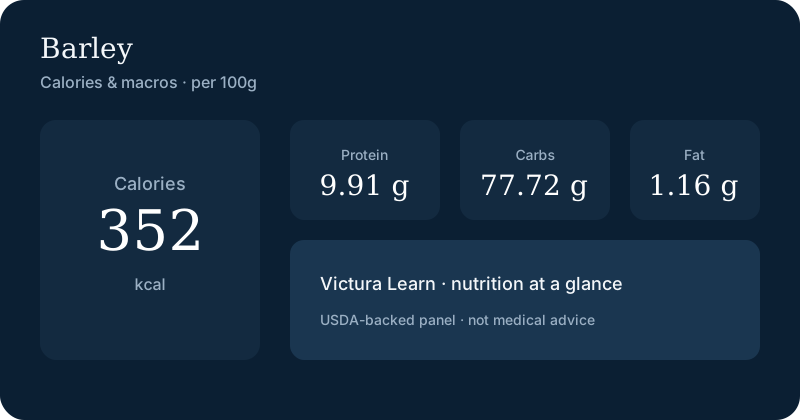
A 100g serving of barley provides about 352 kcal. Per 100g you get about 77.72g carbs and 9.91g protein. Glycemic index is around 28.
Barley is a whole food with approximately 352 calories per 100g, tracked in Victura for macro-aware meal logging.
- Calories (100g serving)
- 352 kcal
- Carbs (100g)
- 77.72g
- Protein (100g)
- 9.91g
- Serving reference
- 100g · 100g serving
- Glycemic index
- 28

Where the calories come from
Per 100g · protein & carbs 4 kcal/g, fat 9 kcal/g
- Protein9.9 g · 11%
- Carbs77.7 g · 86.1%
- Fat1.2 g · 2.9%
Serving calculator
How much did you eat or drink — Barley?
352
Calories
9.9g
Protein
77.7g
Carbs
1.2g
Fat
Nutrition facts
per 100g · Source: USDA FoodData Central (seeded Phase 0)
352 kcal
Calories
Minerals
- Selenium: 37.7mcg
Scientific explanation
Research-backedBarley provides approximately 352 kcal per 100g of raw, pearled grain, delivering 9.91g of protein, 77.72g of carbohydrates, and 1.16g of fat. A standout feature of barley's nutritional profile is its exceptional dietary fiber content, which stands at 15.6g per 100g. A significant portion of this fiber is beta-glucan, a soluble fiber highly regarded in clinical nutrition for its ability to form a viscous gel in the digestive tract. This gel-forming property slows gastric emptying and delays glucose absorption, which directly contributes to its low estimated glycemic index (GI) of 28.
From a micronutrient perspective, barley is an outstanding source of essential minerals, most notably selenium, providing 37.7 mcg per 100g (approximately 69% of the Daily Value). Selenium plays a critical role in thyroid hormone metabolism, DNA synthesis, and protecting the body from oxidative damage. Additionally, barley contains notable amounts of manganese, phosphorus, copper, and B-vitamins such as niacin and thiamin, which are vital for cellular energy production.
The starch structure of barley is rich in amylose, which digests more slowly than amylopectin, further reinforcing its status as a sustained-release carbohydrate source. When cooked, the starch gelatinizes, but the high fiber matrix remains largely intact, preserving its low-glycemic benefits. This makes barley an excellent dietary staple for metabolic health, cardiovascular support, and long-term satiety management. Unlike refined grains, pearled barley retains a substantial portion of its bran and germ nutrients even after the polishing process, making it a superior alternative to white rice or refined wheat products.
Clinical studies indicate that the regular consumption of barley beta-glucans can significantly lower LDL cholesterol levels by binding to bile acids in the gut, forcing the liver to utilize circulating cholesterol to synthesize new bile. Furthermore, the fermentation of barley's soluble fibers by colonic microbiota produces short-chain fatty acids (SCFAs) like acetate, propionate, and butyrate. These SCFAs serve as energy sources for colonocytes and help regulate systemic lipid metabolism and insulin sensitivity.

Community insights
Community insightAmong Victura meal logs, barley appears frequently as a versatile staple in meal-prep routines, hearty stews, and grain-based salads. Users who track their macronutrients often highlight barley's exceptional volume-to-calorie ratio once cooked; because it absorbs a significant amount of water, a small dry portion swells into a highly filling meal component.
Many fitness enthusiasts in the community report using barley as a sustained-release carbohydrate source for endurance training. Runners and cyclists frequently consume barley-based meals 3 to 4 hours before long-duration workouts, noting that it prevents the rapid energy crashes associated with simpler carbohydrates.
In diabetic and insulin-resistant peer groups, users frequently share recipes pairing barley with lean proteins (such as chicken breast or tofu) and healthy fats (like extra virgin olive oil or avocado). This combination is highly praised for producing flat postprandial glucose curves on continuous glucose monitors (CGMs). Additionally, busy professionals value pearled barley for its structural integrity during batch cooking, as it maintains a pleasant, chewy texture throughout the week without becoming mushy or unappealing.
Pros
- Rich in beta-glucan soluble fiber which lowers LDL cholesterol
- Very low glycemic index (28) for excellent blood sugar control
- High in essential minerals like selenium, manganese, and copper
Cons
- Contains gluten, making it unsuitable for those with celiac disease
- Requires a relatively long cooking time compared to refined grains
- High in carbohydrates, which may not fit strict low-carb or keto diets
Best time to eat
Ideal for pre-workout meals or main lunch/dinner dishes to maintain stable energy levels throughout the day.
Good windows
- 2 to 4 hours before endurance exercise
- As a core carbohydrate source for lunch or dinner
Consider avoiding
- Late-night heavy meals if sedentary
- Excessive portions without adequate water intake due to high fiber content
Diet compatibility
Weight loss
Friendly
High fiber content promotes satiety, though dry portions are energy-dense.
Keto
Use caution
Net carbs ~62.1g per 100g - too high-carb for standard keto.
Diabetic friendly
Friendly
GI 28 with 0.8g sugar - generally blood-sugar friendly in moderation.
Frequently asked questions
People also ask
Is a barley healthy?
Yes — a barley is a whole food with measurable nutrients. Healthiness depends on overall diet, portions, and your goals. Estimated GI is 28.
Can I eat a barley every day?
Most people can include a barley daily as part of a balanced diet, as long as total calories and carbs fit their plan.
Are Barleys good for weight loss?
High fiber content promotes satiety, though dry portions are energy-dense.
How many calories are in a barley?
A typical medium serving of barley has about 352 calories, while 100g contains about 352 calories (USDA reference).
Are Barleys good before a workout?
Barleys can work before activity when you want easy carbs; pair a barley with protein if your session is long.
Are Barleys high in sugar?
Barleys contain about 0.8g sugar per 100g — mostly natural sugars when whole.
Is barley good for weight loss?
Yes, barley is highly effective for weight loss. Its soluble fiber delays digestion and triggers satiety signals in the brain. When cooked, barley absorbs a large volume of water, allowing you to eat a satisfying portion size with relatively low caloric density.
Is barley keto-friendly?
No, barley is not keto-friendly. With approximately 62.1g of net carbohydrates per 100g of dry grain, even a small serving will exceed the daily carbohydrate limit of a standard ketogenic diet. It is best suited for moderate to high-carbohydrate dietary patterns.
What is the glycemic index of barley?
The estimated glycemic index of pearled barley is 28, which is classified as very low. This low rating is due to its high concentration of beta-glucan soluble fiber, which slows down carbohydrate digestion and prevents sharp spikes in blood glucose levels.
Is barley safe for people with diabetes?
Yes, barley is highly recommended for people with diabetes. Its low glycemic index of 28 and high fiber content help improve insulin sensitivity and manage post-meal blood sugar levels. Pairing it with a lean protein or healthy fat further optimizes glycemic control.
How many calories does barley have?
Barley contains 352 calories (kcal) per 100g of dry grain, according to USDA reference data. Once cooked, the calorie density drops significantly to about 123 calories per 100g because of the substantial amount of water absorbed during the cooking process.
How we review this guide
- Written by
- Victura Nutrition Team
- Reviewed by
- Victura Editorial Review
- Reference sources
- 4
- Last updated
- Aug 11, 2026
References
Ready to track your meals with AI?
Victura scans your plate, logs macros automatically, and coaches you toward your goals — halal, keto, diabetic-friendly, and more.