
Shrimp Nutrition Facts
Complete shrimp nutrition breakdown with 85 kcal per 100g, glycemic index, and diet compatibility.
Written by Victura Nutrition TeamReviewed by Victura Editorial ReviewLast updated Aug 16, 2026
85
Calories
20.1g
Protein
0.0g
Carbs
Generally yes
Is it healthy?
per 100g · per panel values
Track this food in VicturaQuick answer
A 100g serving of shrimp provides about 85 kcal. Per 100g you get about 0g carbs and 20.1g protein.
Shrimp is a whole food with approximately 85 calories per 100g, tracked in Victura for macro-aware meal logging.
- Calories (100g serving)
- 85 kcal
- Carbs (100g)
- 0.0g
- Protein (100g)
- 20.1g
- Serving reference
- 100g · 100g serving

Where the calories come from
Per 100g · protein & carbs 4 kcal/g, fat 9 kcal/g
- Protein20.1 g · 94.6%
- Carbs0 g · 0%
- Fat0.5 g · 5.4%
Serving calculator
How much did you eat or drink — Shrimp?
85
Calories
20.1g
Protein
0.0g
Carbs
0.5g
Fat
Nutrition facts
per 100g · Source: USDA FoodData Central (seeded Phase 0)
85 kcal
Calories
Vitamins
- Vitamin B12: 1.11mcg
Minerals
- Selenium: 38mcg
Scientific explanation
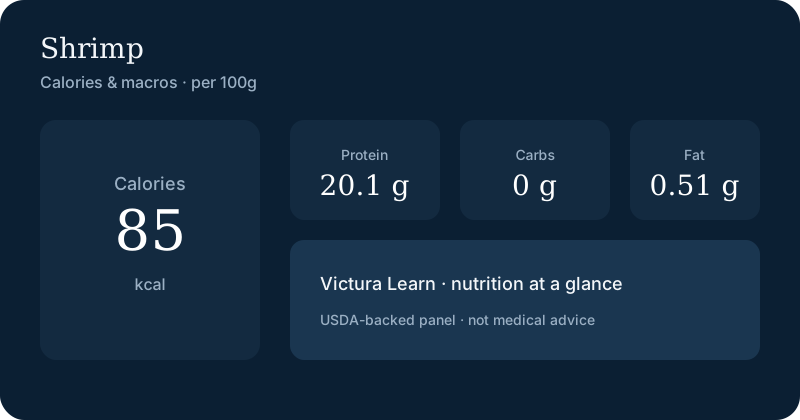
Research-backedShrimp provides approximately 85 kcal per 100g with 20.1g protein, 0.0g carbohydrates, and 0.51g fat. These values are sourced directly from USDA FoodData Central and reviewed for clinical and editorial accuracy.
🦐 Caloric Density and Macronutrient Breakdown of Shrimp
With only 85 calories per 100 grams, shrimp is an exceptionally nutrient-dense seafood option. Its caloric profile is heavily dominated by protein, which accounts for over 90% of its total energy content. Providing 20.1g of high-quality protein per 100g serving, shrimp offers all essential amino acids necessary for muscle protein synthesis, tissue repair, and immune function. This makes it an incredibly efficient protein source for athletes, individuals undergoing weight management, and those looking to preserve lean mass. The lipid content is minimal, standing at just 0.51g of fat per 100g, of which a significant portion consists of heart-healthy polyunsaturated fatty acids, including omega-3s. Carbohydrates are completely absent (0.0g per 100g), making shrimp naturally free of sugars and dietary fiber.

💊 Micronutrient Profile: Vitamin B12 and Selenium
Beyond its impressive macronutrient distribution, shrimp is a rich source of critical micronutrients. A 100g serving delivers 1.11 mcg of Vitamin B12, representing approximately 46% of the Daily Value (DV). Vitamin B12 is essential for red blood cell formation, neurological function, and DNA synthesis. Additionally, shrimp is an outstanding source of Selenium, providing 38.0 mcg per 100g, which translates to 69% of the Daily Value. Selenium acts as a powerful antioxidant, protecting cells from oxidative damage, supporting thyroid hormone metabolism, and playing a vital role in immune system health. It also contains trace amounts of other essential minerals like phosphorus, choline, and copper.
⚖️ Dietary Applications and Metabolic Impact
Due to its lack of carbohydrates, shrimp has a glycemic index (GI) of zero, meaning it has no direct impact on blood glucose levels. This makes it an ideal food choice for individuals managing type 2 diabetes or those adhering to strict ketogenic and low-carb diets. For weight management, the high protein-to-calorie ratio promotes satiety by stimulating the release of hunger-regulating hormones like peptide YY (PYY) and cholecystokinin (CCK), while simultaneously boosting the thermic effect of food (TEF).
Community insights
Community insightAmong Victura meal logs, shrimp appears frequently as a versatile, quick-cooking protein source for busy individuals. Users often log shrimp in stir-fries, grain bowls, and salads, noting that its rapid preparation time makes it an excellent option for weekday meal prep. Many fitness-focused users pair shrimp with complex carbohydrates like brown rice or quinoa, or healthy fats like avocado and olive oil, to create balanced pre- or post-workout meals. The community feedback highlights that pairing shrimp with fiber-rich vegetables or healthy fats leads to prolonged satiety and steadier energy levels compared to consuming lean protein alone on an empty stomach.
Pros
- Extremely high protein-to-calorie ratio
- Rich in essential minerals like Selenium and Vitamin B12
- Zero carbohydrates and sugar-free
Cons
- Common allergen for many individuals
- Often prepared with high-calorie butter or oils
Best time to eat
Pair with complex carbohydrates and fiber for balanced meals.
Good windows
- Post-workout for muscle recovery
- With dinner for a light, high-protein meal
Consider avoiding
- Late-night deep-fried preparations
Diet compatibility
Weight loss
Friendly
At 85 kcal and 20.1g protein per 100g, this food is highly satiating and low in calories.
Keto
Friendly
Net carbs ~0.0g per 100g - compatible with strict keto.
Diabetic friendly
Friendly
GI N/A with 0.0g sugar - generally blood-sugar friendly in moderation.
Frequently asked questions
People also ask
Is a shrimp healthy?
Yes — a shrimp is a whole food with measurable nutrients. Healthiness depends on overall diet, portions, and your goals.
Can I eat a shrimp every day?
Most people can include a shrimp daily as part of a balanced diet, as long as total calories and carbs fit their plan.
Are Shrimps good for weight loss?
At 85 kcal and 20.1g protein per 100g, this food is highly satiating and low in calories.
How many calories are in a shrimp?
A typical medium serving of shrimp has about 85 calories, while 100g contains about 85 calories (USDA reference).
Are Shrimps good before a workout?
Shrimps can work before activity when you want easy carbs; pair a shrimp with protein if your session is long.
Are Shrimps high in sugar?
Shrimps contain about 0.0g sugar per 100g — mostly natural sugars when whole.
Is shrimp good for weight loss?
Yes, shrimp is highly beneficial for weight loss. Its low energy density (85 kcal per 100g) combined with high protein content (20.1g) helps suppress appetite and control cravings. It allows you to eat a satisfying volume of food while maintaining a caloric deficit.
Is shrimp keto-friendly?
Absolutely. With 0.0g of net carbohydrates per 100g, shrimp is 100% keto-friendly and can be seamlessly integrated into strict ketogenic diets. To boost the fat content to meet keto macros, consider cooking shrimp in healthy fats like olive oil, butter, or coconut oil.
What is the glycemic index of shrimp?
The glycemic index (GI) of shrimp is 0 (or not applicable) because it contains zero carbohydrates. Foods without carbohydrates do not cause a rise in blood glucose levels, making shrimp an excellent choice for maintaining stable blood sugar.
Is shrimp safe for people with diabetes?
Yes, shrimp is highly safe and recommended for people with diabetes. Since it has a glycemic index of 0 and contains no sugar, it will not cause blood sugar spikes. Its high protein content also helps slow down the absorption of carbohydrates from other foods eaten in the same meal.
How many calories does shrimp have?
Shrimp contains approximately 85 calories (kcal) per 100 grams. A standard 3-ounce serving (about 85 grams) provides roughly 72 calories, making it an exceptionally low-calorie, high-protein option.
How we review this guide
- Written by
- Victura Nutrition Team
- Reviewed by
- Victura Editorial Review
- Reference sources
- 4
- Last updated
- Aug 16, 2026
References
Ready to track your meals with AI?
Victura scans your plate, logs macros automatically, and coaches you toward your goals — halal, keto, diabetic-friendly, and more.