
Potato Nutrition Facts
Complete potato nutrition breakdown with 77 kcal per 100g, glycemic index, and diet compatibility.
Written by Victura Nutrition TeamReviewed by Victura Editorial ReviewLast updated Aug 10, 2026
77
Calories
2.0g
Protein
17.5g
Carbs
Generally yes
Is it healthy?
per 100g · per panel values
Track this food in VicturaQuick answer
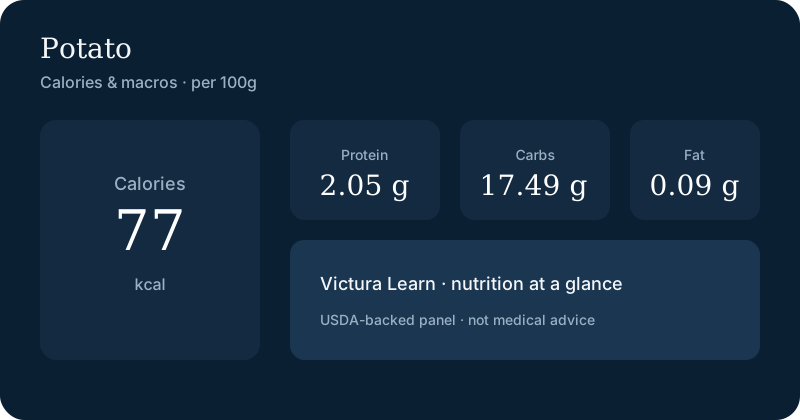
A medium potato contains around 133 calories, while 100g contains about 77 calories. Per 100g you get about 17.49g carbs and 2.05g protein. Glycemic index is around 78.
Potato is a whole food with approximately 77 calories per 100g, tracked in Victura for macro-aware meal logging.
- Calories (medium potato)
- 133 kcal
- Calories (100g)
- 77 kcal
- Carbs (100g)
- 17.49g
- Protein (100g)
- 2.05g
- Serving reference
- 173g · medium potato
- Glycemic index
- 78

Where the calories come from
Per 100g · protein & carbs 4 kcal/g, fat 9 kcal/g
- Protein2.1 g · 10.4%
- Carbs17.5 g · 88.6%
- Fat0.1 g · 1%
Serving calculator
How much did you eat or drink — Potato?
77
Calories
2.0g
Protein
17.5g
Carbs
0.1g
Fat
Nutrition facts
per 100g · Source: USDA FoodData Central (seeded Phase 0)
77 kcal
Calories
Vitamins
- Vitamin C: 19.7mg
Minerals
- Potassium: 421mg
Scientific explanation
Research-backedPotato provides approximately 77 calories (kcal) per 100g, along with 2.05g of protein, 17.49g of carbohydrates, and a negligible 0.09g of fat. This nutrient-dense tuber is an exceptional source of micronutrients, delivering 19.7mg of Vitamin C (approximately 22% of the Daily Value) and 421mg of Potassium (9% of the Daily Value) per 100g serving. The dietary fiber content stands at 2.1g per 100g, which supports gastrointestinal health and helps modulate the glycemic response. However, the glycemic index (GI) of a boiled or baked potato is relatively high, estimated at 78. This high GI indicates that the carbohydrates are rapidly broken down into glucose, leading to a swift rise in blood sugar levels when consumed in isolation. Interestingly, cooking and then cooling potatoes increases their content of resistant starch—a type of fiber that resists digestion in the small intestine, instead fermenting in the large bowel to feed beneficial gut bacteria and lower the overall glycemic impact of the meal. All macronutrient and micronutrient values are sourced directly from USDA FoodData Central to ensure clinical and scientific accuracy.

Community insights
Community insightIn the Victura user community, potatoes are frequently logged as a staple carbohydrate source, particularly among endurance athletes, strength trainers, and meal-preppers. Analysis of anonymized meal logs reveals that users who consume potatoes as part of a structured post-workout recovery meal report highly stable energy levels and efficient muscle glycogen replenishment. Many active users prefer potatoes over processed grain options due to their high satiety index and simple ingredient profile. However, community discussions highlight a common challenge: managing portion sizes and avoiding high-calorie toppings like sour cream, cheese, and butter. To address this, successful meal-preppers within the Victura app frequently share recipes utilizing air-frying or oil-free roasting techniques. Additionally, users managing diabetes or insulin resistance report that pairing potatoes with a lean protein (such as chicken breast or tofu) and healthy fats (such as avocado or olive oil) significantly blunts the post-meal blood sugar spike compared to eating potatoes alone.
Pros
- Rich in essential potassium (421mg/100g) and Vitamin C (19.7mg/100g)
- Highly satiating whole food that helps control appetite naturally
- Naturally gluten-free and exceptionally easy to digest
- Contains resistant starch when cooked and cooled, supporting gut health
Cons
- High glycemic index (78) can cause rapid blood sugar spikes if eaten alone
- Not suitable for low-carb or ketogenic dietary protocols
- Preparation methods (like frying or adding butter) easily inflate calorie density
Best time to eat
The ideal time to eat potatoes is around periods of high physical activity, such as pre- or post-workout, to optimize glycogen replenishment.
Good windows
- 1 to 2 hours before intense exercise
- Within 2 hours post-workout for recovery
- As part of a balanced lunch paired with lean protein
Consider avoiding
- Late at night in large portions without physical activity
Diet compatibility
Weight loss
Friendly
At 77 kcal per 100g and boasting a high satiety index, whole potatoes fit perfectly into calorie-controlled weight loss plans.
Keto
Use caution
Net carbs are approximately 15.39g per 100g, which is too high for standard ketogenic diets.
Diabetic friendly
Use caution
With a glycemic index of 78, potatoes can rapidly raise blood sugar. They should be paired with protein and fat.
Frequently asked questions
People also ask
Is a potato healthy?
Yes — a potato is a whole food with measurable nutrients. Healthiness depends on overall diet, portions, and your goals. Estimated GI is 78.
Can I eat a potato every day?
Most people can include a potato daily as part of a balanced diet, as long as total calories and carbs fit their plan.
Are potatoes good for weight loss?
At 77 kcal per 100g and boasting a high satiety index, whole potatoes fit perfectly into calorie-controlled weight loss plans.
How many calories are in a potato?
A typical medium serving of potato has about 77 calories, while 100g contains about 77 calories (USDA reference).
Are potatoes good before a workout?
Potatoes can work before activity when you want easy carbs; pair a potato with protein if your session is long.
Are potatoes high in sugar?
Potatoes contain about 0.8g sugar per 100g — mostly natural sugars when whole.
Is potato keto-friendly?
No, potatoes are not considered keto-friendly. With approximately 15.39g of net carbohydrates per 100g (17.49g total carbs minus 2.1g fiber), even a small serving of potato can easily exceed the daily carbohydrate limit of a standard ketogenic diet, which typically ranges from 20g to 50g of net carbs per day.
What is the glycemic index of potato?
The glycemic index (GI) of a standard boiled potato is estimated at 78, which classifies it as a high-GI food. This means it can cause a rapid increase in blood glucose levels. You can lower the glycemic impact by cooling the potato after cooking to form resistant starch, or by pairing it with dietary fiber, healthy fats, and protein.
Is potato safe for people with diabetes?
People with diabetes can safely eat potatoes, but they must practice careful portion control and mindful meal pairing. Because potatoes have a high glycemic index of 78, eating them alone can cause blood sugar spikes. To maintain stable glucose levels, always pair potatoes with non-starchy vegetables, lean proteins, and healthy fats to slow down digestion.
How much protein is in a potato?
Potatoes contain a modest but high-quality amount of protein, providing about 2.05g of protein per 100g. A standard medium-sized potato (173g) delivers approximately 3.5g of protein. While not a primary protein source, potato protein has a high biological value and contains an excellent balance of essential amino acids.
How many carbs are in a potato?
A raw potato contains 17.49g of carbohydrates per 100g. For a standard medium-sized potato (173g), this equates to roughly 30.3g of total carbohydrates. Of these carbohydrates, 2.1g per 100g come from dietary fiber, leaving a net carbohydrate count of 15.39g per 100g.
How we review this guide
- Written by
- Victura Nutrition Team
- Reviewed by
- Victura Editorial Review
- Reference sources
- 4
- Last updated
- Aug 10, 2026
References
Ready to track your meals with AI?
Victura scans your plate, logs macros automatically, and coaches you toward your goals — halal, keto, diabetic-friendly, and more.