
Green Beans Nutrition Facts
Complete green beans nutrition breakdown with 31 kcal per 100g, glycemic index, and diet compatibility.
Written by Victura Nutrition TeamReviewed by Victura Editorial ReviewLast updated Aug 10, 2026
31
Calories
1.8g
Protein
7.0g
Carbs
Generally yes
Is it healthy?
per 100g · per panel values
Track this food in VicturaQuick answer
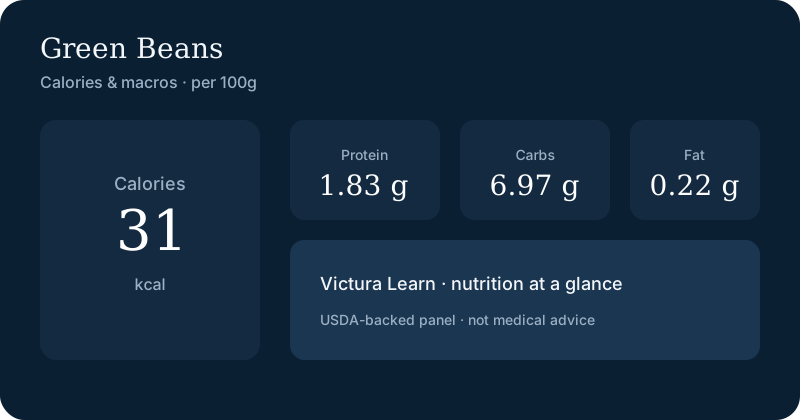
A cup of green beans contains around 39 calories, while 100g contains about 31 calories. Per 100g you get about 6.97g carbs and 1.83g protein. Glycemic index is around 15.
Green Beans is a whole food with approximately 31 calories per 100g, tracked in Victura for macro-aware meal logging.
- Calories (cup)
- 39 kcal
- Calories (100g)
- 31 kcal
- Carbs (100g)
- 6.97g
- Protein (100g)
- 1.83g
- Serving reference
- 125g · cup
- Glycemic index
- 15

Where the calories come from
Per 100g · protein & carbs 4 kcal/g, fat 9 kcal/g
- Protein1.8 g · 19.7%
- Carbs7 g · 75%
- Fat0.2 g · 5.3%
Serving calculator
How much did you eat or drink — Green Beans?
39
Calories
2.3g
Protein
8.7g
Carbs
0.3g
Fat
Calories and macros by serving
Values are calculated from the page's USDA per-100g reference. Prepared or branded products may vary.
| Serving | Calories | Protein | Carbs | Fat |
|---|---|---|---|---|
| 100g | 31 | 1.8g | 7.0g | 0.2g |
| 1 cup (125g) | 39 | 2.3g | 8.7g | 0.3g |
Nutrition facts
per 100g · Source: USDA FoodData Central (seeded Phase 0)
31 kcal
Calories
Vitamins
- Vitamin C: 12.2mg
- Vitamin K: 43mcg
Minerals
- Potassium: 211mg
Scientific explanation
Research-backedGreen Beans provides a highly dense micronutrient profile with minimal caloric impact, delivering approximately 31 kcal per 100g. This raw vegetable consists of 1.83g of protein, 6.97g of carbohydrates, and a negligible 0.22g of fat. For individuals managing glycemic responses, green beans offers an exceptionally low glycemic index (GI) estimated at 15. This minimal glycemic impact is primarily due to its structural fiber content (2.7g per 100g) and low simple sugar concentration (3.26g per 100g), which prevents rapid blood glucose spikes. From a micronutrient perspective, green beans is an outstanding source of phylloquinone (Vitamin K), providing 43.0 mcg per 100g, which constitutes approximately 36% of the daily recommended value. Vitamin K is a critical cofactor for the synthesis of coagulation factors and osteocalcin, a protein essential for bone mineralization. Additionally, it contains 12.2 mg of Vitamin C (14% DV), supporting collagen synthesis and antioxidant defense, alongside 211 mg of Potassium (4% DV) to assist in intracellular fluid balance and systemic blood pressure regulation.

Community insights
Community insightAmong Victura meal logs, green beans appears frequently as a versatile staple in both raw and cooked forms. While some users enjoy them raw as a crunchy, portable snack, the community highly favors lightly steaming or sautéing them. Editorial synthesis of user logs indicates that pairing green beans with healthy fats—such as a drizzle of extra virgin olive oil, sesame oil, or a handful of slivered almonds—significantly enhances the absorption of its fat-soluble Vitamin K. Many fitness enthusiasts in the Victura community log green beans as a high-volume side dish during fat-loss phases, noting that it successfully staves off hunger when paired with lean proteins like chicken breast or tofu. Additionally, some users chop them into morning egg scrambles or blend them into green smoothies to sneak in extra fiber without altering the flavor profile. The steady energy levels reported by users who pair green beans with protein or fat, rather than consuming them in isolation, align with the physiological effects of its low glycemic index.
Pros
- Green Beans is a whole food with measurable macro nutrients
- Extremely low in calories and highly volume-dense
- Excellent source of Vitamin K and Vitamin C
Cons
- Portion size still matters for calorie goals
- Contains mild oxalates which some individuals may need to limit
Best time to eat
Pair with protein and fiber for balanced meals.
Good windows
- With main meals
Consider avoiding
- Very large portions without activity
Diet compatibility
Weight loss
Friendly
At 31 kcal and 2.7g fiber per 100g, this food fits calorie-conscious plans.
Keto
Friendly
Net carbs ~4.3g per 100g - compatible with strict keto.
Diabetic friendly
Friendly
GI 15 with 3.3g sugar - generally blood-sugar friendly in moderation.
Frequently asked questions
People also ask
Is a green beans healthy?
Yes — a green beans is a whole food with measurable nutrients. Healthiness depends on overall diet, portions, and your goals. Estimated GI is 15.
Can I eat a green beans every day?
Most people can include a green beans daily as part of a balanced diet, as long as total calories and carbs fit their plan.
Are Green Beanses good for weight loss?
At 31 kcal and 2.7g fiber per 100g, this food fits calorie-conscious plans.
How many calories are in a green beans?
A typical medium serving of green beans has about 31 calories, while 100g contains about 31 calories (USDA reference).
Are Green Beanses good before a workout?
Green beanses can work before activity when you want easy carbs; pair a green beans with protein if your session is long.
Are Green Beanses high in sugar?
Green beanses contain about 3.3g sugar per 100g — mostly natural sugars when whole.
Is green beans good for weight loss?
Yes, green beans is excellent for weight loss. Its low energy density (31 kcal per 100g) combined with 2.7g of dietary fiber helps promote satiety and prevents overeating by physically filling the stomach, making calorie restriction much easier to sustain.
Is green beans keto-friendly?
Yes, green beans is highly keto-friendly. With approximately 6.97g of total carbohydrates and 2.7g of dietary fiber per 100g, its net carb count is only 4.27g. This low net carb profile allows it to fit comfortably within strict ketogenic macro limits.
What is the glycemic index of green beans?
The glycemic index of green beans is estimated to be 15, which is classified as very low. This low rating indicates that the carbohydrates present are digested and absorbed slowly, preventing rapid fluctuations in blood glucose and insulin levels.
Is green beans safe for people with diabetes?
Yes, green beans is highly safe and recommended for people with diabetes. Its low glycemic index of 15 and low sugar content (3.26g per 100g) mean it will not cause sharp blood sugar spikes, making it an ideal non-starchy vegetable choice.
How many carbs are in green beans?
Green beans contain 6.97g of total carbohydrates per 100g. When you subtract the 2.7g of dietary fiber, you get a net carbohydrate count of just 4.27g per 100g, making them an excellent low-carb vegetable option.
How many calories does green beans have?
Green beans have 31 calories (kcal) per 100g. This extremely low caloric density allows individuals to enjoy generous portions without consuming excess energy, supporting weight management and overall metabolic health.
How we review this guide
- Written by
- Victura Nutrition Team
- Reviewed by
- Victura Editorial Review
- Reference sources
- 4
- Last updated
- Aug 10, 2026
References
Ready to track your meals with AI?
Victura scans your plate, logs macros automatically, and coaches you toward your goals — halal, keto, diabetic-friendly, and more.