
Cucumber Nutrition Facts
Complete cucumber nutrition breakdown with 15 kcal per 100g, glycemic index, and diet compatibility.
Written by Victura Nutrition TeamReviewed by Victura Editorial ReviewLast updated Aug 10, 2026
15
Calories
0.7g
Protein
3.6g
Carbs
Generally yes
Is it healthy?
per 100g · per panel values
Track this food in VicturaQuick answer
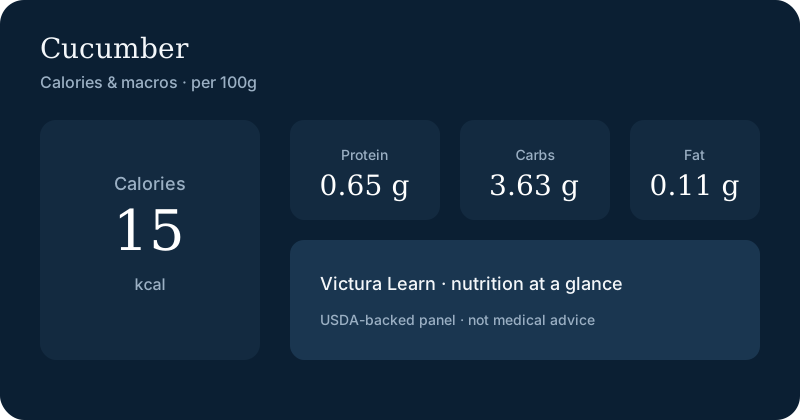
A medium cucumber contains around 45 calories, while 100g contains about 15 calories. Per 100g you get about 3.63g carbs and 0.65g protein. Glycemic index is around 15.
Cucumber is a whole food with approximately 15 calories per 100g, tracked in Victura for macro-aware meal logging.
- Calories (medium cucumber)
- 45 kcal
- Calories (100g)
- 15 kcal
- Carbs (100g)
- 3.63g
- Protein (100g)
- 0.65g
- Serving reference
- 301g · medium cucumber
- Glycemic index
- 15

Where the calories come from
Per 100g · protein & carbs 4 kcal/g, fat 9 kcal/g
- Protein0.7 g · 14.4%
- Carbs3.6 g · 80.2%
- Fat0.1 g · 5.5%
Serving calculator
How much did you eat or drink — Cucumber?
15
Calories
0.7g
Protein
3.6g
Carbs
0.1g
Fat
Nutrition facts
per 100g · Source: USDA FoodData Central (seeded Phase 0)
15 kcal
Calories
Vitamins
- Vitamin K: 16.4mcg
Minerals
- Potassium: 147mg
Scientific explanation
Research-backedCucumber provides an exceptionally high water content of approximately 95.2%, making it one of the most hydrating foods available in a whole-food diet. Per 100g, raw cucumber with its peel contains just 15 calories (kcal), 0.65g of protein, 3.63g of carbohydrates, 1.67g of total sugars, and a minimal 0.11g of fat. Its dietary fiber content stands at 0.5g per 100g. While low in macronutrient density, cucumbers are a valuable source of essential micronutrients. Specifically, a 100g serving delivers 16.4 mcg of Vitamin K (approximately 14% of the Daily Value), which plays a critical role in blood coagulation and bone metabolism. It also provides 147 mg of potassium (3% of the Daily Value), assisting in fluid balance and cardiovascular function. The glycemic index (GI) of cucumber is estimated at 15, classifying it as a very low-glycemic food. This low GI, combined with a minimal glycemic load, ensures that consuming cucumbers has a negligible impact on blood glucose levels. The presence of bioactive compounds, such as cucurbitacins, lignans, and flavonoids, provides antioxidant and anti-inflammatory properties. To maximize nutritional intake, it is highly recommended to consume the peel, as it contains the majority of the fiber, Vitamin A (as beta-carotene), and silica—a trace mineral that supports connective tissue health and skin elasticity. Peeling the cucumber significantly reduces these micronutrient yields. Furthermore, the high water-to-calorie ratio makes it an excellent volume-eating food, helping to promote satiety through gastric distension without adding significant energy to the daily total. This makes it highly applicable in weight management and metabolic health protocols.

Community insights
Community insightAmong Victura meal logs, cucumbers appear frequently as a versatile, low-calorie staple for volume eating, hydration tracking, and meal prep. Users frequently log cucumbers in raw slices, salads, or blended into green smoothies. A common trend observed in community logs is pairing cucumbers with healthy fats or proteins—such as Greek yogurt (in tzatziki), hummus, feta cheese, or a drizzle of extra virgin olive oil. This practice is highly beneficial from a nutritional standpoint; because Vitamin K is fat-soluble, consuming cucumbers alongside a source of dietary fat significantly enhances the absorption of this essential vitamin. Additionally, users report that combining cucumbers with protein-rich dips helps sustain satiety far longer than consuming the vegetable on its own. In meal prep contexts, cucumbers are favored for their crisp texture, though users note that salting them beforehand to draw out excess moisture prevents salads from becoming soggy over several days of storage.
Pros
- Extremely hydrating with a 95.2% water content
- Very low calorie density, ideal for volume eating and weight loss
- Good source of Vitamin K and potassium when consumed with the peel
Cons
- Very low in protein and dietary fiber
- Peeling removes the majority of beneficial micronutrients and fiber
Best time to eat
Pair with healthy fats (like olive oil or avocado) to maximize fat-soluble Vitamin K absorption.
Good windows
- With main meals
- As a hydrating post-workout snack
- Between meals to manage hunger
Consider avoiding
- Extremely large portions right before bed if sensitive to nighttime urination
Diet compatibility
Weight loss
Friendly
At 15 kcal and 0.5g fiber per 100g, this food is extremely low in energy density, making it excellent for volume eating.
Keto
Friendly
Net carbs ~3.1g per 100g - compatible with strict keto.
Diabetic friendly
Friendly
GI 15 with 1.7g sugar - generally blood-sugar friendly in moderation.
Frequently asked questions
People also ask
Is a cucumber healthy?
Yes — a cucumber is a whole food with measurable nutrients. Healthiness depends on overall diet, portions, and your goals. Estimated GI is 15.
Can I eat a cucumber every day?
Most people can include a cucumber daily as part of a balanced diet, as long as total calories and carbs fit their plan.
Are cucumbers good for weight loss?
At 15 kcal and 0.5g fiber per 100g, this food is extremely low in energy density, making it excellent for volume eating.
How many calories are in a cucumber?
A typical medium serving of cucumber has about 15 calories, while 100g contains about 15 calories (USDA reference).
Are cucumbers good before a workout?
Cucumbers can work before activity when you want easy carbs; pair a cucumber with protein if your session is long.
Are cucumbers high in sugar?
Cucumbers contain about 1.7g sugar per 100g — mostly natural sugars when whole.
Is cucumber keto-friendly?
Yes, cucumbers are highly keto-friendly. With only 3.63g of total carbohydrates and 0.5g of fiber per 100g, a standard serving yields approximately 3.13g of net carbs. This low carbohydrate impact allows cucumbers to fit easily within the strict daily carb limits of a ketogenic lifestyle.
What is the glycemic index of cucumber?
The glycemic index (GI) of cucumber is estimated to be 15, which is classified as very low. This means that the carbohydrates present in cucumbers are digested and absorbed slowly, resulting in a gradual, minimal rise in blood sugar levels rather than a sharp spike.
Is cucumber safe for people with diabetes?
Yes, cucumbers are highly safe and beneficial for individuals with diabetes. Their low glycemic index of 15 and minimal carbohydrate load mean they have a negligible impact on blood glucose levels. Additionally, the fiber in cucumbers helps slow down any potential sugar absorption, supporting stable glycemic control.
How many calories are in one cucumber?
One medium whole cucumber (weighing roughly 301g) contains about 45 calories. A smaller cucumber (around 100g to 150g) will contain between 15 and 22 calories. Because they are so low in calories, tracking them down to the exact gram is rarely necessary for weight management.
Does cucumber have protein?
Cucumbers contain a very small amount of protein, yielding approximately 0.65g per 100g. While they contribute to your overall daily micronutrient and hydration goals, they should not be relied upon as a primary protein source. To build balanced meals, pair cucumbers with protein-rich foods like Greek yogurt, chicken, tofu, or legumes.
How we review this guide
- Written by
- Victura Nutrition Team
- Reviewed by
- Victura Editorial Review
- Reference sources
- 4
- Last updated
- Aug 10, 2026
References
Ready to track your meals with AI?
Victura scans your plate, logs macros automatically, and coaches you toward your goals — halal, keto, diabetic-friendly, and more.