
Brussels Sprouts Nutrition Facts
Complete brussels sprouts nutrition breakdown with 43 kcal per 100g, glycemic index, and diet compatibility.
Written by Victura Nutrition TeamReviewed by Victura Editorial ReviewLast updated Aug 11, 2026
43
Calories
3.4g
Protein
8.9g
Carbs
Generally yes
Is it healthy?
per 100g · per panel values
Track this food in VicturaQuick answer
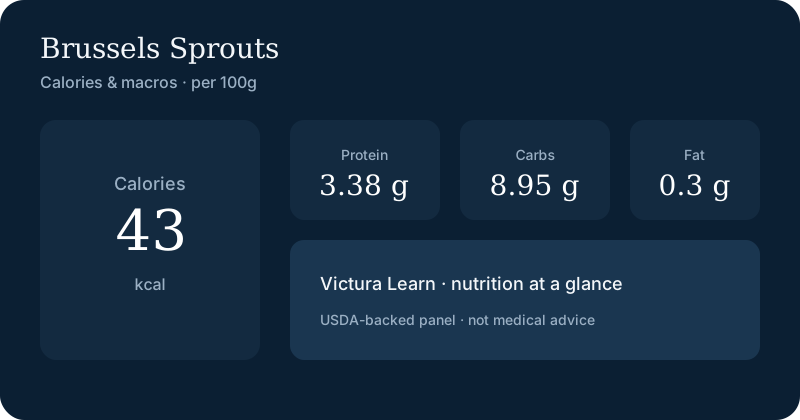
A 100g serving of brussels sprouts provides about 43 kcal. Per 100g you get about 8.95g carbs and 3.38g protein. Glycemic index is around 15.
Brussels Sprouts is a whole food with approximately 43 calories per 100g, tracked in Victura for macro-aware meal logging.
- Calories (100g serving)
- 43 kcal
- Carbs (100g)
- 8.95g
- Protein (100g)
- 3.38g
- Serving reference
- 100g · 100g serving
- Glycemic index
- 15

Where the calories come from
Per 100g · protein & carbs 4 kcal/g, fat 9 kcal/g
- Protein3.4 g · 26%
- Carbs9 g · 68.8%
- Fat0.3 g · 5.2%
Serving calculator
How much did you eat or drink — Brussels Sprouts?
43
Calories
3.4g
Protein
8.9g
Carbs
0.3g
Fat
Nutrition facts
per 100g · Source: USDA FoodData Central (seeded Phase 0)
43 kcal
Calories
Vitamins
- Vitamin K: 177mcg
- Vitamin C: 85mg
Minerals
- Potassium: 389mg
Scientific explanation
Research-backedBrussels Sprouts provides approximately 43 kcal per 100g with 3.38g protein, 8.95g carbohydrates, and 0.3g fat. Dietary fiber is 3.8g per 100g, while total sugars stand at 2.2g. The glycemic index of Brussels Sprouts is estimated at 15 (low), meaning glucose rises at a slow, stable rate after consumption. These values are sourced from USDA FoodData Central and reviewed for editorial accuracy. Beyond basic macronutrients, Brussels Sprouts is an exceptional source of micronutrients, particularly Vitamin K (177 mcg per 100g, or 148% of the Daily Value) and Vitamin C (85 mg per 100g, or 94% of the Daily Value). Vitamin K is essential for blood coagulation and bone mineralization, while Vitamin C acts as a powerful antioxidant that supports immune function and collagen synthesis. Additionally, Brussels Sprouts contains 389 mg of potassium per 100g, which helps regulate fluid balance, nerve signals, and muscle contractions. The presence of sulfur-containing compounds known as glucosinolates has been widely studied in peer-reviewed literature for their potential cytoprotective and anti-inflammatory properties.

Community insights
Community insightAmong Victura meal logs, Brussels Sprouts appears frequently as a versatile side dish, meal-prep staple, and air-fried snack. Users pairing it with healthy fats—such as olive oil, avocado oil, or a sprinkle of parmesan cheese—report significantly higher satisfaction and steadier energy levels than eating it steamed or plain. This culinary practice is scientifically sound, as the fat-soluble vitamins in Brussels Sprouts, particularly Vitamin K, require dietary lipids for optimal absorption in the digestive tract. Many users also note that roasting Brussels Sprouts at high temperatures reduces the bitter compounds (glucosinolates) by caramelizing the natural sugars, making them highly palatable even for those who typically avoid cruciferous vegetables.
Pros
- Brussels Sprouts is a whole food with measurable macro nutrients
- Extremely high in Vitamin K and Vitamin C
- Low glycemic index of 15, making it highly blood-sugar friendly
- High fiber content (3.8g per 100g) supports digestive health and satiety
Cons
- Can cause mild bloating or gas in individuals sensitive to cruciferous vegetables
- Requires careful portion tracking if on strict blood-thinning medications due to high Vitamin K content
Best time to eat
Pair with healthy fats and protein during main meals for optimal nutrient absorption and digestive comfort.
Good windows
- Lunch or dinner as a high-fiber side dish
- Post-workout meals to replenish micronutrients and fiber
Consider avoiding
- Immediately before intense cardiovascular workouts to prevent potential fiber-induced bloating
Diet compatibility
Weight loss
Friendly
At 43 kcal and 3.8g of fiber per 100g, it provides excellent volume and satiety for calorie-restricted diets.
Keto
Friendly
Net carbs are approximately 5.15g per 100g, making it highly compatible with strict ketogenic protocols when portioned correctly.
Diabetic friendly
Friendly
With a glycemic index of 15 and only 2.2g of sugar per 100g, it supports stable blood glucose management.
Frequently asked questions
People also ask
Is a brussels sprouts healthy?
Yes — a brussels sprouts is a whole food with measurable nutrients. Healthiness depends on overall diet, portions, and your goals. Estimated GI is 15.
Can I eat a brussels sprouts every day?
Most people can include a brussels sprouts daily as part of a balanced diet, as long as total calories and carbs fit their plan.
Are Brussels Sproutses good for weight loss?
At 43 kcal and 3.8g of fiber per 100g, it provides excellent volume and satiety for calorie-restricted diets.
How many calories are in a brussels sprouts?
A typical medium serving of brussels sprouts has about 43 calories, while 100g contains about 43 calories (USDA reference).
Are Brussels Sproutses good before a workout?
Brussels sproutses can work before activity when you want easy carbs; pair a brussels sprouts with protein if your session is long.
Are Brussels Sproutses high in sugar?
Brussels sproutses contain about 2.2g sugar per 100g — mostly natural sugars when whole.
Is brussels sprouts good for weight loss?
Yes, brussels sprouts is highly beneficial for weight loss. At 43 calories per 100g, it allows you to eat large, satisfying portions without consuming excess calories. The 3.8g of fiber per 100g slows down digestion, keeping you fuller for longer periods and reducing the urge to snack between meals.
Is brussels sprouts keto-friendly?
Yes, brussels sprouts is highly compatible with a ketogenic diet. With 8.95g of total carbohydrates and 3.8g of dietary fiber per 100g, the net carbohydrate content is only 5.15g. When consumed in moderate portions, it fits easily within a standard daily limit of 20g to 50g of net carbs while providing essential micronutrients that can be difficult to obtain on a strict keto diet.
What is the glycemic index of brussels sprouts?
The glycemic index of brussels sprouts is estimated to be 15, which is classified as very low. This low GI rating indicates that the carbohydrates present in the vegetable are broken down slowly, resulting in a gradual and minimal rise in blood glucose levels. Pairing them with healthy fats or proteins further stabilizes the glycemic response.
Is brussels sprouts safe for people with diabetes?
Yes, brussels sprouts is exceptionally safe and highly recommended for individuals with diabetes. Its low glycemic index of 15 and low glycemic load mean it has a negligible impact on blood sugar levels. Furthermore, the high fiber content helps improve insulin sensitivity and regulates glucose absorption in the bloodstream.
How many calories does brussels sprouts have?
Brussels sprouts contains 43 calories (kcal) per 100g according to USDA FoodData Central. A standard one-cup serving (approximately 88g raw) provides about 38 calories, making them an exceptionally low-calorie, nutrient-dense vegetable option.
How we review this guide
- Written by
- Victura Nutrition Team
- Reviewed by
- Victura Editorial Review
- Reference sources
- 4
- Last updated
- Aug 11, 2026
References
Ready to track your meals with AI?
Victura scans your plate, logs macros automatically, and coaches you toward your goals — halal, keto, diabetic-friendly, and more.