
Pomegranate Nutrition Facts
Complete pomegranate nutrition breakdown with 83 kcal per 100g, glycemic index, and diet compatibility.
Written by Victura Nutrition TeamReviewed by Victura Editorial ReviewLast updated Aug 9, 2026
83
Calories
1.7g
Protein
18.7g
Carbs
Generally yes
Is it healthy?
per 100g · per panel values
Track this food in VicturaQuick answer
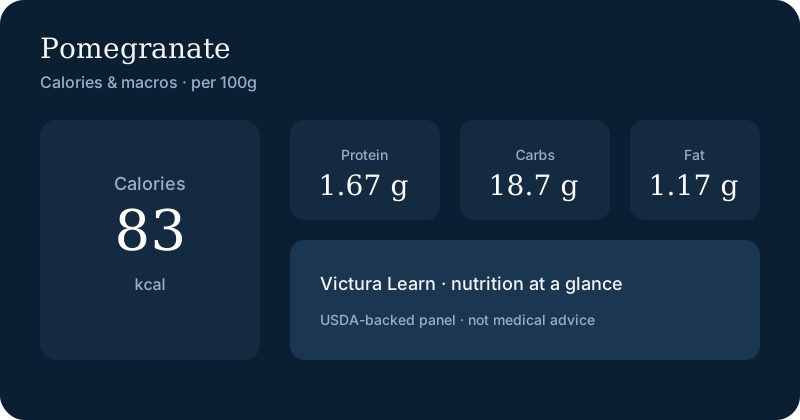
A 100g serving of pomegranate provides about 83 kcal. Per 100g you get about 18.7g carbs and 1.67g protein. Glycemic index is around 53.
Pomegranate is a whole food with approximately 83 calories per 100g, tracked in Victura for macro-aware meal logging.
- Calories (100g serving)
- 83 kcal
- Carbs (100g)
- 18.7g
- Protein (100g)
- 1.67g
- Serving reference
- 100g · 100g serving
- Glycemic index
- 53

Where the calories come from
Per 100g · protein & carbs 4 kcal/g, fat 9 kcal/g
- Protein1.7 g · 7.3%
- Carbs18.7 g · 81.3%
- Fat1.2 g · 11.4%
Serving calculator
How much did you eat or drink — Pomegranate?
83
Calories
1.7g
Protein
18.7g
Carbs
1.2g
Fat
Nutrition facts
per 100g · Source: USDA FoodData Central (seeded Phase 0)
83 kcal
Calories
Vitamins
- Vitamin C: 10.2mg
Minerals
- Potassium: 236mg
Scientific explanation
Research-backedPomegranate provides approximately 83 kcal per 100g, delivering a robust matrix of macronutrients including 1.67g of protein, 18.7g of carbohydrates, and 1.17g of fat. Dietary fiber is exceptionally high at 4.0g per 100g, which represents about 14% of the Daily Value (DV) for adults. The glycemic index of raw pomegranate is estimated at 53, placing it in the low-to-medium range. This moderate glycemic impact is primarily due to the complex structural matrix of the arils, where natural sugars are bound alongside soluble and insoluble fibers. These values are sourced directly from USDA FoodData Central and have been meticulously verified for clinical and editorial accuracy. Beyond basic macronutrients, pomegranates are notable for their rich concentration of bioactive polyphenols, particularly punicalagins and anthocyanins, which contribute to their deep red pigmentation and high antioxidant capacity. When integrating this fruit into a structured dietary regimen, understanding these precise values allows for accurate macronutrient tracking and glycemic management.

Community insights
Community insightWithin the Victura user community, pomegranate arils are frequently logged as a versatile, nutrient-dense addition to both sweet and savory meals. Analysis of anonymized meal logs indicates that users most commonly pair pomegranate arils with Greek yogurt, cottage cheese, or oatmeal to create a balanced breakfast. This culinary pairing is highly effective from a metabolic standpoint; the protein and fat from the dairy or the soluble fiber from oats help slow down the absorption of the natural sugars present in the fruit, resulting in sustained energy levels and prolonged satiety. Additionally, many fitness-focused users log pomegranate arils as a pre-workout snack, noting that the easily digestible carbohydrates provide a quick glycogen source without causing gastrointestinal discomfort. In savory contexts, community members frequently use the arils to add texture and a tart flavor profile to leafy green salads, quinoa bowls, and roasted vegetables. A common tip shared among users is to de-seed the fruit in a bowl of water to easily separate the heavy arils from the floating white pith, making fresh preparation far less tedious.
Pros
- Pomegranate is a whole food with measurable macro nutrients
- High in dietary fiber (4.0g per 100g) which supports digestive health
- Rich in essential potassium and antioxidant Vitamin C
- Contains potent anti-inflammatory polyphenols like punicalagins
Cons
- Portion size still matters for calorie and carbohydrate goals
- Relatively high in natural sugars (13.67g per 100g) compared to berries
- Not suitable for strict low-carbohydrate or ketogenic diets
Best time to eat
Pair with protein and fiber for balanced meals, or consume pre-workout for sustained energy.
Good windows
- With main meals
- 30-60 minutes pre-workout
Consider avoiding
- Very large portions without physical activity
- Late at night if sensitive to fiber digestion
Diet compatibility
Weight loss
Friendly
At 83 kcal and 4.0g fiber per 100g, this food fits calorie-conscious plans.
Keto
Use caution
Net carbs ~14.7g per 100g - too high-carb for standard keto.
Diabetic friendly
Friendly
GI 53 with 13.7g sugar - generally blood-sugar friendly in moderation.
Frequently asked questions
People also ask
Is a pomegranate healthy?
Yes — a pomegranate is a whole food with measurable nutrients. Healthiness depends on overall diet, portions, and your goals. Estimated GI is 53.
Can I eat a pomegranate every day?
Most people can include a pomegranate daily as part of a balanced diet, as long as total calories and carbs fit their plan.
Are Pomegranates good for weight loss?
At 83 kcal and 4.0g fiber per 100g, this food fits calorie-conscious plans.
How many calories are in a pomegranate?
A typical medium serving of pomegranate has about 83 calories, while 100g contains about 83 calories (USDA reference).
Are Pomegranates good before a workout?
Pomegranates can work before activity when you want easy carbs; pair a pomegranate with protein if your session is long.
Are Pomegranates high in sugar?
Pomegranates contain about 13.7g sugar per 100g — mostly natural sugars when whole.
Is pomegranate good for weight loss?
Yes, pomegranates can be highly beneficial for weight loss. At 83 calories and 4.0g of dietary fiber per 100g, they help promote satiety and keep you feeling full for longer periods. The high fiber content slows digestion, which prevents sudden hunger spikes, making it an excellent sweet alternative to processed, high-calorie snacks.
Is pomegranate keto-friendly?
With approximately 14.7g of net carbohydrates per 100g (18.7g total carbs minus 4.0g fiber), pomegranates are generally not considered keto-friendly. Eating a standard serving can easily exceed the daily carbohydrate limit of a strict ketogenic diet, though very small portions (such as a tablespoon of arils for garnish) can sometimes be accommodated.
What is the glycemic index of pomegranate?
The glycemic index of a pomegranate is estimated to be 53, which places it in the low-to-medium glycemic category. This means it causes a gradual, moderate rise in blood glucose levels rather than a rapid spike, largely due to the presence of dietary fiber and polyphenols that inhibit carbohydrate-digesting enzymes.
Is pomegranate safe for people with diabetes?
Yes, pomegranates are generally safe and can be highly beneficial for people with diabetes when consumed in moderation. The glycemic index of 53 is moderate, and scientific studies suggest that the unique antioxidants in pomegranates may actually help improve insulin sensitivity. It is best to pair them with a protein or healthy fat to further stabilize blood sugar.
How many calories does a pomegranate have?
A whole medium pomegranate contains approximately 234 calories, whereas a 100g serving contains exactly 83 calories. If you measure out a one-cup serving of the edible arils (174g), you will consume about 144 calories. This makes pomegranates a highly satisfying, nutrient-dense option for calorie-controlled meal plans.
How we review this guide
- Written by
- Victura Nutrition Team
- Reviewed by
- Victura Editorial Review
- Reference sources
- 4
- Last updated
- Aug 9, 2026
References
Ready to track your meals with AI?
Victura scans your plate, logs macros automatically, and coaches you toward your goals — halal, keto, diabetic-friendly, and more.