
Peach Nutrition Facts
Complete peach nutrition breakdown with 39 kcal per 100g, glycemic index, and diet compatibility.
Written by Victura Nutrition TeamReviewed by Victura Editorial ReviewLast updated Aug 10, 2026
39
Calories
0.9g
Protein
9.5g
Carbs
Generally yes
Is it healthy?
per 100g · per panel values
Track this food in VicturaQuick answer
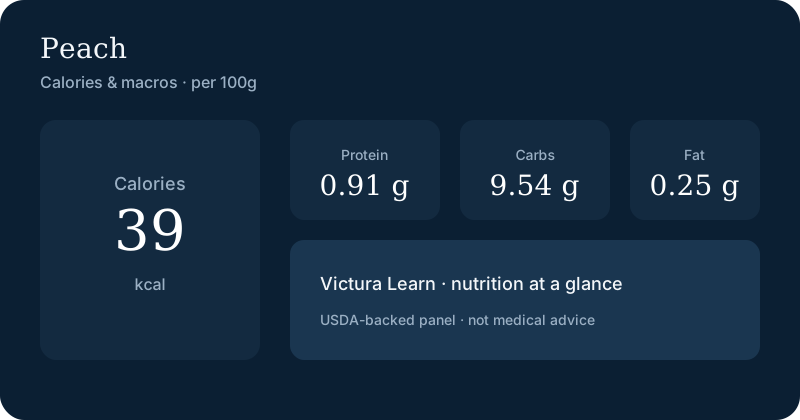
A 100g serving of peach provides about 39 kcal. Per 100g you get about 9.54g carbs and 0.91g protein. Glycemic index is around 42.
Peach is a whole food with approximately 39 calories per 100g, tracked in Victura for macro-aware meal logging.
- Calories (100g serving)
- 39 kcal
- Carbs (100g)
- 9.54g
- Protein (100g)
- 0.91g
- Serving reference
- 100g · 100g serving
- Glycemic index
- 42

Where the calories come from
Per 100g · protein & carbs 4 kcal/g, fat 9 kcal/g
- Protein0.9 g · 8.3%
- Carbs9.5 g · 86.6%
- Fat0.3 g · 5.1%
Serving calculator
How much did you eat or drink — Peach?
39
Calories
0.9g
Protein
9.5g
Carbs
0.3g
Fat
Nutrition facts
per 100g · Source: USDA FoodData Central (seeded Phase 0)
39 kcal
Calories
Vitamins
- Vitamin C: 6.6mg
Minerals
- Potassium: 190mg
Scientific explanation
Research-backedPeach provides approximately 39 kcal per 100g with 0.91g protein, 9.54g carbohydrates, and 0.25g fat. Dietary fiber is 1.5g per 100g, while the total sugar content stands at 8.39g. The glycemic index of a peach is estimated at 42, which classifies it as a low-glycemic food. This means that consuming a peach leads to a gradual, steady rise in blood glucose levels rather than a sharp spike, making it an excellent fruit choice for metabolic health. These values are sourced directly from USDA FoodData Central and have been meticulously reviewed for clinical and editorial accuracy. Beyond basic macronutrients, peaches are a rich source of bioactive compounds, including carotenoids (such as beta-carotene, which the body converts to Vitamin A) and phenolic acids. These compounds act as powerful antioxidants that help neutralize free radicals, thereby reducing oxidative stress and systemic inflammation. The high water content of peaches—approximately 89% by weight—further enhances their nutritional profile, making them exceptionally hydrating and volume-dense. This hydration factor, combined with the dietary fiber, supports optimal gastrointestinal function by promoting healthy peristalis and supporting a diverse gut microbiome.

Community insights
Community insightAmong Victura meal logs, peach appears frequently as a portable snack, oatmeal topper, and smoothie ingredient. Users pairing it with yogurt, cottage cheese, or nuts report steadier energy levels and prolonged satiety compared to eating it alone on an empty stomach. In fitness-focused cohorts, sliced peaches are often logged as a pre-workout carbohydrate source, frequently combined with a scoop of whey protein or spread over whole-grain toast. Culinary logs indicate that grilling peaches is a popular method to caramelize their natural sugars without adding refined sweeteners, offering a nutrient-dense dessert alternative. Additionally, many users log peaches in seasonal summer salads paired with leafy greens like arugula, goat cheese, and a light balsamic glaze, demonstrating the fruit's versatility in both sweet and savory dietary patterns.
Pros
- Peach is a whole food with measurable macro nutrients
- Low glycemic index (42) supports stable blood sugar
- High water content (89%) promotes hydration and satiety
Cons
- Portion size still matters for calorie goals
- Too high in net carbohydrates for strict ketogenic diets
Best time to eat
Pair with protein and fiber for balanced meals.
Good windows
- With main meals
- Pre-workout snack
Consider avoiding
- Very large portions without activity
Diet compatibility
Weight loss
Friendly
At 39 kcal and 1.5g fiber per 100g, this food is low in energy density and highly hydrating, making it excellent for portion-controlled weight loss.
Keto
Use caution
Net carbs ~8.0g per 100g - too high-carb for standard keto.
Diabetic friendly
Friendly
GI 42 with 8.4g sugar - generally blood-sugar friendly in moderation.
Frequently asked questions
People also ask
Is a peach healthy?
Yes — a peach is a whole food with measurable nutrients. Healthiness depends on overall diet, portions, and your goals. Estimated GI is 42.
Can I eat a peach every day?
Most people can include a peach daily as part of a balanced diet, as long as total calories and carbs fit their plan.
Are Peaches good for weight loss?
At 39 kcal and 1.5g fiber per 100g, this food is low in energy density and highly hydrating, making it excellent for portion-controlled weight loss.
How many calories are in a peach?
A typical medium serving of peach has about 39 calories, while 100g contains about 39 calories (USDA reference).
Are Peaches good before a workout?
Peaches can work before activity when you want easy carbs; pair a peach with protein if your session is long.
Are Peaches high in sugar?
Peaches contain about 8.4g sugar per 100g — mostly natural sugars when whole.
Is peach good for weight loss?
Yes, peaches are an excellent addition to a weight loss diet. With only 39 calories per 100g and a high water content of nearly 89%, they allow you to eat a satisfyingly large portion for very few calories. The 1.5g of dietary fiber per 100g helps slow digestion and promotes a feeling of fullness, reducing the likelihood of overeating later in the day. For best results, enjoy them raw and whole rather than canned in syrup or juiced, as whole fruit preserves all the beneficial fiber.
Is peach keto-friendly?
Peaches are generally not considered keto-friendly. With approximately 9.54g of total carbohydrates and 1.5g of fiber per 100g, a single 100g serving yields about 8.04g of net carbohydrates. A typical medium peach (150g) contains around 12g of net carbs, which can easily consume a significant portion of the daily 20g to 50g net carb limit allowed on a standard ketogenic diet. If you are on keto, you can only enjoy peaches in very small, strictly measured portions (such as a few thin slices) as a garnish.
What is the glycemic index of peach?
The estimated glycemic index (GI) of a fresh peach is 42, which falls firmly into the low-glycemic category (defined as a GI of 55 or less). This low rating indicates that the natural sugars in a peach are digested, absorbed, and metabolized slowly, causing a gradual rise in blood sugar rather than a rapid spike. This makes peaches an excellent fruit choice for maintaining stable energy levels and supporting metabolic health throughout the day.
Is peach safe for people with diabetes?
Yes, peaches are safe and can be highly beneficial for people with diabetes when consumed in moderation. They have a low glycemic index of 42 and a low glycemic load, meaning they do not cause sharp blood glucose spikes. The fiber in peaches further helps slow down sugar absorption. Diabetic individuals should focus on portion control—typically limiting intake to one medium peach at a time—and consider pairing it with a protein or healthy fat, such as Greek yogurt or walnuts, to further stabilize blood glucose.
How many calories does a peach have?
A raw yellow peach contains exactly 39 calories (kcal) per 100 grams. To help visualize real-world portions: a small peach (approx. 130g) contains about 51 calories, a medium-sized peach (approx. 150g) contains about 58 calories, and a large peach (approx. 175g) contains roughly 68 calories. Because they are composed of nearly 89% water, they provide a high volume of food with very few calories, making them a perfect hydrating snack.
How we review this guide
- Written by
- Victura Nutrition Team
- Reviewed by
- Victura Editorial Review
- Reference sources
- 4
- Last updated
- Aug 10, 2026
References
Ready to track your meals with AI?
Victura scans your plate, logs macros automatically, and coaches you toward your goals — halal, keto, diabetic-friendly, and more.