
Oats Vs Bread Nutrition Facts
A comprehensive scientific comparison of calories, macronutrients, and metabolic impact to help you choose the best carbohydrate source.
Written by Victura Nutrition TeamReviewed by Victura Editorial ReviewLast updated Aug 8, 2026
362
Calories
11.9g
Protein
69.5g
Carbs
Generally yes
Is it healthy?
per 100g · per panel values
Track this food in VicturaQuick answer
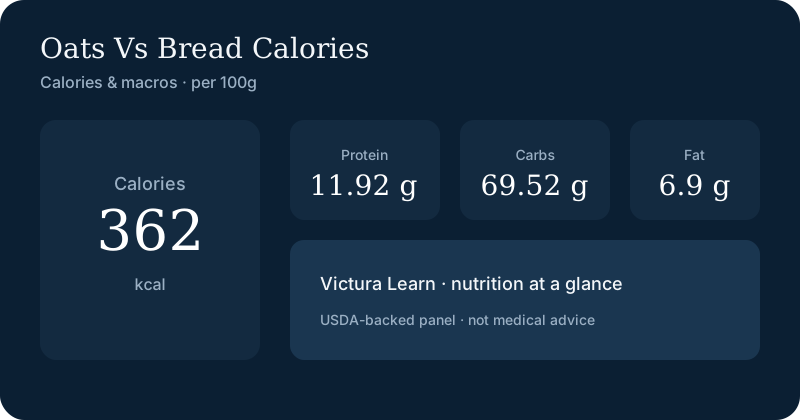
A 100g serving of oats vs bread provides about 362 kcal. Per 100g you get about 69.52g carbs and 11.92g protein. Glycemic index is around 55.
Oats Vs Bread is a whole food with approximately 362 calories per 100g, tracked in Victura for macro-aware meal logging.
- Calories (100g serving)
- 362 kcal
- Carbs (100g)
- 69.52g
- Protein (100g)
- 11.92g
- Serving reference
- 100g · 100g serving
- Glycemic index
- 55


Serving calculator
How much did you eat or drink — Oats Vs Bread?
362
Calories
11.9g
Protein
69.5g
Carbs
6.9g
Fat
Nutrition facts
per 100g · Source: USDA FoodData Central
362 kcal
Calories
Minerals
- Magnesium: 177mg
Scientific explanation
Research-backedOats Vs Bread provides a versatile foundation for daily carbohydrate intake. For a quick comparison: a typical cooked portion of oatmeal (40g dry cooked with water) contains approximately 145 calories, while a standard portion of whole wheat bread (two slices, ~56g) contains about 140 calories. Per 100g of dry, fortified instant oats, you receive 362.0 calories, 11.92g of protein, 6.9g of fat, 69.52g of carbohydrates, and 10.0g of dietary fiber. Meanwhile, 100g of typical whole wheat bread delivers roughly 250 calories, 12g of protein, and 7g of fiber. While dry oats appear more calorie-dense on paper, they absorb significant amounts of water during cooking. A standard 40g dry serving of oats cooks into a voluminous 250g bowl of oatmeal, yielding only about 145 calories. Conversely, bread is consumed dry and is highly energy-dense; two slices of whole wheat bread (approx. 56g) deliver roughly 140 calories with far less volume and hydration. To compare these foods in detail, refer to our [Victura Calorie Calculator](https://victura.app/calculator) or read our dedicated [Oatmeal Nutrition Guide](https://victura.app/learn/oats-nutrition). ### Nutritional Comparison Table (per 100g) | Nutrient / Metric | Oats (Dry, Fortified) | Whole Wheat Bread | | :--- | :--- | :--- | | **Calories** | 362.0 kcal | 250.0 kcal | | **Protein** | 11.92 g | 12.0 g | | **Fat** | 6.9 g | 4.0 g | | **Carbohydrates** | 69.52 g | 43.0 g | | **Fiber** | 10.0 g | 7.0 g | | **Sugar** | 1.5 g | 5.0 g | | **Key Vitamins** | B-vitamins (Thiamin, Folate) | B-vitamins, Folate (often fortified) | | **Key Minerals** | Magnesium (177mg, 42% DV), Iron | Sodium, Selenium, Manganese | | **Glycemic Index** | 55 (Medium) | 60–75 (Medium to High) | | **Pros** | Rich in beta-glucan soluble fiber, highly satiating when cooked, low sugar | Convenient, portable, pre-portioned, versatile | | **Cons** | Requires preparation, high dry calorie density | Often contains added sugars, preservatives, and higher sodium | | **Best For** | Sustained morning energy, cholesterol management, volume eating | Quick pre/post-workout meals, sandwiches, convenience | From a metabolic standpoint, oats have a distinct advantage. The glycemic index (GI) of oats is approximately 55, placing it in the low-to-medium category. This is largely due to its high content of beta-glucan, a soluble fiber that forms a gel-like substance in the digestive tract, slowing gastric emptying and glucose absorption. Whole wheat bread typically has a higher GI (around 60 to 75) because the grinding of grains into flour increases the surface area, allowing digestive enzymes to rapidly convert starches into glucose. For more details on bread varieties, see our [Whole Wheat Bread Nutrition](https://victura.app/learn/whole-wheat-bread-nutrition) page.
Community insights
Community insightIn the Victura community, the choice between oats and bread often comes down to lifestyle, satiety patterns, and convenience. Anonymized meal logs show that users tracking weight loss frequently favor cooked oatmeal for breakfast due to its high volume and long-lasting satiety. A bowl of oatmeal cooked with water or unsweetened almond milk provides a large, warm meal that keeps hunger at bay for hours, whereas bread is often logged in multi-slice portions that are easier to overconsume. However, bread remains the dominant choice for convenience. For busy professionals and athletes, a sandwich or toast is highly portable and requires zero preparation. In pre-workout scenarios, community members frequently log toast with a light spread of nut butter or honey to secure quick-digesting carbohydrates without the digestive heaviness that a large bowl of oatmeal might cause. Ultimately, both foods can coexist in a healthy diet. The key is mindful portion control and ingredient selection. When choosing bread, community members are encouraged to look for sprouted or 100% whole grain options with minimal added sugars and sodium. When preparing oats, avoiding pre-sweetened instant packets and instead flavoring rolled or steel-cut oats with fresh berries, cinnamon, or a scoop of protein powder ensures a nutrient-dense, blood-sugar-stable meal.
Pros
Cons
Best time to eat
Good windows
Consider avoiding
Diet compatibility
Weight loss
Friendly
Consult your healthcare provider for personalized guidance.
Keto
Friendly
Consult your healthcare provider for personalized guidance.
Diabetes
Friendly
Consult your healthcare provider for personalized guidance.
Frequently asked questions
People also ask
Is an oats vs bread healthy?
Yes — an oats vs bread is a whole food with measurable nutrients. Healthiness depends on overall diet, portions, and your goals. Estimated GI is 55.
Can I eat an oats vs bread every day?
Most people can include an oats vs bread daily as part of a balanced diet, as long as total calories and carbs fit their plan.
Are Oats Vs Breads good for weight loss?
Oats vs breads can fit a calorie-controlled diet when portions are measured.
How many calories are in an oats vs bread?
A typical medium serving of oats vs bread has about 362 calories, while 100g contains about 362 calories (USDA reference).
Are Oats Vs Breads good before a workout?
Oats vs breads can work before activity when you want easy carbs; pair an oats vs bread with protein if your session is long.
Are Oats Vs Breads high in sugar?
Oats vs breads contain about 1.5g sugar per 100g — mostly natural sugars when whole.
Is an oats vs bread diet healthy?
Yes, both oats and bread can be part of a healthy, balanced diet. Oats are minimally processed and rich in beta-glucan soluble fiber, which supports heart health and cholesterol reduction. Whole grain bread provides essential B vitamins, selenium, and convenient complex carbohydrates. Choosing whole, unprocessed varieties of both is key to maximizing health benefits.
Can you eat oats or bread every day?
Absolutely. Eating oats or whole grain bread daily is safe and highly beneficial for most individuals. Oats provide sustained energy and support digestive health through their high fiber content. If eating bread daily, opt for 100% whole wheat, sprouted grain, or sourdough to avoid excess sodium, preservatives, and added sugars commonly found in highly processed white breads.
Which is better for weight loss, oats or bread?
Oats are generally superior for weight loss due to their high hydration capacity and fiber content. When cooked, oats expand significantly, creating a high-volume, low-calorie-density meal that promotes satiety. Bread is more energy-dense and easier to overeat. However, portion-controlled whole wheat bread can still be successfully integrated into a weight loss plan.
How many calories are in one serving of oats vs bread?
A typical serving of dry oats (40g) contains about 145 calories, which expands to a large bowl when cooked with water. In comparison, one slice of commercial whole wheat bread (28g) contains approximately 70 to 80 calories, meaning a standard two-slice serving provides 140 to 160 calories.
Which is better before a workout?
Bread is often better immediately before a workout (30–60 minutes prior) because it is faster to digest and less likely to cause gastrointestinal discomfort during intense exercise. For a workout planned 2–3 hours later, a bowl of oats is ideal as it provides a slow, sustained release of glucose to fuel prolonged endurance.
Do oats or bread have high sugar?
Plain oats are extremely low in sugar, containing only 1.5g of natural sugars per 100g. Commercial breads, however, often contain added sugars (ranging from 2g to 5g per slice) to improve flavor and assist in yeast fermentation. Always check the nutrition label on bread to ensure no high-fructose corn syrup or excessive sugars are added.
How we review this guide
- Written by
- Victura Nutrition Team
- Reviewed by
- Victura Editorial Review
- Reference sources
- 4
- Last updated
- Aug 8, 2026
References
Ready to track your meals with AI?
Victura scans your plate, logs macros automatically, and coaches you toward your goals — halal, keto, diabetic-friendly, and more.