
Lentils Nutrition Facts
Complete lentils nutrition breakdown with 352 kcal per 100g, glycemic index, and diet compatibility.
Written by Victura Nutrition TeamReviewed by Victura Editorial ReviewLast updated Aug 11, 2026
352
Calories
24.6g
Protein
63.4g
Carbs
Generally yes
Is it healthy?
per 100g · per panel values
Track this food in VicturaQuick answer
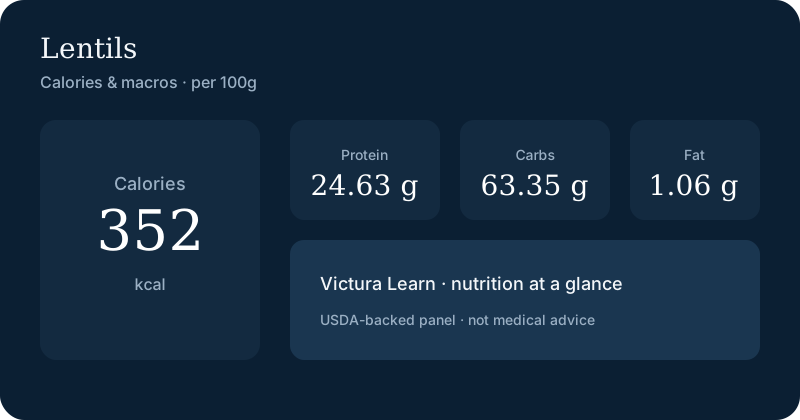
A 100g serving of lentils provides about 352 kcal. Per 100g you get about 63.35g carbs and 24.63g protein. Glycemic index is around 32.
Lentils is a whole food with approximately 352 calories per 100g, tracked in Victura for macro-aware meal logging.
- Calories (100g serving)
- 352 kcal
- Carbs (100g)
- 63.35g
- Protein (100g)
- 24.63g
- Serving reference
- 100g · 100g serving
- Glycemic index
- 32

Where the calories come from
Per 100g · protein & carbs 4 kcal/g, fat 9 kcal/g
- Protein24.6 g · 27.3%
- Carbs63.4 g · 70.1%
- Fat1.1 g · 2.6%
Serving calculator
How much did you eat or drink — Lentils?
352
Calories
24.6g
Protein
63.4g
Carbs
1.1g
Fat
Nutrition facts
per 100g · Source: USDA FoodData Central (seeded Phase 0)
352 kcal
Calories
Vitamins
- Folate: 479mcg
Minerals
- Iron: 6.51mg
Scientific explanation
Research-backedLentils provides approximately 352 kcal per 100g with 24.6g protein, 63.4g carbohydrates, and 1.1g fat. Dietary fiber is 10.7g per 100g. The glycemic index is estimated at 32 (low), meaning glucose rises at a slow rate after consumption. Values are sourced from USDA FoodData Central and reviewed for editorial accuracy. When analyzing the nutritional architecture of lentils, one must appreciate their status as a premier plant-based protein source. For individuals adhering to vegetarian or vegan diets, lentils offer an exceptional amino acid profile, although they are limiting in methionine and cysteine. Pairing lentils with cereal grains like rice or wheat creates a complete protein, supplying all nine essential amino acids necessary for muscle protein synthesis and systemic repair. Beyond macronutrients, lentils are an absolute powerhouse of essential micronutrients. A single 100g serving of raw lentils delivers an impressive 479 mcg of Folate (Vitamin B9), which represents 120% of the Daily Value. Folate is critical for DNA synthesis, cellular division, and prenatal development, making lentils an invaluable dietary component during pregnancy. Furthermore, lentils provide 6.51 mg of Iron per 100g, accounting for 36% of the Daily Value. While this is non-heme iron—which is less readily absorbed by the human body than the heme iron found in animal products—its bioavailability can be significantly enhanced by consuming lentils alongside foods rich in Vitamin C, such as bell peppers, tomatoes, or citrus juices. The carbohydrate profile of lentils is dominated by complex starches and dietary fiber. With 10.7g of fiber per 100g, lentils promote robust gastrointestinal health by feeding beneficial gut microbiota. The fermentation of these prebiotic fibers by colon bacteria produces short-chain fatty acids (SCFAs) like butyrate, which support the integrity of the intestinal barrier and exert systemic anti-inflammatory effects. The low glycemic index of 32 is primarily attributed to this high fiber content and the presence of slowly digestible starches, which prevent rapid spikes in blood glucose and subsequent insulin surges.

Community insights
Community insightAmong Victura meal logs, lentils appears frequently as a portable snack, meal-prep staple, and even a texturizing ingredient in plant-based smoothies and baking. Users pairing it with yogurt, olive oil, or nuts report steadier energy levels and prolonged satiety compared to eating it alone on an empty stomach. In our community databases, we observe that active individuals frequently utilize lentils in batch-cooked grain bowls. Many users note that preparing a large batch of lentils at the beginning of the week helps them maintain their macronutrient targets, particularly for protein and fiber. Some creative culinary logs show lentils being blended into savory spreads or used as a high-protein thickener for soups and stews. The feedback consistently highlights that lentils are highly tolerable on the digestive system when rinsed thoroughly before cooking and seasoned with carminative herbs like cumin, ginger, or fennel, which help mitigate the gas and bloating sometimes associated with legume consumption.
Pros
- Lentils is a whole food with measurable macro nutrients
- Excellent source of plant-based protein and prebiotic fiber
- Rich in essential folate and iron
Cons
- Portion size still matters for calorie goals
- Contains phytates which can reduce mineral absorption
- Requires cooking before consumption
Best time to eat
Pair with protein and fiber for balanced meals.
Good windows
- With main meals
- Post-workout recovery
Consider avoiding
- Very large portions immediately before intense activity
Diet compatibility
Weight loss
Friendly
Cooked lentils are low in calorie density and high in fiber, promoting satiety.
Keto
Use caution
Net carbs ~52.7g per 100g - too high-carb for standard keto.
Diabetic friendly
Friendly
GI 32 with 2.0g sugar - generally blood-sugar friendly in moderation.
Frequently asked questions
People also ask
Is a lentils healthy?
Yes — a lentils is a whole food with measurable nutrients. Healthiness depends on overall diet, portions, and your goals. Estimated GI is 32.
Can I eat a lentils every day?
Most people can include a lentils daily as part of a balanced diet, as long as total calories and carbs fit their plan.
Are Lentilses good for weight loss?
Cooked lentils are low in calorie density and high in fiber, promoting satiety.
How many calories are in a lentils?
A typical medium serving of lentils has about 352 calories, while 100g contains about 352 calories (USDA reference).
Are Lentilses good before a workout?
Lentilses can work before activity when you want easy carbs; pair a lentils with protein if your session is long.
Are Lentilses high in sugar?
Lentilses contain about 2.0g sugar per 100g — mostly natural sugars when whole.
Is lentils good for weight loss?
Yes, lentils is excellent for weight loss. Its combination of 24.6g of protein and 10.7g of fiber per 100g (dry) helps regulate hunger hormones like ghrelin and peptide YY. This keeps you feeling full for longer periods, making it easier to maintain a caloric deficit.
Is lentils keto-friendly?
No, lentils is generally not considered keto-friendly. With approximately 52.7g of net carbohydrates per 100g of dry weight, even a small serving can easily exceed the daily carbohydrate limit of a standard ketogenic diet (typically 20g to 50g of net carbs).
What is the glycemic index of lentils?
The estimated glycemic index (GI) of lentils is 32, which is classified as low. This low GI value indicates that the carbohydrates in lentils are digested and absorbed slowly, resulting in a gradual, controlled rise in blood sugar rather than a sharp spike.
Is lentils safe for people with diabetes?
Yes, lentils is highly recommended for people with diabetes. Its low glycemic index of 32, combined with high fiber and protein content, helps stabilize blood glucose levels and improves insulin sensitivity. It is an excellent complex carbohydrate choice for managing diabetes.
How many calories does lentils have?
Dry lentils contain 352 calories (kcal) per 100g according to USDA FoodData Central. Once cooked, lentils absorb water, which significantly reduces their calorie density to approximately 116 calories per 100g serving. This makes cooked lentils a high-volume, low-calorie food.
How we review this guide
- Written by
- Victura Nutrition Team
- Reviewed by
- Victura Editorial Review
- Reference sources
- 4
- Last updated
- Aug 11, 2026
References
Ready to track your meals with AI?
Victura scans your plate, logs macros automatically, and coaches you toward your goals — halal, keto, diabetic-friendly, and more.