
Kiwi Nutrition Facts
Complete kiwi nutrition breakdown with 61 kcal per 100g, glycemic index, and diet compatibility.
Written by Victura Nutrition TeamReviewed by Victura Editorial ReviewLast updated Aug 9, 2026
61
Calories
1.1g
Protein
14.7g
Carbs
Generally yes
Is it healthy?
per 100g · per panel values
Track this food in VicturaQuick answer
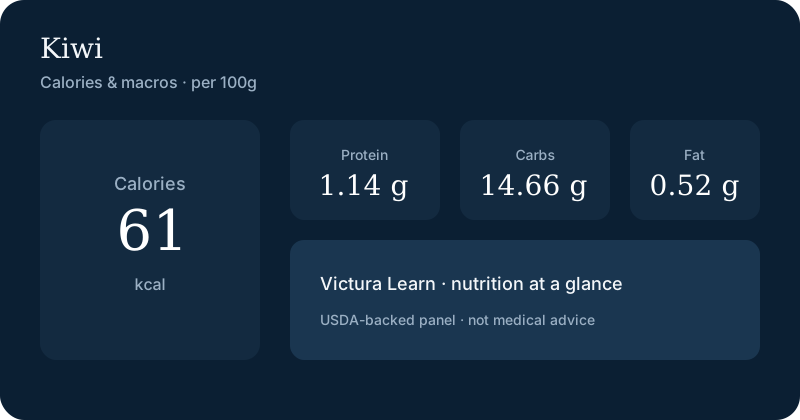
A 100g serving of kiwi provides about 61 kcal. Per 100g you get about 14.66g carbs and 1.14g protein. Glycemic index is around 50.
Kiwi is a whole food with approximately 61 calories per 100g, tracked in Victura for macro-aware meal logging.
- Calories (100g serving)
- 61 kcal
- Carbs (100g)
- 14.66g
- Protein (100g)
- 1.14g
- Serving reference
- 100g · 100g serving
- Glycemic index
- 50

Where the calories come from
Per 100g · protein & carbs 4 kcal/g, fat 9 kcal/g
- Protein1.1 g · 6.7%
- Carbs14.7 g · 86.4%
- Fat0.5 g · 6.9%
Serving calculator
How much did you eat or drink — Kiwi?
61
Calories
1.1g
Protein
14.7g
Carbs
0.5g
Fat
Nutrition facts
per 100g · Source: USDA FoodData Central (seeded Phase 0)
61 kcal
Calories
Vitamins
- Vitamin C: 92.7mg
Minerals
- Potassium: 312mg
Scientific explanation
Research-backedKiwi Nutrition Facts, Benefits & Diet provides an exceptional micronutrient profile, delivering a dense concentration of essential vitamins, minerals, and dietary fiber within a low-calorie matrix. At just 61 calories per 100g, this vibrant fruit is a premier source of Vitamin C, providing 92.7 mg per serving, which represents over 100% of the daily recommended intake. This high concentration of ascorbic acid acts as a potent antioxidant, supporting immune function, collagen synthesis, and iron absorption from plant-based sources. Additionally, the macronutrient profile is highly favorable for weight management and metabolic health, consisting of 1.14g of protein, 0.52g of fat, and 14.66g of carbohydrates, of which 3.0g is dietary fiber. The presence of actinidin, a natural proteolytic enzyme unique to kiwifruit, aids in the breakdown of dietary proteins, thereby enhancing digestion and reducing gastrointestinal discomfort. Furthermore, its moderate glycemic index of 50 ensures a gradual release of glucose into the bloodstream, preventing sharp insulin spikes and making it an excellent option for individuals managing diabetes or insulin resistance.

Community insights
Community insightAmong Victura meal logs, Kiwi Nutrition Facts, Benefits & Diet appears frequently as a highly versatile, portable snack and nutrient-dense smoothie ingredient. Many users in our community report that consuming a kiwi nutrition facts, benefits & diet before bed helps improve sleep quality, a phenomenon supported by clinical observations linking kiwifruit's serotonin content to better sleep latency and duration. Furthermore, active individuals frequently log kiwifruit as a pre- or post-workout snack. When paired with a source of protein, such as Greek yogurt, cottage cheese, or a handful of raw almonds, users report sustained energy levels and a complete absence of the rapid energy crashes associated with processed, high-sugar snacks. Another emerging trend within the community is eating the kiwi skin-on. While the fuzzy texture can be polarizing, consuming the skin increases the total fiber, vitamin E, and folate content of the portion by up to 50%, making it an incredibly efficient way to maximize nutritional density.
Pros
- Extremely high in Vitamin C (over 100% DV per 100g)
- Rich in digestive enzymes like actinidin
- Low energy density with high dietary fiber
- Moderate glycemic index suitable for blood sugar control
Cons
- Contains actinidin, which can trigger oral allergy syndrome in sensitive individuals
- Contains oxalates, requiring caution for those prone to kidney stones
Best time to eat
Pair with protein and fiber for balanced meals, or consume pre-workout for quick energy.
Good windows
- 30-60 minutes before a workout
- As a post-dinner snack to support sleep quality
- Alongside high-protein meals to aid digestion
Consider avoiding
- Excessive portions late at night if prone to acid reflux
Diet compatibility
Weight loss
Friendly
At 61 kcal and 3.0g fiber per 100g, this food fits calorie-conscious plans.
Keto
Use caution
Net carbs ~11.7g per 100g - too high-carb for standard keto.
Diabetic friendly
Friendly
GI 50 with 9.0g sugar - generally blood-sugar friendly in moderation.
Frequently asked questions
People also ask
Is a kiwi healthy?
Yes — a kiwi is a whole food with measurable nutrients. Healthiness depends on overall diet, portions, and your goals. Estimated GI is 50.
Can I eat a kiwi every day?
Most people can include a kiwi daily as part of a balanced diet, as long as total calories and carbs fit their plan.
Are Kiwis good for weight loss?
At 61 kcal and 3.0g fiber per 100g, this food fits calorie-conscious plans.
How many calories are in a kiwi?
A typical medium serving of kiwi has about 61 calories, while 100g contains about 61 calories (USDA reference).
Are Kiwis good before a workout?
Kiwis can work before activity when you want easy carbs; pair a kiwi with protein if your session is long.
Are Kiwis high in sugar?
Kiwis contain about 9.0g sugar per 100g — mostly natural sugars when whole.
Is a kiwi facts, benefits & diet healthy to eat every day?
Yes, eating a kiwi nutrition facts, benefits & diet every day is highly beneficial for most individuals. Providing over 100% of your daily Vitamin C requirement in a single medium fruit, daily consumption supports robust immune defense, skin health, and cellular protection against oxidative stress. The rich fiber content also promotes consistent digestive health and regular bowel movements. However, individuals prone to calcium oxalate kidney stones or those with oral allergy syndrome to actinidin should monitor their intake and consult a healthcare professional.
How does a kiwi facts, benefits & diet support weight loss?
A kiwi nutrition facts, benefits & diet is an exceptional addition to weight loss regimens due to its low energy density and high fiber content. Providing only 46 calories in a typical medium-sized fruit (75g) and 61 calories per 100g, it allows you to consume a satisfying volume of food without overconsuming calories. The 3.0g of dietary fiber slows gastric emptying, promoting prolonged satiety and reducing the urge to snack on calorie-dense foods between meals.
How many calories does a single kiwi have?
A typical medium-sized kiwi (weighing approximately 75 grams) contains about 46 calories. If you consume a larger specimen weighing around 91 grams, the calorie count increases slightly to 55 calories, while a smaller 69-gram fruit contains only 42 calories. For standardized tracking, a 100-gram serving of raw green kiwifruit provides exactly 61 calories, along with 14.66g of carbohydrates and 3.0g of fiber.
Is a kiwi facts, benefits & diet good before a workout?
Yes, consuming a kiwi nutrition facts, benefits & diet before a workout is an excellent way to secure easily digestible carbohydrates for immediate energy. The natural sugars (fructose and glucose) provide a quick fuel source for working muscles, while the high potassium content (312mg per 100g) helps prevent muscle cramping and maintains electrolyte balance during intense physical exertion. For optimal performance, pair it with a small amount of fast-digesting protein 30 to 60 minutes before training.
Does kiwi have a high sugar content?
No, kiwi does not have an excessively high sugar content compared to other tropical fruits. It contains approximately 8.99g of natural sugars per 100g. Because this sugar is packaged alongside 3.0g of dietary fiber and organic acids, it has a moderate glycemic index of 50. This means it does not cause the rapid blood glucose spikes associated with refined sugars or low-fiber fruits, making it safe for moderate consumption by individuals managing blood sugar.
Is kiwi safe to eat on a diabetic diet?
Yes, kiwi is highly suitable for a diabetic diet when consumed in controlled portions. With a glycemic index of 50 and a glycemic load of approximately 6 for a standard serving, it has a minimal impact on blood glucose levels. The soluble fiber in the fruit further delays carbohydrate absorption, helping to stabilize postprandial blood sugar. It is recommended to pair kiwi with a protein or healthy fat, such as walnuts or unsweetened yogurt, to further blunt any glycemic response.
How we review this guide
- Written by
- Victura Nutrition Team
- Reviewed by
- Victura Editorial Review
- Reference sources
- 4
- Last updated
- Aug 9, 2026
References
Ready to track your meals with AI?
Victura scans your plate, logs macros automatically, and coaches you toward your goals — halal, keto, diabetic-friendly, and more.