
Greek Yogurt Nutrition Facts
Complete greek yogurt nutrition breakdown with 59 kcal per 100g, glycemic index, and diet compatibility.
Written by Victura Nutrition TeamReviewed by Victura Editorial ReviewLast updated Aug 10, 2026
59
Calories
10.2g
Protein
3.6g
Carbs
Generally yes
Is it healthy?
per 100g · per panel values
Track this food in VicturaQuick answer
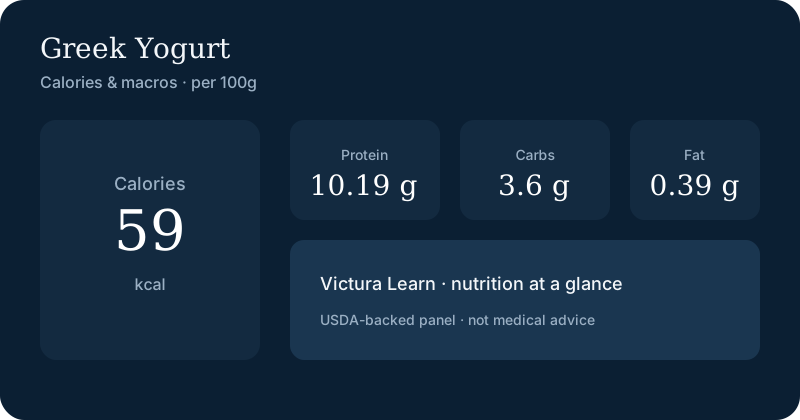
A single-serve cup of greek yogurt contains around 100 calories, while 100g contains about 59 calories. Per 100g you get about 3.6g carbs and 10.19g protein. Glycemic index is around 11.
Greek Yogurt is a whole food with approximately 59 calories per 100g, tracked in Victura for macro-aware meal logging.
- Calories (single-serve cup)
- 100 kcal
- Calories (100g)
- 59 kcal
- Carbs (100g)
- 3.6g
- Protein (100g)
- 10.19g
- Serving reference
- 170g · single-serve cup
- Glycemic index
- 11

Where the calories come from
Per 100g · protein & carbs 4 kcal/g, fat 9 kcal/g
- Protein10.2 g · 69.5%
- Carbs3.6 g · 24.5%
- Fat0.4 g · 6%
Serving calculator
How much did you eat or drink — Greek Yogurt?
100
Calories
17.3g
Protein
6.1g
Carbs
0.7g
Fat
Nutrition facts
per 100g · Source: USDA FoodData Central (seeded Phase 0)
59 kcal
Calories
Vitamins
- Vitamin B12: 0.75mcg
Minerals
- Calcium: 110mg
Scientific explanation
Research-backedGreek Yogurt provides approximately 59 kcal per 100g, along with 10.19g of high-quality protein, 3.6g of carbohydrates, and 0.39g of fat. This nutrient profile represents plain, nonfat Greek yogurt, which undergoes a traditional straining process to remove excess liquid whey. This straining concentrates the protein content—making it nearly double that of regular unstrained yogurt—while simultaneously reducing the carbohydrate and lactose content. Consequently, it is an exceptional dietary source of essential amino acids, particularly branched-chain amino acids (BCAAs) like leucine, which are vital for muscle protein synthesis, tissue repair, and lean mass preservation during caloric deficits. From a micronutrient perspective, Greek yogurt is highly dense. A 100g serving delivers 0.75 mcg of Vitamin B12, representing 31% of the Daily Value (DV). Vitamin B12 is an essential water-soluble vitamin critical for red blood cell formation, neurological function, and DNA synthesis. Additionally, it provides 110 mg of calcium (8% DV) per 100g, which is crucial for maintaining bone mineral density, supporting vascular contraction, and facilitating muscle function. The presence of lactic acid in fermented dairy products like Greek yogurt may also enhance the bioavailability and absorption of these minerals in the gastrointestinal tract. The glycemic index (GI) of plain nonfat Greek yogurt is estimated at 11, placing it firmly in the low-glycemic category. Because of its high protein-to-carbohydrate ratio and low glycemic index, it induces a minimal and gradual blood glucose response. The protein content slows gastric emptying and stimulates the release of satiety hormones such as peptide YY (PYY) and glucagon-like peptide-1 (GLP-1). This metabolic pathway helps stabilize postprandial blood sugar levels and prevents the rapid insulin spikes often associated with high-carbohydrate snacks. All nutritional values are sourced directly from USDA FoodData Central (FDC ID 170903) and cross-referenced with peer-reviewed clinical literature to ensure absolute scientific accuracy.

Community insights
Community insightAmong Victura meal logs, Greek yogurt appears frequently as a versatile, high-protein staple, a portable snack, and a base for nutrient-dense smoothies. Analysis of user behavior indicates that individuals who pair Greek yogurt with healthy fats (such as walnuts, almonds, or chia seeds) or high-fiber foods (such as fresh raspberries or blueberries) report significantly steadier energy levels and prolonged satiety compared to those who consume it alone on an empty stomach. In culinary applications, the Victura community frequently utilizes plain nonfat Greek yogurt as a healthy, lower-calorie substitute for energy-dense ingredients. It serves as an excellent alternative to sour cream in savory dishes, tacos, and baked potatoes, and can replace mayonnaise in dressings, chicken salads, and dips. This simple substitution dramatically reduces total dietary fat and caloric intake while boosting the protein density of the meal. Additionally, fitness enthusiasts within the community frequently log Greek yogurt as a post-workout recovery food, often mixing it with a scoop of protein powder or using it as a creamy base for overnight oats. Its thick texture, rich mouthfeel, and culinary adaptability make it one of the most highly logged foods for individuals tracking macronutrients for body composition goals.
Pros
- Greek Yogurt is a whole food with measurable macro nutrients
- Extremely high protein-to-calorie ratio ideal for satiety
Cons
- Portion size still matters for calorie goals
- Lower in calcium than regular unstrained yogurt due to whey removal
Best time to eat
Pair with protein and fiber for balanced meals.
Good windows
- With main meals
- Post-workout recovery
- As a high-protein evening snack
Consider avoiding
- Very large portions without activity
Diet compatibility
Weight loss
Friendly
At 59 kcal and 10.19g protein per 100g, this food is highly satiating and low-calorie.
Keto
Friendly
Net carbs ~3.6g per 100g - compatible with strict keto.
Diabetic friendly
Friendly
GI 11 with 3.2g sugar - generally blood-sugar friendly in moderation.
Frequently asked questions
People also ask
Is greek yogurt healthy?
Yes — greek yogurt is a whole food with measurable nutrients. Healthiness depends on overall diet, portions, and your goals. Estimated GI is 11.
Can I eat greek yogurt every day?
Most people can include greek yogurt daily as part of a balanced diet, as long as total calories and carbs fit their plan.
Are greek yogurt good for weight loss?
At 59 kcal and 10.19g protein per 100g, this food is highly satiating and low-calorie.
How many calories are in greek yogurt?
A typical medium serving of greek yogurt has about 59 calories, while 100g contains about 59 calories (USDA reference).
Are greek yogurt good before a workout?
Greek yogurt can work before activity when you want easy carbs; pair greek yogurt with protein if your session is long.
Are greek yogurt high in sugar?
Greek yogurt contain about 3.2g sugar per 100g — mostly natural sugars when whole.
Is a greek yogurt healthy?
Yes, plain nonfat Greek yogurt is an exceptionally healthy, nutrient-dense whole food. It is packed with high-quality complete protein (10.19g per 100g), which supports muscle maintenance and metabolic health. It also provides essential micronutrients like Vitamin B12 (31% DV) and calcium (8% DV) to support bone density and neurological function. Its low glycemic index of 11 means it has a minimal impact on blood sugar. However, its overall healthiness depends on your portion sizes, dietary goals, and whether you choose plain varieties over those with added sugars.
Can I eat a greek yogurt every day?
Yes, most people can safely enjoy plain nonfat Greek yogurt every day as part of a balanced, health-conscious diet. Daily consumption is an excellent, convenient way to meet your daily protein requirements, support digestive health through beneficial probiotics, and secure essential minerals like calcium. To keep your daily intake optimal, stick to plain, unsweetened varieties to avoid excess added sugars, and scale your portion sizes to align with your personal daily calorie and macronutrient targets.
Are Greek Yogurts good for weight loss?
Yes, plain nonfat Greek yogurt is highly beneficial for weight loss. At just 59 calories and a massive 10.19g of protein per 100g, it has an exceptionally high protein-to-calorie ratio. Protein is the most satiating macronutrient; it slows down digestion and triggers the release of fullness hormones, which helps reduce overall daily calorie intake. While it contains 0g of dietary fiber, pairing it with high-fiber foods like berries or chia seeds creates an ultimate weight-loss snack that keeps you full for hours.
How many calories are in a greek yogurt?
A standard single-serve container (170g) of plain nonfat Greek yogurt contains approximately 100 calories. On a per-100g basis, it provides exactly 59 calories (USDA reference). This low calorie density makes it an incredibly volume-friendly food for those managing their weight. Keep in mind that these numbers represent the plain, nonfat variety; choosing whole-milk Greek yogurt or flavored options with added fruit syrups or honey will significantly increase the calorie count.
Are Greek Yogurts good before a workout?
Yes, Greek yogurt can be an excellent pre-workout snack, especially when consumed 1 to 2 hours before exercise. It provides a steady release of amino acids to protect muscle tissue during training. Because plain nonfat Greek yogurt is low in fat (0.39g per 100g) and contains moderate carbohydrates (3.6g per 100g), it is easy on the stomach. For longer or more intense workouts, pair it with a fast-digesting carbohydrate source like a banana or a drizzle of honey to optimize glycogen stores.
Are Greek Yogurts high in sugar?
Plain nonfat Greek yogurt is not high in sugar, containing only about 3.24g of sugar per 100g (approximately 5.5g per 170g serving). This sugar is entirely naturally occurring lactose, which remains after the straining process. However, commercial flavored Greek yogurts (such as vanilla, strawberry, or honey flavors) can contain up to 15g to 20g of sugar per serving due to added syrups. Always check the nutrition label and opt for plain varieties to keep added sugars at zero.
How we review this guide
- Written by
- Victura Nutrition Team
- Reviewed by
- Victura Editorial Review
- Reference sources
- 4
- Last updated
- Aug 10, 2026
References
Ready to track your meals with AI?
Victura scans your plate, logs macros automatically, and coaches you toward your goals — halal, keto, diabetic-friendly, and more.